Your business exterior sends a message before customers ever walk through the door. Poor lighting makes properties look unsafe, uninviting, and closed even when you are open. Smart commercial outdoor lighting does the opposite by boosting visibility, improving security, and making your building stand out after dark. Understanding the types of commercial outdoor lighting available helps you choose fixtures that match your property’s specific needs and budget.
Whether you run a retail storefront, office complex, restaurant, or event venue, the right lighting strategy protects your investment while creating a professional first impression. This guide breaks down the most effective commercial lighting options and explains which ones deliver the best results for different business types across Prescott, Prescott Valley, and surrounding areas.
Why Commercial Outdoor Lighting Matters for Your Business
Commercial properties face different challenges than residential homes. You need lighting that handles higher foot traffic, meets local safety codes, and operates reliably for extended hours every night. The right setup reduces liability risks by illuminating walkways, parking areas, and entry points where accidents are most likely to occur.
Well-designed lighting also extends your operating hours by making customers feel comfortable visiting after sunset. Studies show that businesses with proper exterior lighting see higher evening traffic and fewer security incidents. Dark storefronts signal closure even when you are open, costing you potential sales every night.
Energy efficiency matters more for commercial properties because your lights run longer and cover larger areas. Choosing fixtures with low operating costs and minimal maintenance requirements protects your bottom line year after year. Modern LED systems can reduce energy consumption by 60 to 80 percent compared to older halogen or incandescent options.
Security and Safety Lighting
Security lighting serves one primary purpose: making your property less attractive to criminals while helping legitimate visitors navigate safely. These fixtures typically produce bright, consistent light across vulnerable areas like parking lots, loading docks, and side entrances.
Wall-Mounted Floodlights
Floodlights mounted on building exteriors provide wide coverage with minimal fixtures. They work well for illuminating loading areas, back entrances, and parking zones. Most commercial-grade models use LED bulbs rated for 50,000 hours or more, reducing replacement costs and service calls.
Positioning matters as much as brightness. Lights mounted 12 to 20 feet high eliminate shadows where intruders might hide while avoiding glare that blinds approaching visitors. Motion sensors can reduce energy use by activating lights only when movement is detected, though constant illumination often provides better deterrence.
Parking Lot Pole Lights
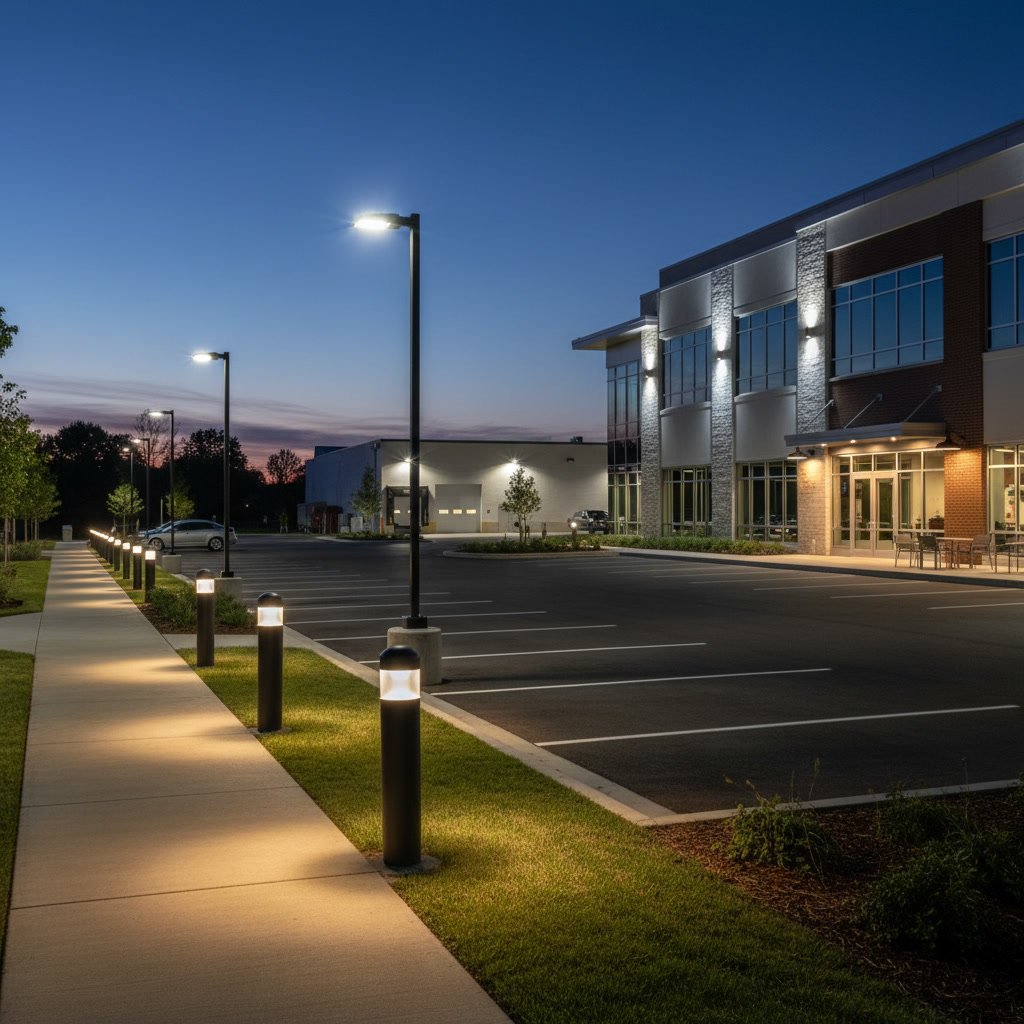
Tall pole-mounted fixtures spread light evenly across large parking areas. Standard commercial poles range from 15 to 30 feet in height, with spacing determined by fixture brightness and beam angle. Proper coverage ensures customers can locate their vehicles and walk safely to your entrance.
LED parking lot lights offer significant advantages over older high-pressure sodium or metal halide systems. They provide better color rendering, making it easier to identify vehicles and people. They also reach full brightness instantly instead of requiring a warm-up period, which improves security during power interruptions.
Architectural and Accent Lighting
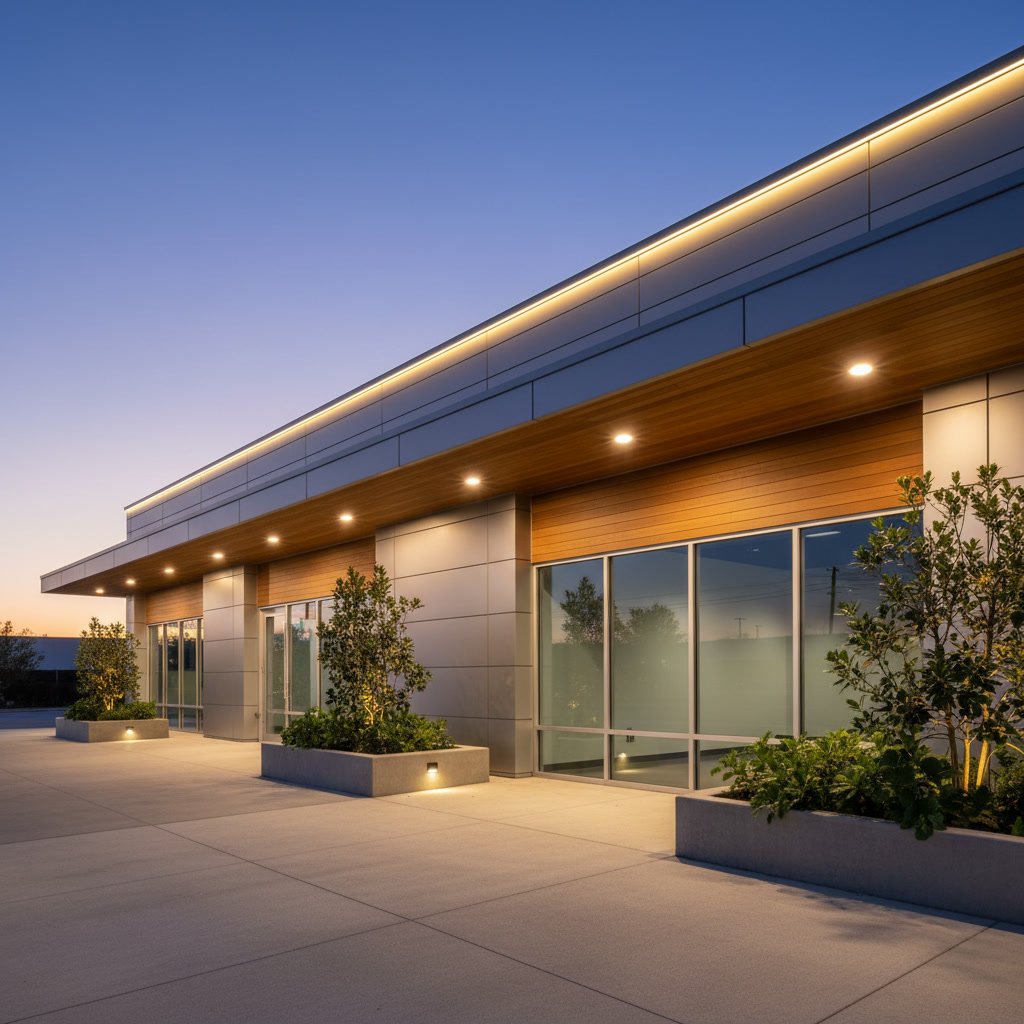
Architectural lighting highlights your building’s best features while creating visual interest that draws attention from passing traffic. These fixtures add dimension and character that flat, uniform lighting cannot achieve.
Wall Washers and Uplighting
Wall washers create smooth, even illumination across vertical surfaces, showcasing texture, color, and architectural details. Uplighting placed at ground level directs light upward to emphasize columns, facades, and signage. Both techniques add depth and drama that makes buildings more memorable.
Color temperature affects how your building appears at night. Warm whites between 2700K and 3000K create inviting, traditional appearances suitable for restaurants and hospitality businesses. Cooler whites from 4000K to 5000K project modern, professional images preferred by tech companies and medical offices.
Soffit and Recessed Lighting
Recessed fixtures mounted in overhangs and soffits provide subtle downlighting for entrances and walkways. They maintain clean architectural lines while directing light exactly where needed. Soffit lighting works especially well for businesses with covered walkways, porticos, or extended roof lines.
These fixtures need proper weatherproofing and insulation ratings to prevent moisture damage and heat loss through your ceiling. Commercial-grade housings withstand temperature extremes and wet conditions better than residential models.
Pro Tip: Combine multiple types commercial outdoor lighting at different heights and angles to eliminate shadows and create visual interest. Single-source lighting often creates harsh contrasts that reduce visibility and aesthetic appeal.
Landscape and Pathway Lighting for Commercial Properties
Well-lit pathways and landscaping guide visitors safely while softening the harsh industrial look that pure security lighting creates. These fixtures balance function with aesthetics, making your property welcoming without sacrificing visibility.
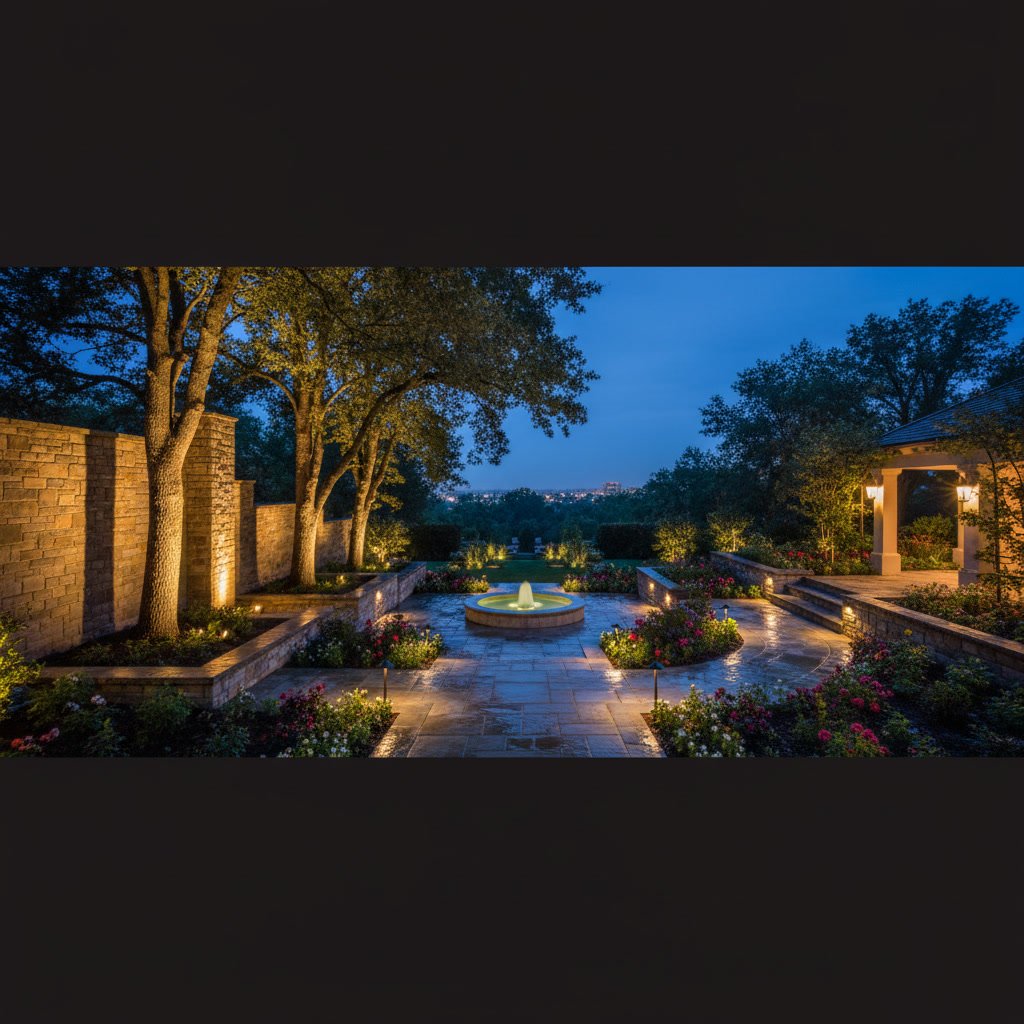
Landscape lighting for commercial properties typically uses low-voltage LED systems that consume minimal power while providing years of reliable operation. Path lights spaced every six to eight feet ensure continuous illumination along walkways without creating bright spots that cause glare.
Bollard lights offer excellent durability for high-traffic areas. These short, sturdy posts withstand accidental impacts better than stake-mounted fixtures while providing 360-degree illumination at ground level. Heights between 24 and 42 inches work best for directing light downward onto paths without shining into pedestrians’ eyes.
Shrub and tree uplighting adds dimension to landscaped areas while filling in gaps between building lights and pathway fixtures. Properly positioned landscape lights prevent your property from looking like a fortress while maintaining the visibility needed for safety and security. Our commercial lighting services include custom landscape designs that complement your building’s architecture.
Permanent LED Track Lighting Systems
Permanent LED track lighting has transformed how businesses handle seasonal decorations and year-round accent lighting. These systems mount along rooflines, overhangs, and architectural features, providing programmable color-changing capabilities without the labor and liability of annual installation and removal.
Track systems contain individually addressable RGB LED modules that change colors, patterns, and brightness through smartphone apps or automated schedules. You can display holiday themes during winter months, patriotic colors for Independence Day, and corporate branding year-round using the same installed hardware.
The financial case for permanent lighting becomes clear when you calculate annual costs for temporary installations. Professional holiday light installation typically costs between $800 and $3,000 per year depending on building size. That expense repeats every season, plus the time your staff spends coordinating installations.
Permanent systems require one installation with costs typically recovered within two to four years. After that, you control all lighting from your phone without ladders, storage, or recurring service fees. The same infrastructure that displays holiday colors also provides architectural accent lighting, security illumination, and special event theming throughout the year.
Event and Specialty Lighting Options
Some businesses need flexible lighting that adapts to changing needs. Restaurants with patios, event venues, hotels, and retail stores hosting special promotions benefit from systems that transform spaces without permanent alterations.
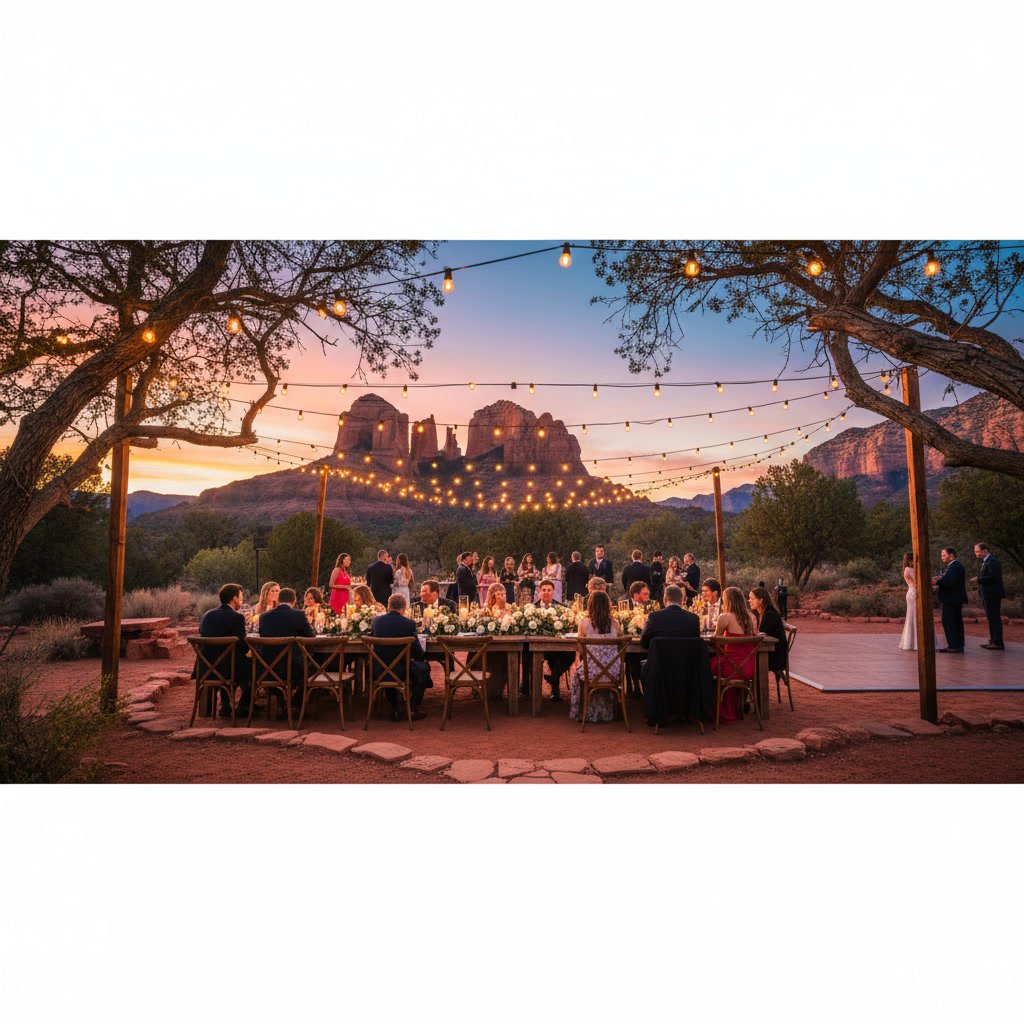
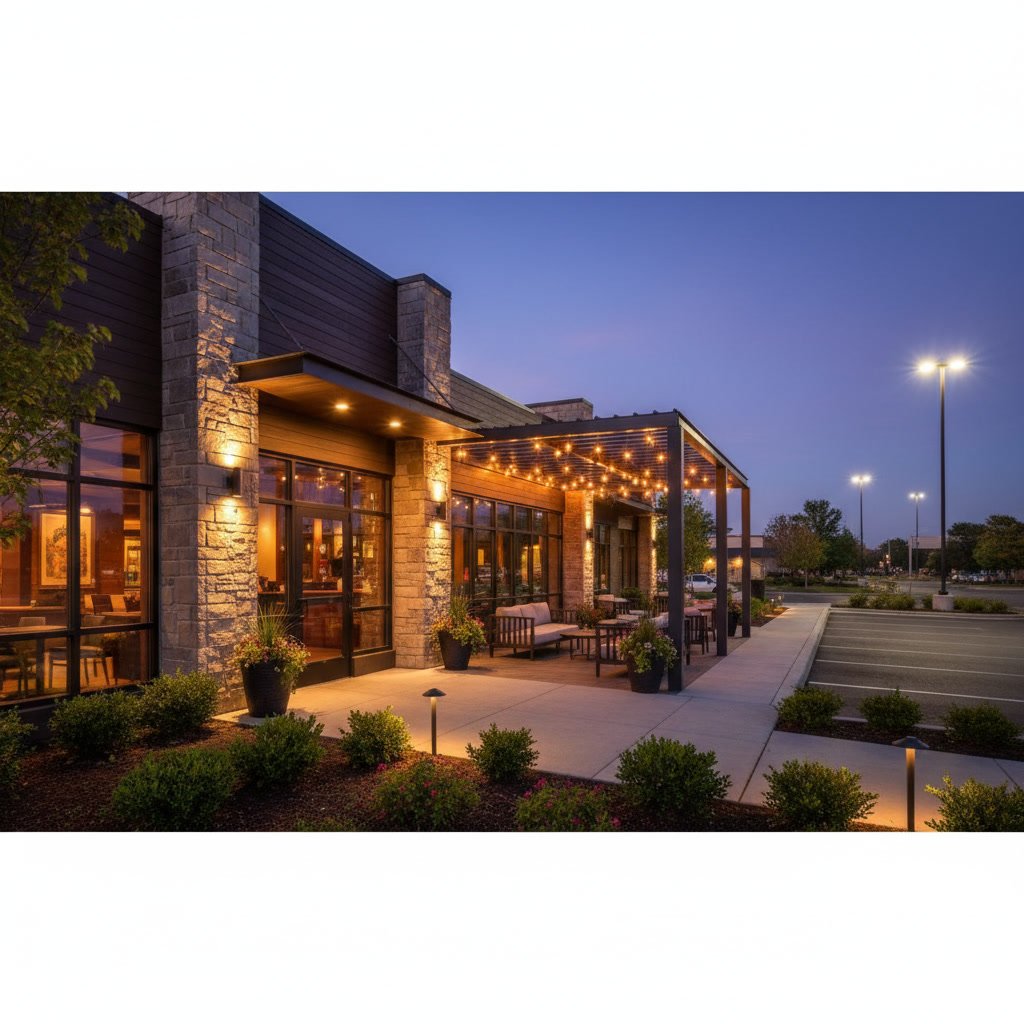
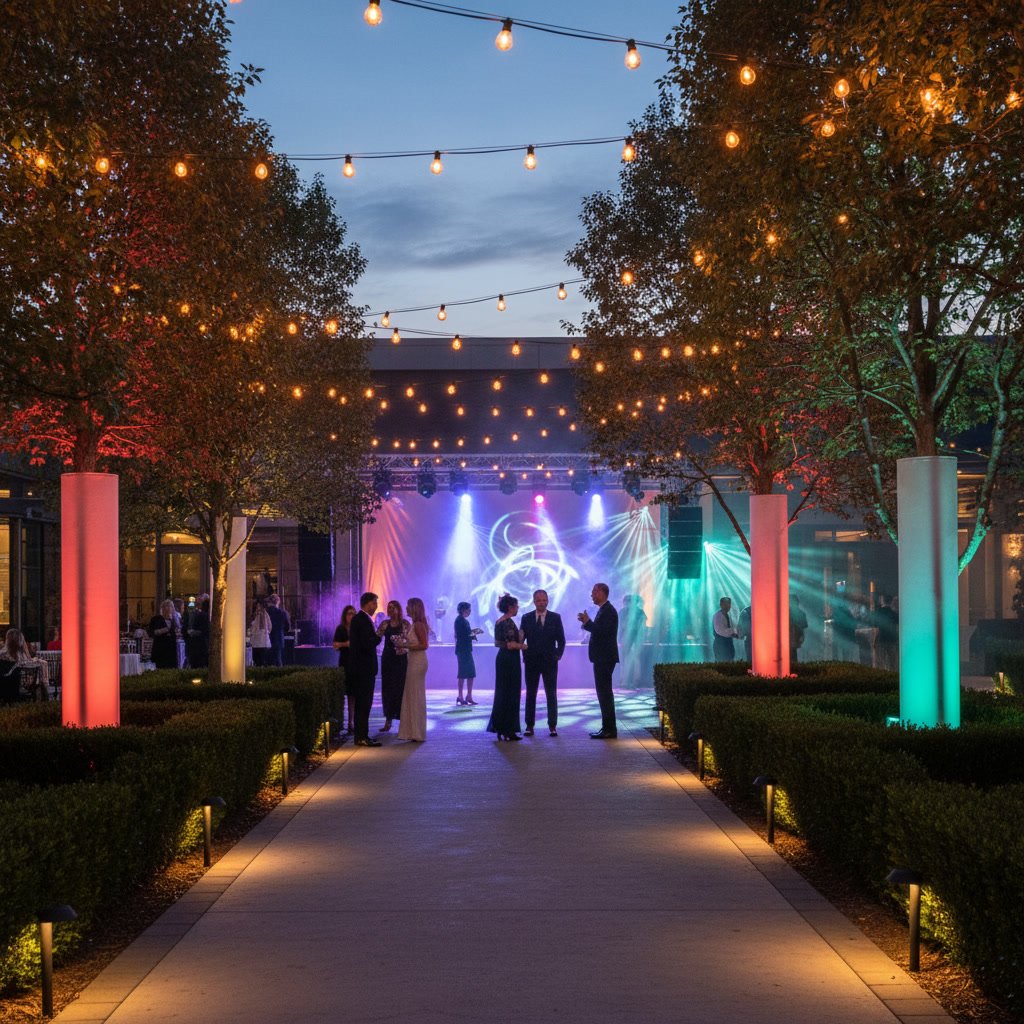
String lighting and cafe lights create inviting atmospheres for outdoor dining and gathering spaces. Commercial-grade string lights use shatterproof bulbs rated for continuous outdoor use, unlike hardware store versions that fail after one season. Proper installation includes secure mounting points and weatherproof connections that withstand Arizona wind and monsoon conditions.
Event lighting services can include temporary installations for grand openings, seasonal promotions, or special celebrations. Uplighting, pin spots, and color washes transform ordinary spaces into memorable experiences that encourage social media sharing and return visits.
Businesses in areas like Sedona and Prescott that host weddings and private events can offer enhanced packages by incorporating professional lighting design. The same fixtures work for corporate gatherings, holiday parties, and community events throughout the year.
Key Takeaway: Businesses that host multiple event types benefit most from modular lighting systems that combine permanent architectural fixtures with flexible temporary options. This approach provides consistency for daily operations while allowing creativity for special occasions.
Choosing the Right Fixtures for Your Business Type
Different businesses require different lighting strategies. Understanding which types commercial outdoor lighting work best for your industry helps you prioritize investments and avoid wasting money on fixtures that do not match your needs.
Retail Storefronts and Shopping Centers
Retail properties need bright, welcoming lighting that showcases window displays and makes customers feel safe approaching your entrance. Combine overhead canopy lighting with window accent lights and pathway fixtures that guide visitors from parking areas. Permanent LED systems offer excellent ROI by enabling seasonal themes that attract attention and encourage impulse visits.
Restaurants and Hospitality
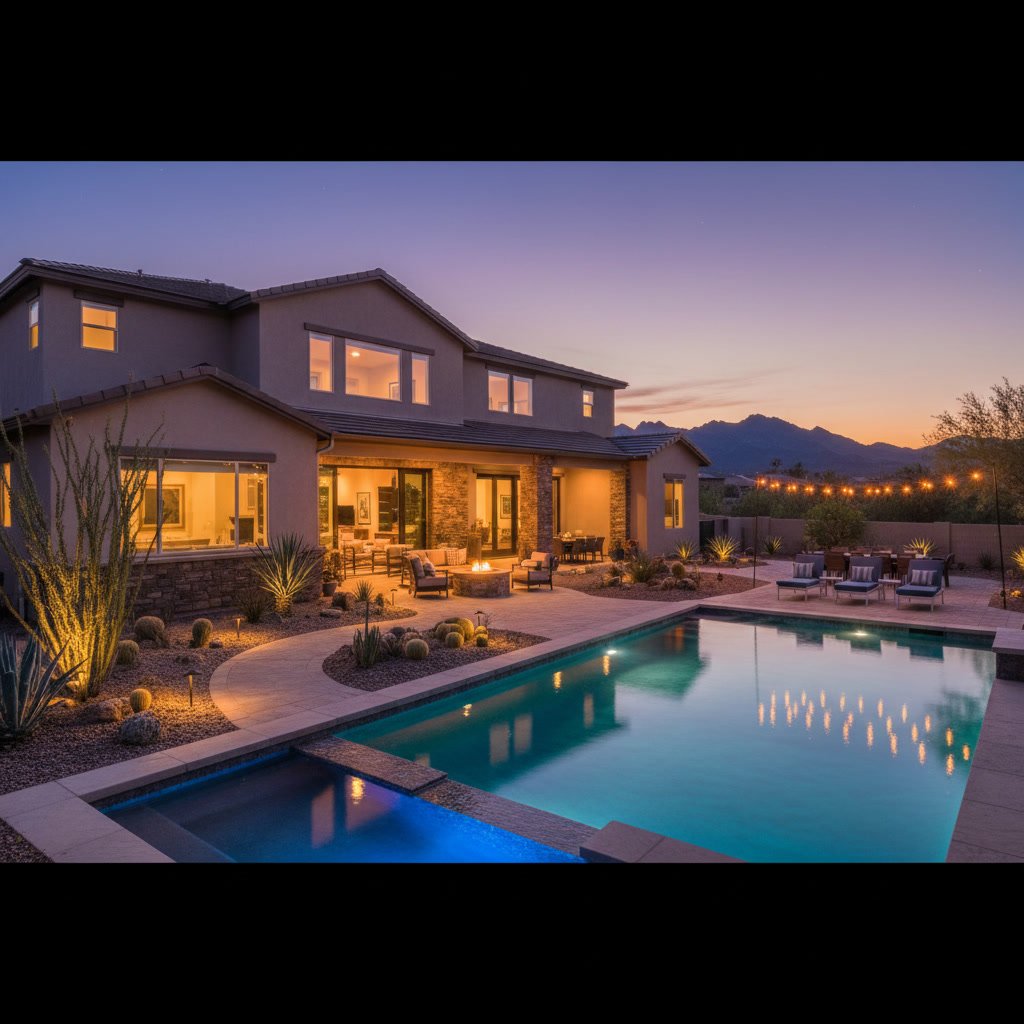
Dining establishments benefit from warmer color temperatures and dimmable systems that adapt to different times of day. Patio and outdoor seating areas require even, glare-free illumination that creates ambiance without interfering with conversation. String lights and architectural accents add character while security lighting keeps parking and walkways safe.
Office Buildings and Professional Services
Professional properties need clean, consistent lighting that projects competence and attention to detail. Focus on architectural uplighting that highlights building features, uniform parking lot coverage, and well-lit entrances that remain welcoming during evening appointments. Energy efficiency matters more for offices because lights operate on predictable schedules, making automation and smart controls particularly cost-effective.
Industrial and Warehouse Facilities
Industrial properties prioritize function over aesthetics, requiring high-output fixtures that illuminate loading docks, material storage, and vehicle circulation routes. Durability becomes critical in environments with heavy equipment, frequent vibrations, and exposure to dust or chemicals. LED high-bay and floodlight systems provide the lumens needed while reducing energy costs that compound over long operating hours.
Smart Controls and Automation
Modern commercial lighting systems integrate smart controls that reduce energy costs while improving functionality. Astronomical timers adjust on and off times automatically as daylight hours change throughout the year, eliminating manual adjustments and ensuring lights operate only when needed.
Motion sensors and occupancy detectors reduce runtime in low-traffic areas while maintaining full illumination in high-use zones. Dimming capabilities extend bulb life and reduce energy consumption during hours when full brightness is not required. Some systems adjust brightness based on ambient light levels, maintaining consistent illumination as natural light fades.
Networked systems allow facility managers to monitor and control multiple properties from central dashboards. You can identify failed fixtures immediately instead of waiting for customer complaints or routine inspections. Usage reports show exactly how much energy each zone consumes, helping you identify opportunities for additional savings.
Integration with security systems creates coordinated responses to detected motion or alarm triggers. Lights can automatically brighten when cameras detect movement, improving footage quality while deterring potential intruders. These features cost more upfront but deliver measurable returns through reduced energy bills, lower maintenance costs, and improved security.
Installation and Maintenance Considerations
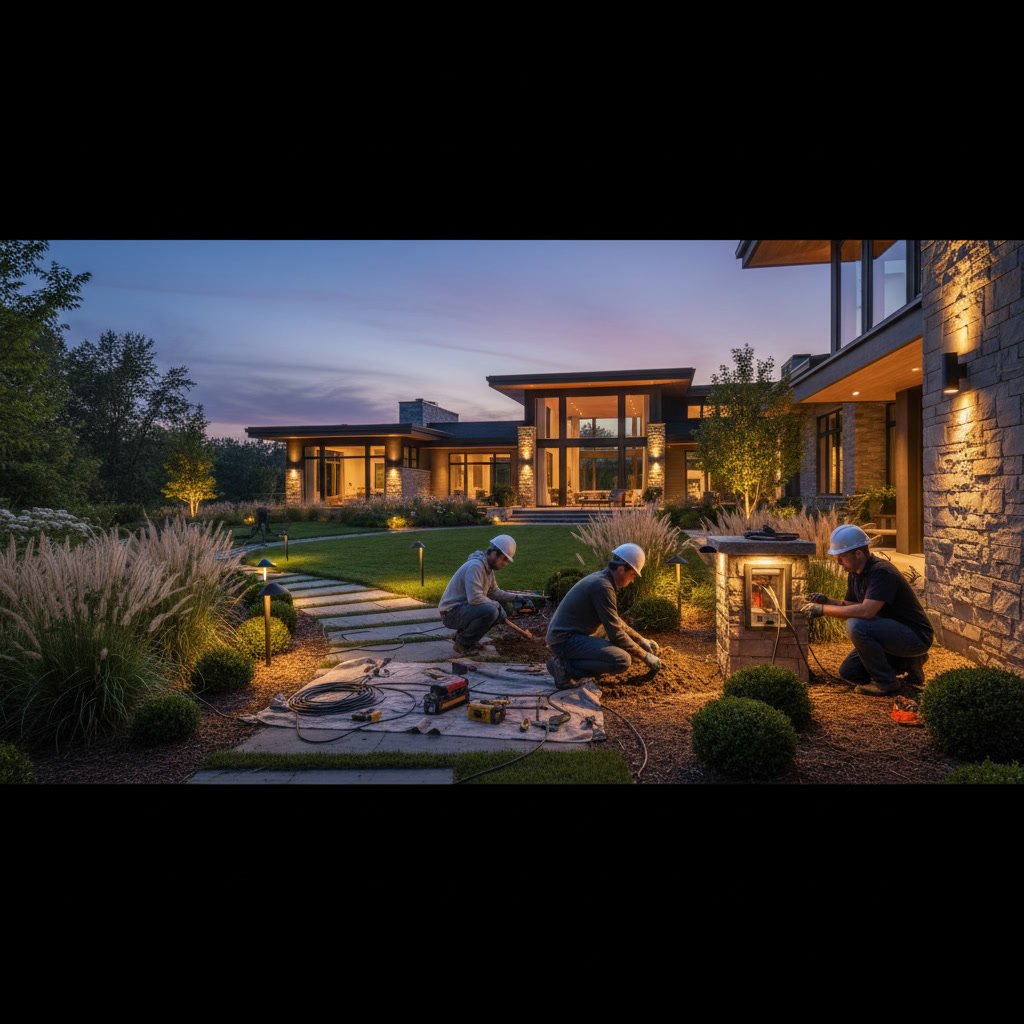
Professional installation ensures commercial lighting performs reliably for years without safety hazards or code violations. Licensed contractors understand local electrical codes, proper fixture placement, and weatherproofing requirements that DIY installations often miss.
Commercial installations require careful planning around business hours to minimize disruption. Experienced installers complete projects efficiently while maintaining job site safety and protecting your landscaping. They also handle permit applications and inspections required for electrical work in most municipalities.
Maintenance requirements vary by fixture type and quality. Commercial-grade LED systems typically require minimal service beyond periodic cleaning and occasional component replacement. Budget fixtures often fail within months, creating ongoing service calls that exceed any initial savings. Working with established contractors ensures you get properly rated equipment backed by manufacturer warranties and professional installation guarantees.
TRI-CITY Lightning serves businesses throughout Prescott Valley, Chino Valley, and surrounding communities with commercial-grade lighting solutions designed for Arizona conditions. Our installations use weatherproof components rated for extreme temperature swings, intense UV exposure, and monsoon weather that quickly destroys inferior products.
Cost Factors and Budget Planning
Commercial outdoor lighting costs depend on property size, fixture quality, installation complexity, and feature requirements. Small storefronts might invest $2,000 to $5,000 for comprehensive lighting, while large retail centers or office complexes easily spend $20,000 or more for complete systems.
Focus on total cost of ownership rather than initial price alone. Quality LED fixtures cost more upfront but consume 70 to 80 percent less energy than older technologies while lasting five to ten times longer. A $200 commercial-grade fixture that operates for 50,000 hours with minimal maintenance provides better value than a $50 residential fixture requiring replacement every 5,000 hours.
Many businesses phase installations by prioritizing security and safety lighting first, then adding architectural and landscape elements as budgets allow. This approach delivers immediate benefits while spreading costs across multiple budget cycles. Permanent LED systems often qualify for energy efficiency rebates from utility providers, reducing net costs by 10 to 20 percent.
Factor ongoing costs into your planning, including energy consumption, bulb replacement, cleaning, and repairs. LED systems drastically reduce these expenses compared to older technologies, often paying for themselves within three to five years through reduced utility bills and maintenance costs alone.
Frequently Asked Questions
What types of commercial outdoor lighting use the least energy?
LED fixtures use 70 to 80 percent less energy than traditional halogen, incandescent, or high-pressure sodium lights while producing equivalent or better illumination. Smart controls with motion sensors and dimming capabilities reduce consumption further by operating at full power only when necessary. Solar-powered fixtures eliminate grid energy use entirely but work best for supplemental applications rather than primary security or safety lighting.
How bright should commercial parking lot lighting be?
Industry standards recommend one to two foot-candles of illumination for general parking areas, with three to five foot-candles near entrances and high-traffic walkways. Higher brightness does not always improve safety, as excessive glare can reduce visibility and create harsh shadows. Proper fixture placement and beam angles matter more than raw lumens for achieving even, comfortable illumination.
Can I mix different types of commercial outdoor lighting on the same property?
Combining multiple fixture types creates the most effective and visually appealing results. Use high-output pole lights or floodlights for parking and security, architectural fixtures to highlight building features, and pathway lights to guide foot traffic. Maintain consistent color temperature across all fixtures, typically between 3000K and 4000K for commercial properties, to create cohesive appearance rather than a mismatched patchwork.
How often do commercial outdoor lights need maintenance?
Quality LED commercial fixtures require minimal maintenance beyond annual cleaning and periodic inspections. Budget two to four service visits per year for large properties to check connections, clean lenses, and identify potential issues before they cause failures. Lower-quality fixtures or older technologies need more frequent bulb replacements and repairs, increasing total ownership costs substantially over time.
Do commercial outdoor lighting systems require special permits?
Most municipalities require electrical permits for new commercial lighting installations or significant modifications to existing systems. Licensed contractors handle permit applications and coordinate required inspections as part of professional installation services. Operating without proper permits can result in fines, insurance complications, and liability issues if accidents occur. Always verify that your contractor pulls appropriate permits and follows local electrical codes.
Making Your Commercial Lighting Decision
Selecting the right types of commercial outdoor lighting transforms your business property from a liability risk into an asset that works around the clock. The most effective strategies combine security lighting that protects people and property, architectural features that showcase your building, and landscape elements that create welcoming environments. Smart controls and quality fixtures ensure reliable operation with minimal ongoing costs.
Professional installation by experienced contractors delivers systems designed specifically for your property’s layout, business type, and budget. TRI-CITY Lightning has helped businesses throughout the Prescott area create stunning, functional outdoor lighting since 2019. Our commercial-grade installations withstand Arizona’s challenging climate while providing years of reliable performance with minimal maintenance.
Ready to see what professional commercial lighting can do for your property? Contact TRI-CITY Lightning at +19283568919 to schedule a consultation. We serve businesses in Prescott, Prescott Valley, Chino Valley, Cottonwood, Sedona, and surrounding communities with custom lighting solutions that enhance safety, visibility, and curb appeal.