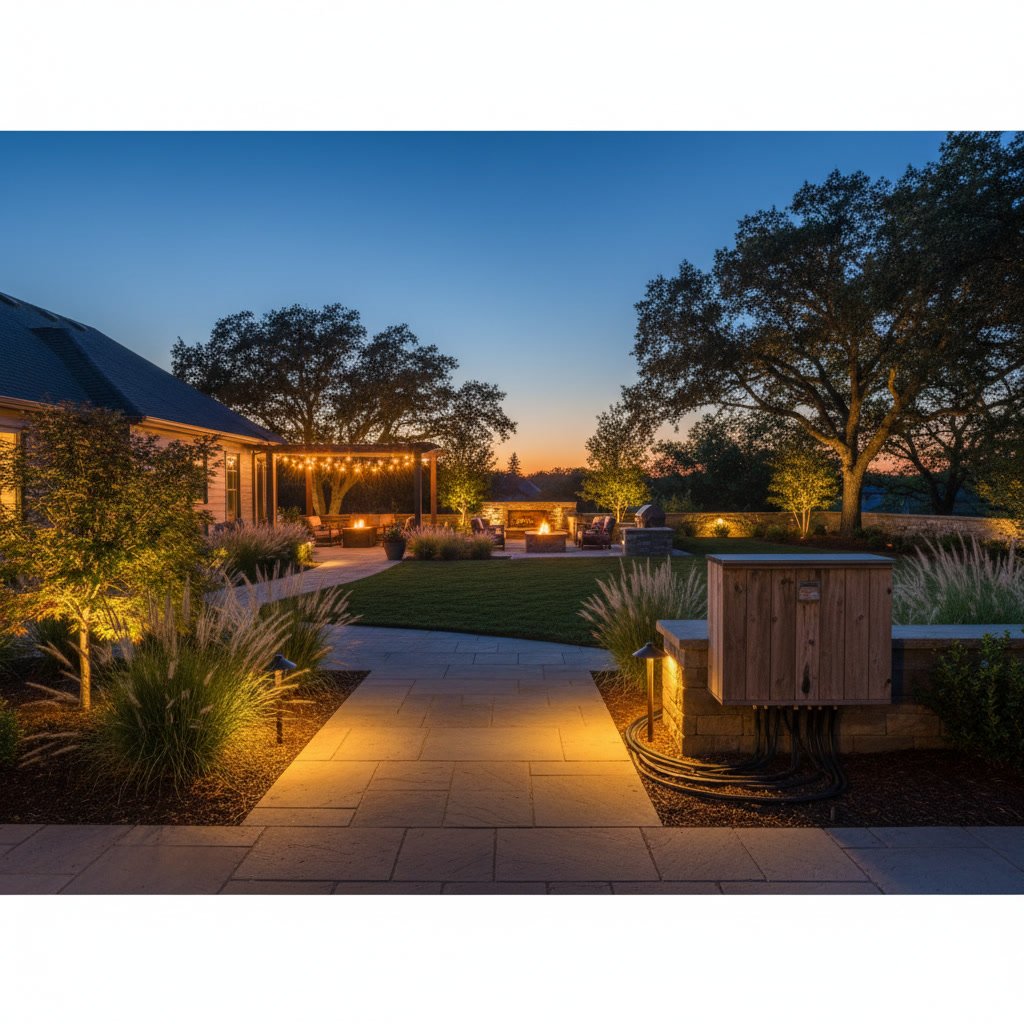

A professional landscape lighting installation process transforms outdoor spaces through careful planning, expert design, and precise execution. The journey begins with a detailed property assessment and ends with a fully functional system that enhances safety, beauty, and property value. Understanding each phase helps property owners set realistic expectations and appreciate the craftsmanship involved in creating stunning outdoor illumination.
Why Professional Installation Matters for Outdoor Lighting
Professional installation differs dramatically from simple DIY projects or basic fixture placement. Experienced installers understand voltage requirements, transformer sizing, wire gauge calculations, and weatherproofing techniques that ensure systems operate safely for years. They also recognize how light interacts with different surfaces, textures, and plant materials throughout the seasons.
The difference shows in both performance and longevity. Professional systems use commercial-grade components designed for continuous outdoor exposure, while proper installation techniques prevent common failures like water intrusion, voltage drop, and premature bulb burnout. Most importantly, trained installers know local electrical codes and safety requirements that protect both property and residents.
The Initial Consultation and Property Assessment in Prescott
Every project starts with a thorough site visit where the installer walks the property with the homeowner. This conversation covers goals, preferences, budget parameters, and any specific features the owner wants highlighted. The installer examines architectural details, landscaping elements, walkways, and existing electrical access points.
During this assessment, professionals measure distances, note sight lines from windows and outdoor living areas, and identify potential installation challenges like rocky soil or limited power sources. They also discuss practical concerns such as seasonal plant growth, water features that require special consideration, and areas where outdoor audio integration might enhance the space.

Custom Design and Lighting Plan Development
After the site visit, the installer creates a detailed lighting plan tailored to the specific property. This design phase considers multiple lighting techniques including uplighting for trees and architectural features, downlighting for pathways and seating areas, cross lighting for dimensional texture, and moonlighting for natural overhead illumination.
The plan specifies fixture types, beam angles, color temperatures, and exact placement locations. Professional designers balance aesthetic goals with practical needs, ensuring adequate illumination for safety without creating harsh glare or light pollution. They also plan the electrical layout, determining transformer locations, wire runs, and circuit distribution to maintain proper voltage across all fixtures.
One expert-level consideration often overlooked is lumen maintenance over time. Quality designers calculate initial output levels knowing that LED performance gradually decreases, ensuring the system still delivers adequate light years into the future rather than appearing perfect only at installation.
Equipment Selection and Material Preparation
Professional installers source commercial-grade components built for long-term outdoor exposure. This includes marine-grade brass or powder-coated aluminum fixtures, UV-resistant wire rated for direct burial, stainless steel hardware, and transformers with thermal protection and voltage regulation.
Before arriving at the property, installers prepare materials by pre-cutting wires to specified lengths, assembling fixtures with appropriate lamps, and organizing components by installation zone. This preparation minimizes on-site time and ensures the installation proceeds efficiently without multiple trips for additional supplies.
Step-by-Step Installation Process
The physical installation follows a systematic sequence that ensures quality and safety at every stage:
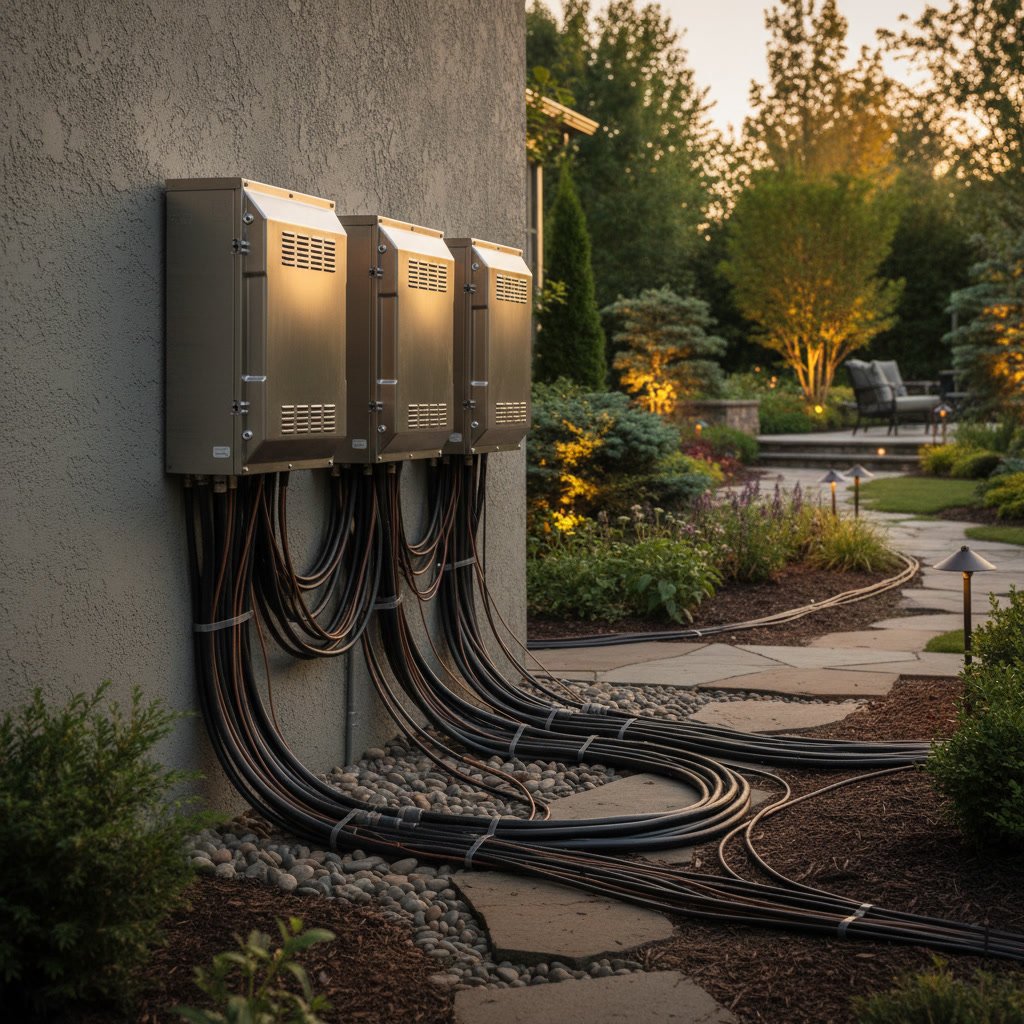
Transformer installation: The installer mounts the transformer near an outdoor-rated power source, typically on an exterior wall or inside a garage with wire access to the yard. Proper height, ventilation, and weather protection are critical for long-term reliability.
Wire routing: Low-voltage cable runs from the transformer to each fixture location. Professionals bury wire at appropriate depths (typically six to eight inches) to protect against damage from lawn equipment while allowing future access for maintenance or modifications.
Fixture placement and securing: Each light is positioned at the precise location and angle specified in the design. Installers use appropriate mounting methods for different surfaces, whether driving stakes into soil, attaching to hardscape with anchors, or securing to architectural elements with non-corrosive fasteners.
Electrical connections: Wire connections use waterproof connectors filled with dielectric grease to prevent corrosion. Professional installers test voltage at each fixture location to confirm proper power delivery before making final connections.
Adjustment and aiming: After activation, installers fine-tune each fixture’s angle and focus to achieve the designed effect. This stage requires working at night to see actual light output and make precise adjustments for optimal appearance.

Testing and System Activation
Before considering the job complete, installers conduct comprehensive system testing. They verify that all circuits function properly, check voltage levels across the system, ensure timers or smart controls operate correctly, and confirm that no fixtures exhibit flickering or other performance issues.
This testing phase also includes a final walkthrough with the property owner, demonstrating system operation and reviewing any programmable features. Installers adjust brightness levels if needed and make final tweaks to fixture positions based on the owner’s feedback.
Integration with Existing Systems
Many properties already have permanent lighting or other outdoor electrical systems. Professional installers coordinate new landscape lighting with existing infrastructure, ensuring compatible voltage levels, proper load distribution, and unified control options where desired.
For properties with smart home systems, installers can integrate landscape lighting controls with existing platforms, allowing centralized management of all outdoor illumination. This integration extends to event lighting capabilities, enabling property owners to create different scenes for various occasions.
Quality Control and Final Inspection
Professional installations include a thorough quality inspection covering both technical performance and aesthetic results. Installers verify that all burial points are properly backfilled and graded, connections are secure and waterproofed, fixtures are level and firmly mounted, and the overall visual effect matches the approved design.
This inspection also confirms that the installation meets local electrical codes and safety standards. Any landscaping disturbed during installation is restored to its original condition, and the work area is left clean and ready for immediate enjoyment.
Understanding even lighting principles helps property owners evaluate whether their installation achieves professional-quality results with balanced illumination across all designed areas.

Owner Education and Control Training
After installation, professional contractors provide detailed instruction on system operation. This includes demonstrating timer programming, explaining brightness adjustments, and showing how to reset the system if needed. Owners receive documentation covering warranty information, fixture specifications, and basic troubleshooting steps.
Quality installers also provide guidance on seasonal adjustments, explaining how changes in plant growth or foliage may require periodic fixture repositioning. They discuss lamp replacement schedules and offer recommendations for maintaining optimal performance over time.
Ongoing Maintenance and Support
The relationship with a professional installer extends beyond the initial installation. Reputable contractors offer maintenance programs that include annual inspections, fixture cleaning, connection checks, and bulb replacements as needed. These services ensure the system continues performing at peak levels year after year.
Maintenance visits also provide opportunities to adjust the system as landscaping matures, trees grow, or property owners add new features they want illuminated. Professional installers track system performance and can recommend upgrades or expansions that enhance the original design.
Transforming Your Property with Professional Installation
The landscape lighting installation process delivers far more than simple illumination. Professional installation creates a cohesive outdoor lighting system that enhances architecture, showcases landscaping, improves safety, and extends outdoor living hours throughout the year. The combination of expert design, quality materials, and skilled installation ensures results that DIY approaches simply cannot match.
TRI-CITY Lightning brings years of hands-on experience to every project, combining technical expertise with creative vision to transform outdoor spaces throughout the region. Whether you need landscape lighting for a residential property or commercial lighting for a business, professional installation ensures your investment delivers lasting value and beauty. Ready to illuminate your outdoor space with a professionally designed and installed system? Call +19283568919 to schedule your property assessment and discover how expert lighting installation can enhance your home or business.