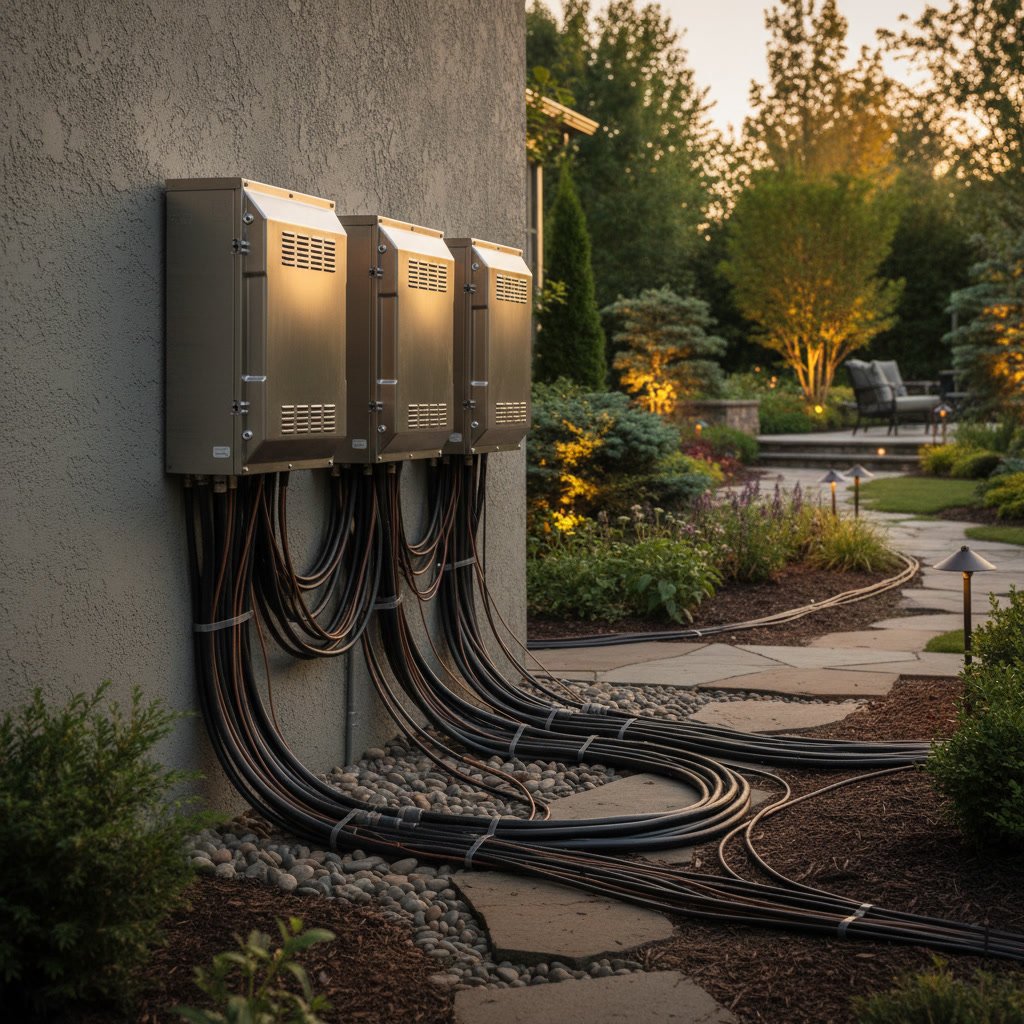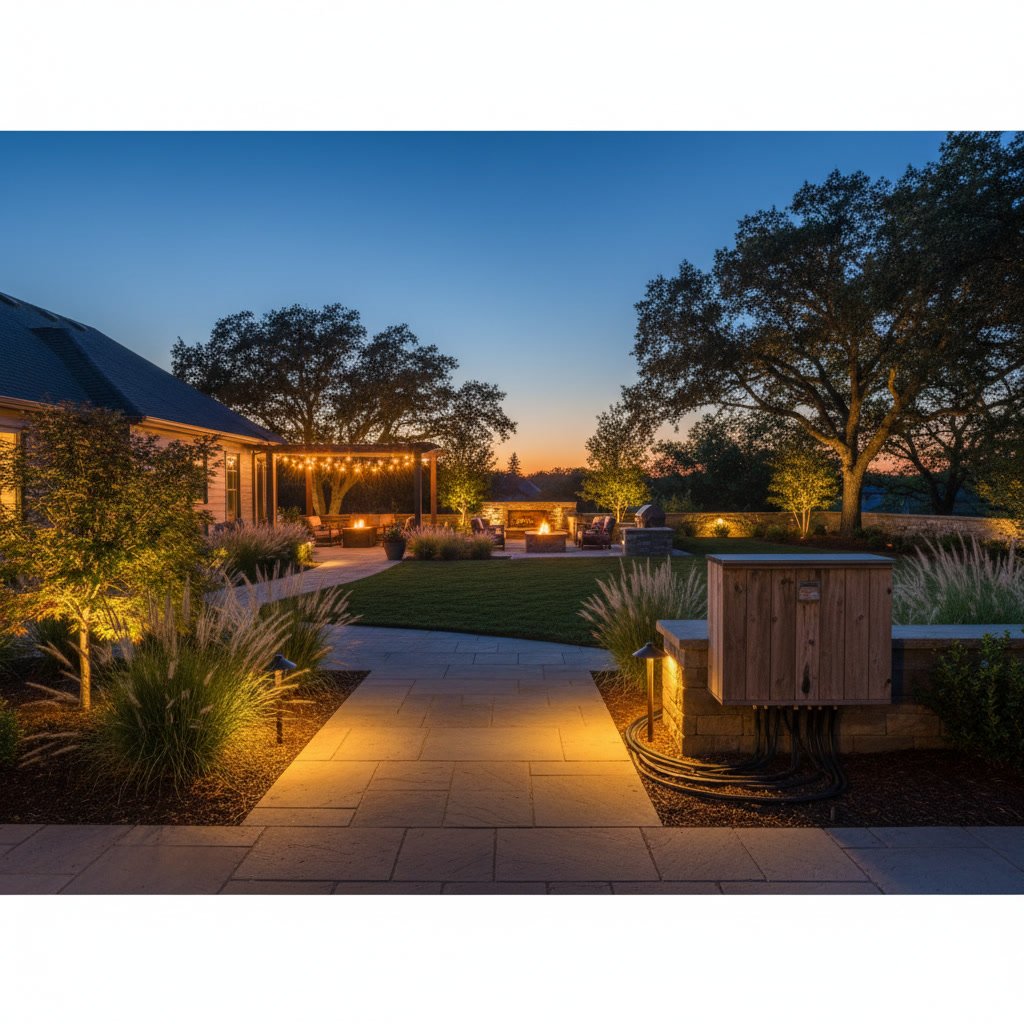
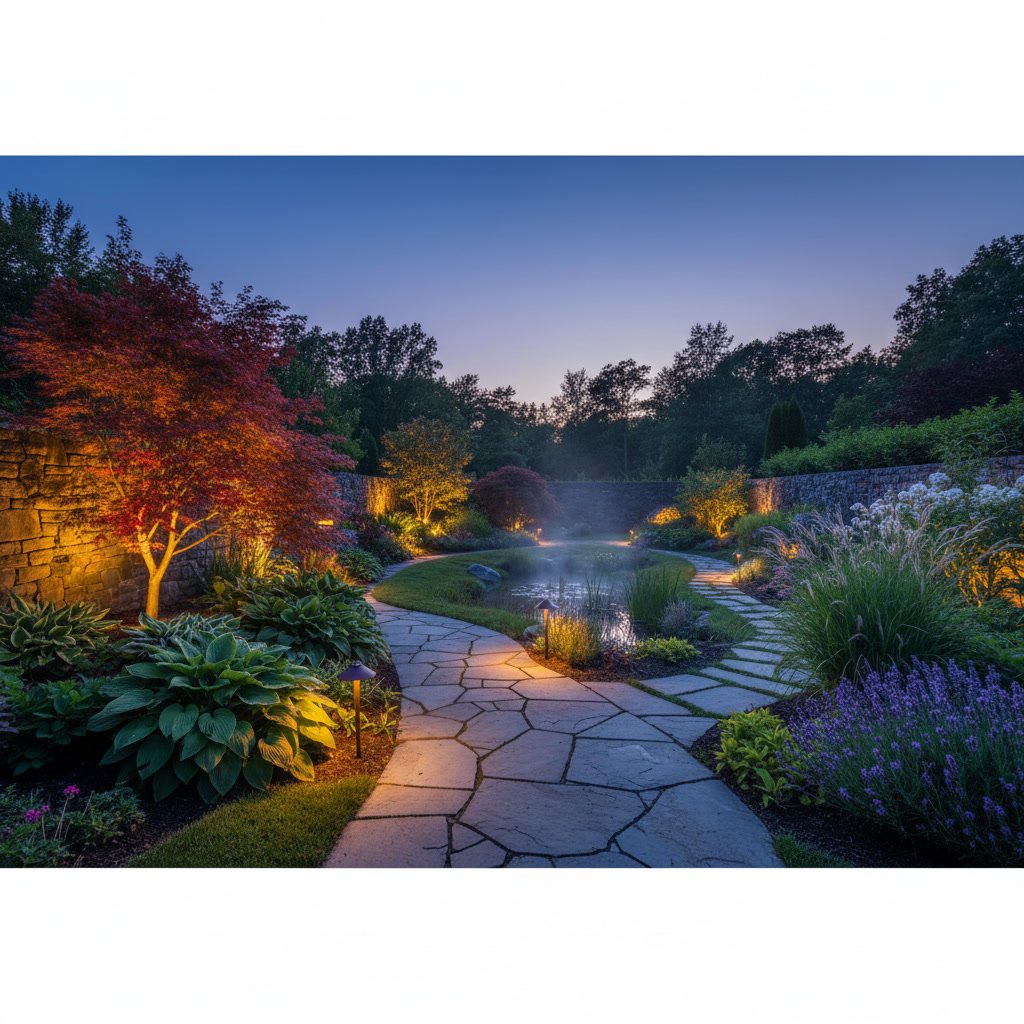
Selecting the proper landscape lighting color temperature determines whether your outdoor space feels warm and inviting or stark and clinical. Color temperature, measured in Kelvins (K), ranges from warm amber tones around 2200K to cool white hues above 5000K. Most outdoor applications benefit from temperatures between 2700K and 4000K, with warmer values creating cozy, traditional atmospheres and cooler values delivering crisp, modern aesthetics.
Understanding the Kelvin Scale for Outdoor Lighting
The Kelvin scale measures the color appearance of light sources. Lower numbers produce warm, yellowish light similar to candlelight or incandescent bulbs. Higher numbers create cool, bluish-white light that resembles daylight or overcast skies. This scale provides a standardized way to describe and compare light color across different fixtures and manufacturers.
A 2700K lamp emits a soft, golden glow often described as warm white. Moving up the scale, 3000K delivers a neutral warm tone popular in residential settings. At 4000K, the light appears crisp and white with minimal yellow cast. Beyond 5000K, the light takes on a noticeably blue tint that most homeowners find too harsh for living spaces.
Why Color Temperature Matters for Your Outdoor Design
The color temperature you choose affects how materials, plants, and architectural features appear at night. Warm temperatures enhance earthy tones like brick, stone, and natural wood while making foliage appear richer and more dimensional. Cool temperatures can wash out warm materials but excel at highlighting modern metals, concrete, and certain plant species with blue-green foliage.
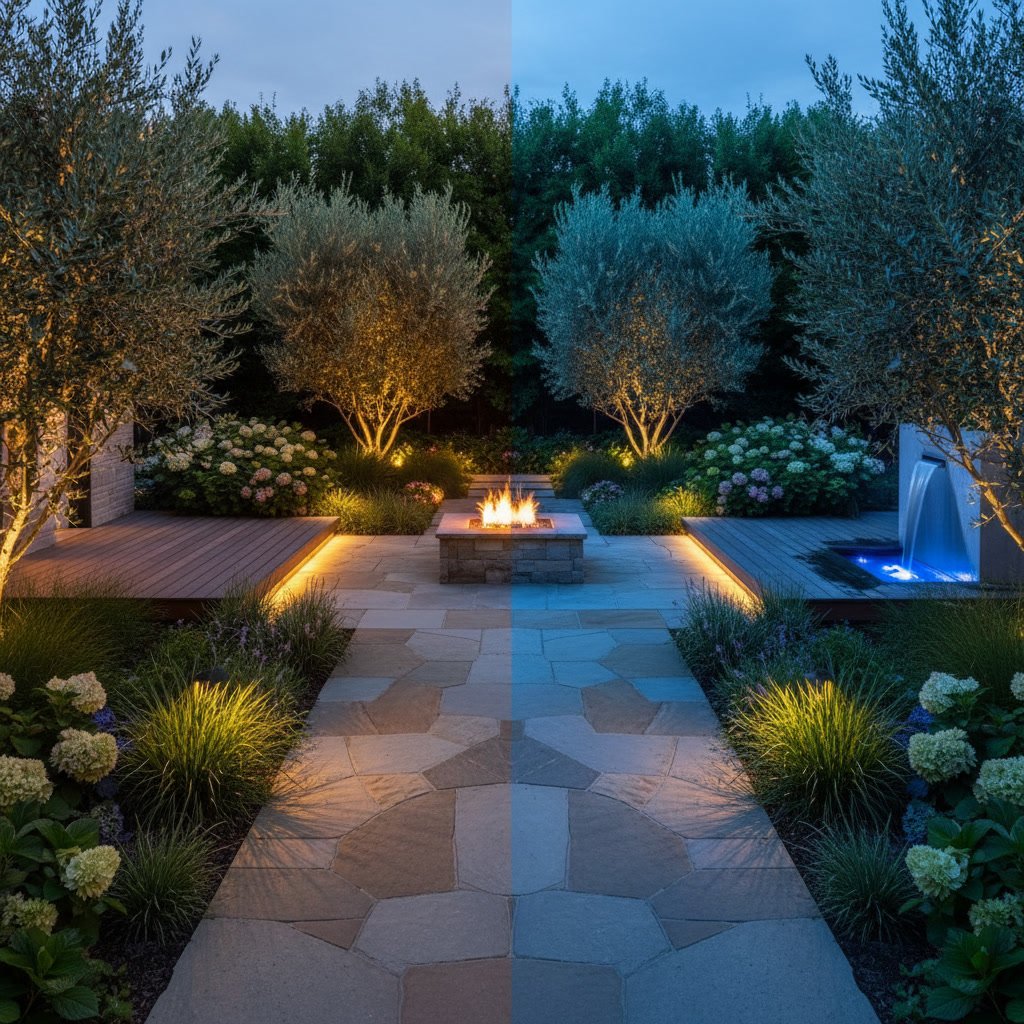
Beyond aesthetics, color temperature influences mood and functionality. Warmer light feels welcoming and encourages relaxation, making it ideal for entertainment areas and gathering spaces. Cooler light promotes alertness and visibility, which explains its popularity for security applications and task-oriented areas like outdoor kitchens or workspaces.
Warm White Versus Cool White in Prescott Landscapes
In the Prescott region, most properties benefit from warm white temperatures between 2700K and 3000K. These values complement the natural desert palette of adobe, sandstone, and native vegetation. The golden tones harmonize with Arizona sunsets and create continuity between day and evening aesthetics.
Cool white options around 4000K work well for contemporary homes with stucco, metal accents, or minimalist design elements. They also perform effectively for illuminating water features, where the crisp light creates dramatic reflections and highlights movement. Professional landscape lighting designers often mix temperatures strategically to create depth and visual interest across a property.
Matching Color Temperature to Specific Outdoor Applications
Different outdoor zones require different approaches to color temperature selection. Pathway lighting typically uses 2700K to 3000K to guide guests safely while maintaining a welcoming atmosphere. These warmer temperatures reduce glare and eye strain, making them safer for navigation in low-light conditions.
Uplighting for trees and architectural features often employs 2700K to create dramatic silhouettes and enhance texture. The warm tone brings out bark patterns, leaf detail, and masonry character that cooler temperatures might flatten. Accent lighting for sculpture or decorative elements may use slightly cooler 3500K to 4000K values to create contrast and draw attention.
Security and perimeter lighting sometimes benefits from 4000K to 5000K temperatures because the cooler light improves color rendering for camera systems and allows better visual identification at distance. However, many homeowners find these temperatures too institutional and opt for 3000K as a compromise between warmth and visibility.
How Material and Plant Selection Affects Temperature Choice
Your home’s exterior materials provide important clues about optimal color temperature. Red brick, cedar siding, and terracotta tile all glow beautifully under 2700K to 3000K lighting. These warm sources amplify the natural warmth in the materials without distorting their color.
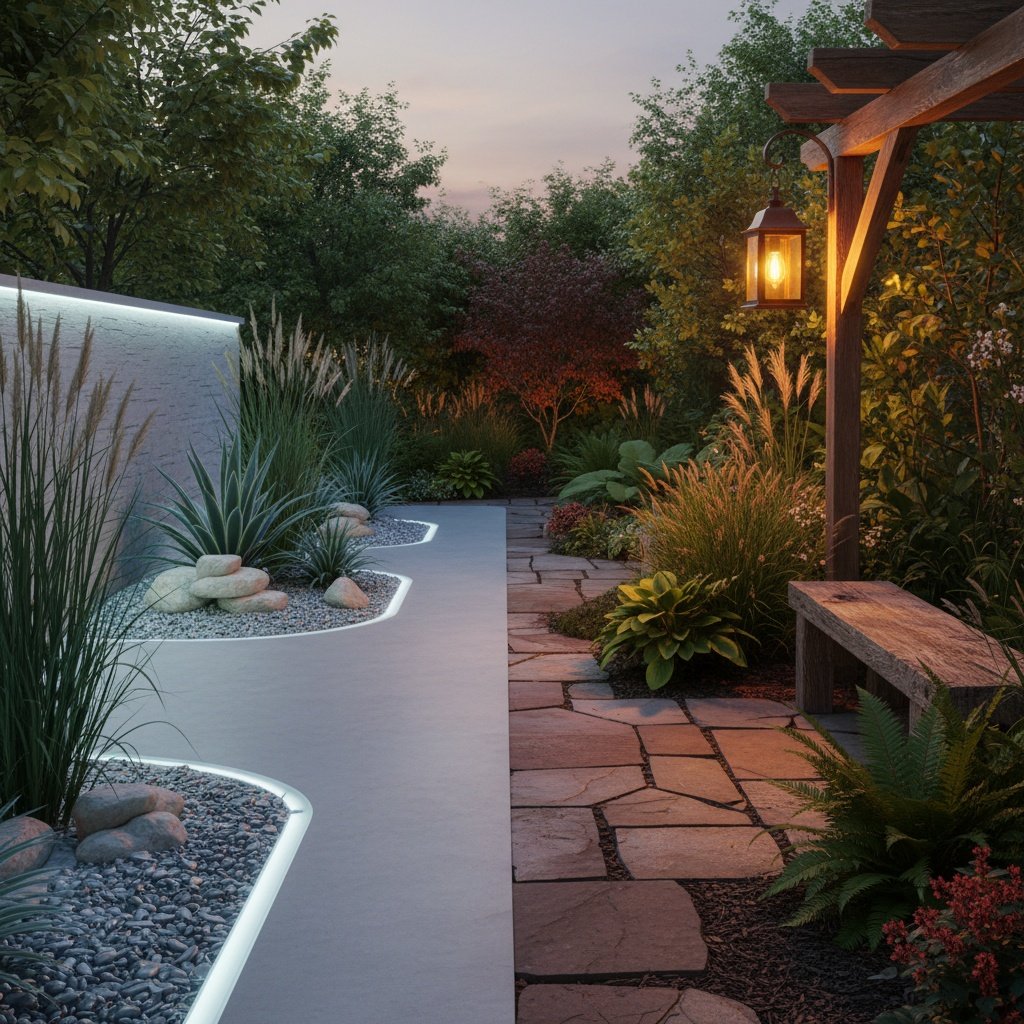
Painted surfaces require more careful consideration. Off-white and beige exteriors accept a wide temperature range but look most natural under 3000K. Gray and white modern exteriors often appear most striking under 3500K to 4000K, where the cooler light creates clean contrast and emphasizes architectural lines.
Plant lighting demands attention to foliage color. Green and yellow-toned plants respond well to warm temperatures that enhance their natural vibrancy. Blue-green succulents, silver-leaved plants, and purple foliage often benefit from slightly cooler 3500K sources that don’t muddy their distinctive hues. Understanding these relationships helps create even lighting that enhances curb appeal rather than fighting against your landscape design.
Consistency Versus Variety Across Your Property
One common question involves whether to use a single temperature throughout or vary temperatures by zone. Most professional installations use one primary temperature for 80 to 90 percent of fixtures to create visual cohesion. This approach prevents the disjointed appearance that results from mixing too many different color temperatures.
Strategic variation works when you intentionally create distinct zones. A pool area might use 4000K while the surrounding landscape uses 3000K, clearly delineating the recreation space. Commercial lighting projects often employ this technique to differentiate parking, entry, and landscape zones while maintaining professional cohesion within each area.
Avoid mixing temperatures within a single visual field. When two fixtures illuminate the same wall or tree from different angles, they must share the same color temperature. Mismatched sources create an unprofessional appearance and confuse the eye, undermining the entire lighting design.
Testing Color Temperature Before Full Installation
The single most valuable step you can take involves testing actual fixtures on your property before committing to a full installation. Manufacturer specifications and showroom displays rarely capture how a specific temperature will interact with your unique materials, plants, and surrounding environment.
Request sample fixtures in your top two or three temperature choices. Install them temporarily in key locations and evaluate them after dark for several nights. Notice how they affect different materials, how they feel from various viewing angles, and whether the temperature feels appropriate to your home’s style. What looked perfect at 3000K might feel too yellow on your specific brick, or your presumed preference for 4000K might feel cold and unwelcoming in practice.
Pay attention to how temperatures appear at different times of night. A temperature that feels perfect at dusk may seem different at midnight when ambient light disappears. Consider how temperatures interact with moonlight, which adds a cool blue cast that can shift perceived color temperature during certain lunar phases.
Step-by-Step Temperature Selection Process
Start by identifying your home’s dominant exterior materials and cataloging their undertones. Warm materials push toward lower temperatures, while cool materials accept higher values. Next, consider your preferred aesthetic: traditional and cozy favors 2700K to 3000K, while contemporary and dramatic leans toward 3500K to 4000K.
Evaluate existing light sources on your property. If you have exterior sconces, porch lights, or garage fixtures with a color temperature you love, match that value in your landscape fixtures for seamless integration. When implementing permanent lighting solutions, this consistency becomes especially important since the fixtures will be visible year-round.
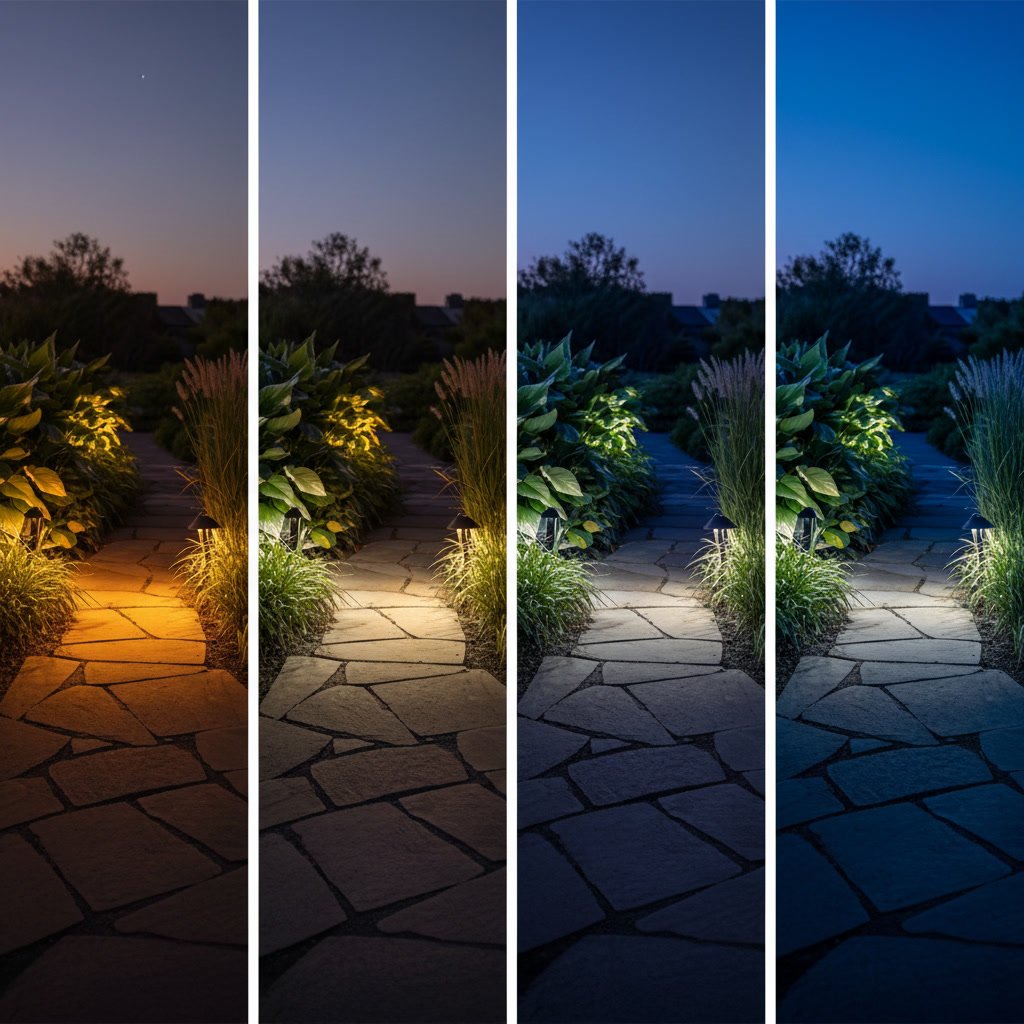
Review your functional needs by zone. Security areas may require cooler, brighter temperatures while entertaining spaces benefit from warmer values. Create a property map noting preferred temperatures for each zone, then look for a dominant choice that serves the majority of your property.
Finally, consult with an experienced installer who understands regional preferences and has completed projects on properties similar to yours. They can show you actual installations with different temperatures and help you avoid costly mistakes that would require fixture replacement.
Color Rendering Index and Temperature
While selecting landscape lighting color temperature, also consider Color Rendering Index (CRI), which measures how accurately a light source reveals true colors compared to natural sunlight. CRI ranges from 0 to 100, with higher values providing better color accuracy. Most quality outdoor LED fixtures offer CRI ratings between 80 and 95.
A fixture with 3000K temperature but low CRI around 70 will make colors appear dull and muddy despite the warm tone. The same 3000K temperature with CRI above 90 renders colors vibrantly and naturally. This distinction matters especially when lighting flowering plants, decorative elements, or architectural details where color accuracy enhances visual impact.
Specify both temperature and minimum CRI when selecting fixtures. Professional-grade products used during a professional landscape lighting installation typically include specifications for both values, ensuring you receive predictable, high-quality results.
Adjustable and Tunable White Technology
Recent advances in LED technology enable fixtures that adjust color temperature on demand. Tunable white systems allow you to shift from 2700K to 5000K using a smartphone app or control panel. This flexibility lets you create warm, intimate settings for evening gatherings and switch to cooler, energizing light for morning activities in the same space.
While appealing in theory, tunable systems add complexity and cost that most residential applications don’t require. They make more sense for event lighting or commercial properties that host varied functions requiring different moods. For permanent residential installations, selecting a single optimal temperature typically delivers better value and simpler operation.
If you find yourself torn between two temperatures, that uncertainty often indicates you haven’t clearly defined your priorities or tested options on your actual property. Proper testing almost always reveals a clear preference that eliminates the need for adjustable technology.
Creating Timeless Outdoor Lighting Through Smart Temperature Choices
The right color temperature transforms your outdoor spaces from merely illuminated to thoughtfully designed. By matching temperature to materials, understanding the impact on mood and functionality, and testing options before full commitment, you create lighting that enhances your property’s beauty and value for years to come. Remember that warmer temperatures between 2700K and 3000K serve most residential applications exceptionally well, creating inviting atmospheres that complement natural materials and traditional aesthetics.
TRI-CITY Lightning brings expert temperature selection and precise installation to properties throughout the region. Our team tests temperatures on your specific materials and provides honest recommendations based on years of experience creating stunning outdoor environments. Whether you need subtle accent lighting or comprehensive property illumination, we ensure every fixture contributes to a cohesive, beautiful result. Contact us at +19283568919 to schedule a consultation and discover how professional color temperature selection transforms your outdoor spaces.