Sedona’s stunning natural beauty draws couples from across the country, but even the most spectacular red rock backdrop needs the right lighting after sunset. Choosing wedding lighting for outdoor venues requires balancing aesthetics, safety, and the unique challenges of desert environments. Whether you’re planning an intimate ceremony at sunset or a reception under the stars, the lighting you select will define the mood, highlight architectural and natural features, and ensure your guests feel comfortable throughout the evening.
This guide walks you through every consideration for selecting wedding lighting at outdoor venues in and around Sedona, from timing and power sources to the specific types of fixtures that work best in Arizona’s high desert climate.
Understanding Sedona’s Unique Lighting Challenges
Sedona sits at approximately 4,500 feet elevation, which means cooler evenings even in summer and limited twilight compared to lower elevations. The transition from daylight to darkness happens faster than many couples expect, typically within 30 to 45 minutes after sunset.
Your venue’s natural surroundings also play a crucial role. Red rock formations reflect warm tones beautifully when lit correctly, but they can also create deep shadows that swallow ambient light. Wind is another factor, particularly in spring and early summer, when gusts can exceed 20 mph and affect hanging fixtures or lightweight decorative elements.
Most outdoor venues in the Sedona, AZ area offer either limited electrical infrastructure or require generators for full-scale lighting setups. Understanding your power options early in the planning process prevents last-minute surprises and helps you budget accurately.
Types of Wedding Lighting for Outdoor Venues
The right combination of lighting types creates depth, ambiance, and functionality. Most successful outdoor weddings use three to five different lighting techniques layered together.
String and Bistro Lights
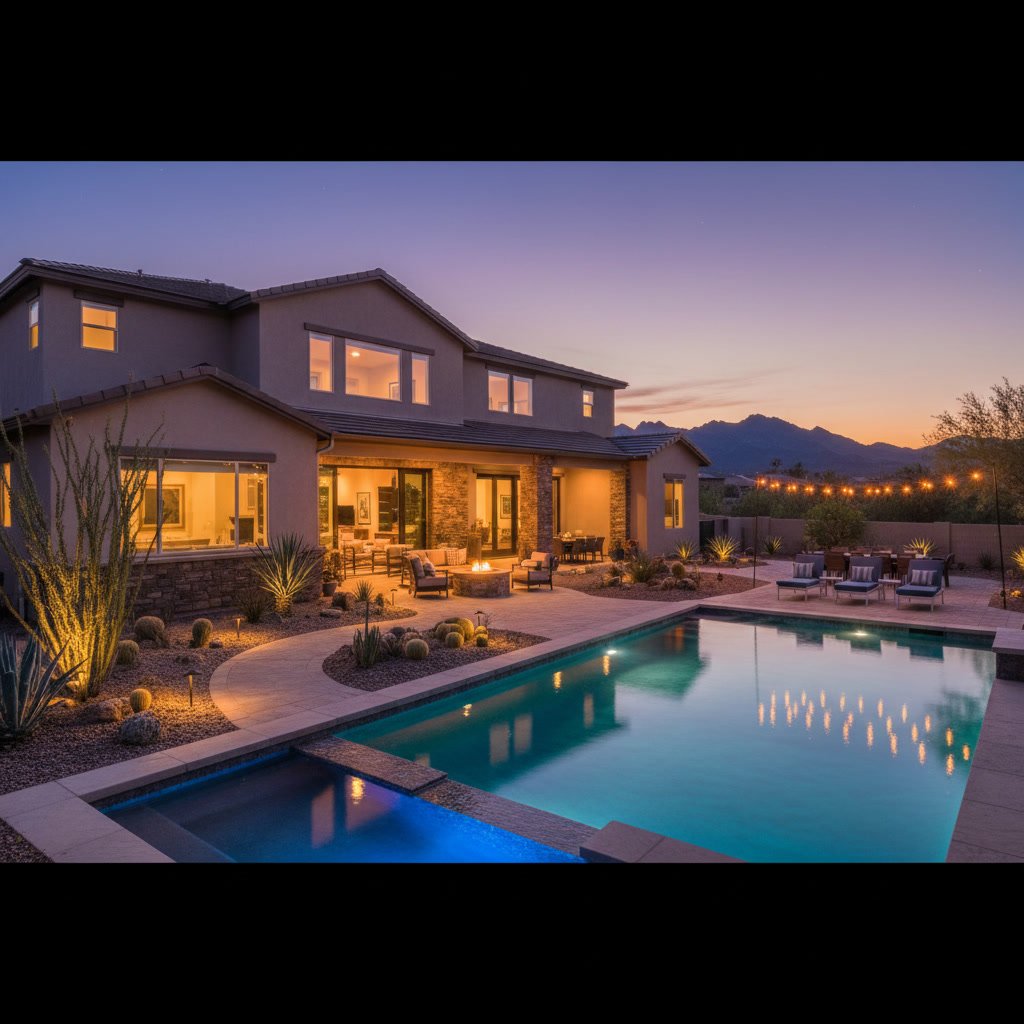
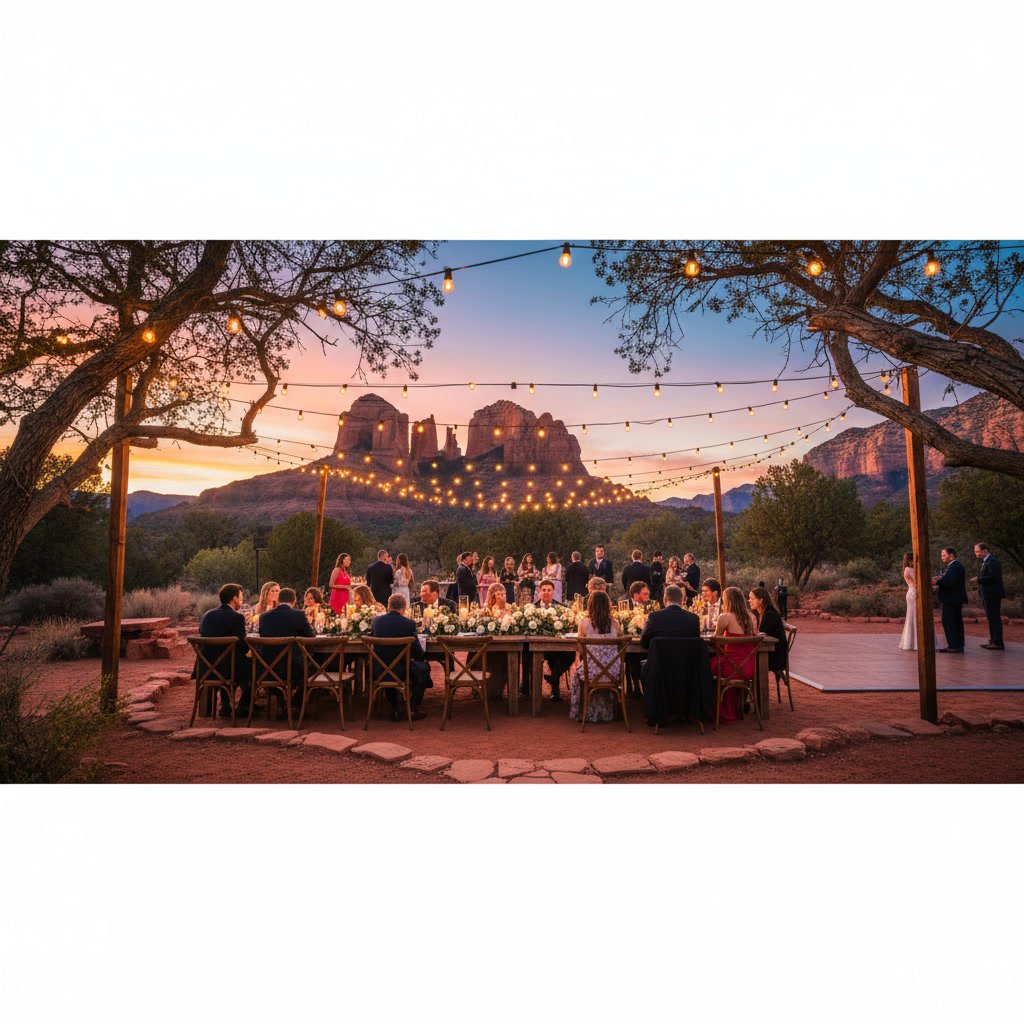
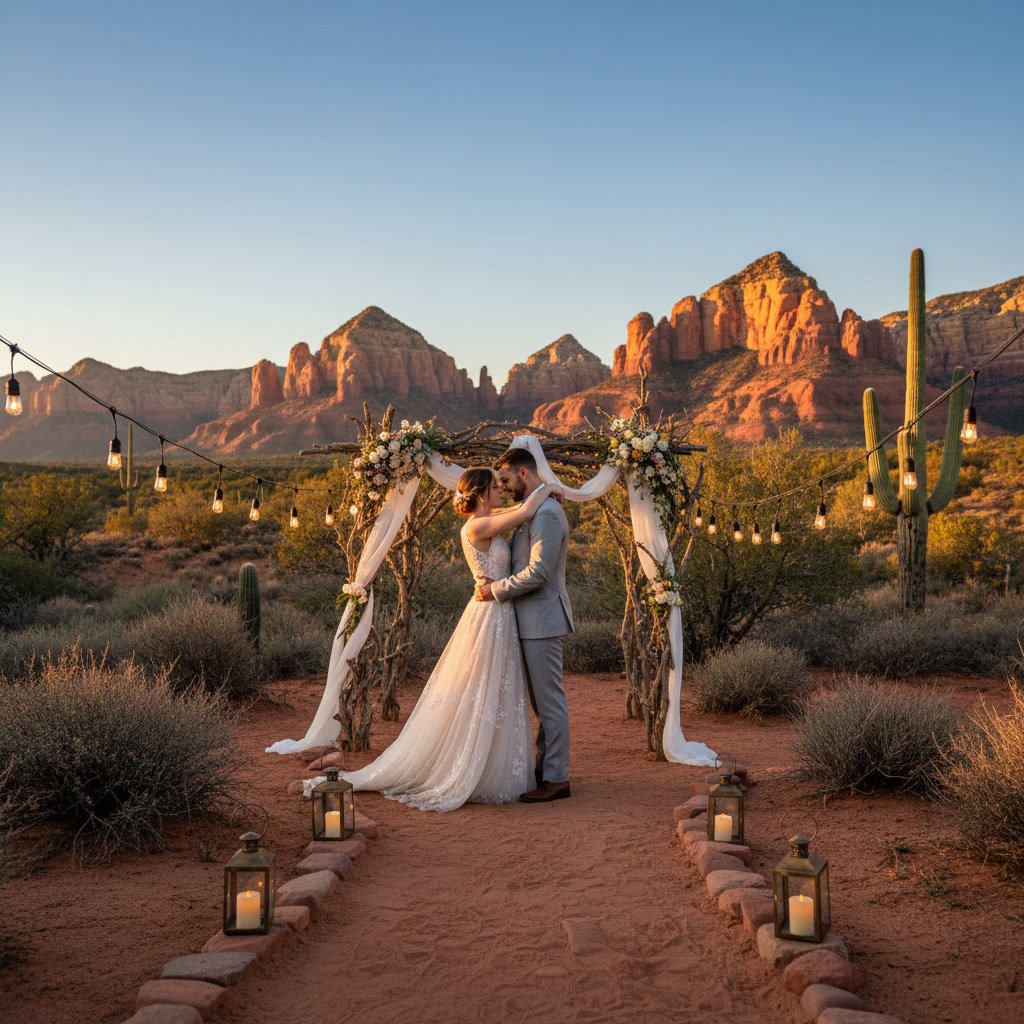
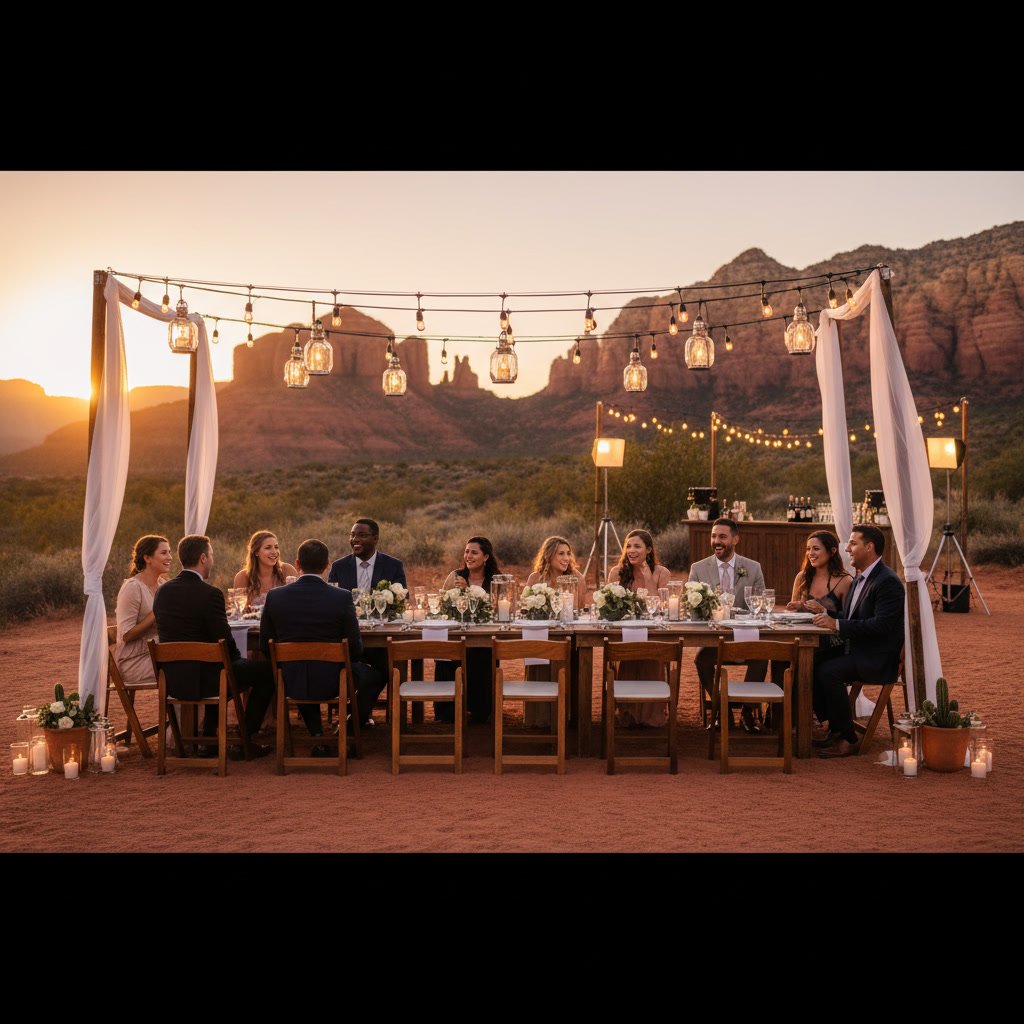
String lights remain the most popular choice for wedding lighting outdoor venues because they provide even overhead illumination while creating a romantic canopy effect. Commercial-grade bistro lights use larger Edison-style bulbs spaced 18 to 24 inches apart and are designed to withstand wind and temperature changes.
When planning string light installations, calculate coverage based on one strand per 10 to 15 feet of reception space. For a 30-by-40-foot tent or open-air dining area, expect to need 12 to 16 strands in a crisscross pattern for adequate coverage.
Uplighting and Wash Lights
Uplighting transforms vertical surfaces, whether that’s red rock formations, venue buildings, or decorative elements like arbors and pergolas. LED uplights offer the advantage of adjustable color temperature, allowing you to shift from warm amber during cocktail hour to cooler tones for dancing.
Position uplights 3 to 6 feet from the surface you’re illuminating, angled at roughly 45 degrees. Battery-powered LED units eliminate the need for visible power cables, which is especially valuable on uneven terrain or when lighting natural rock features.
Pathway and Safety Lighting
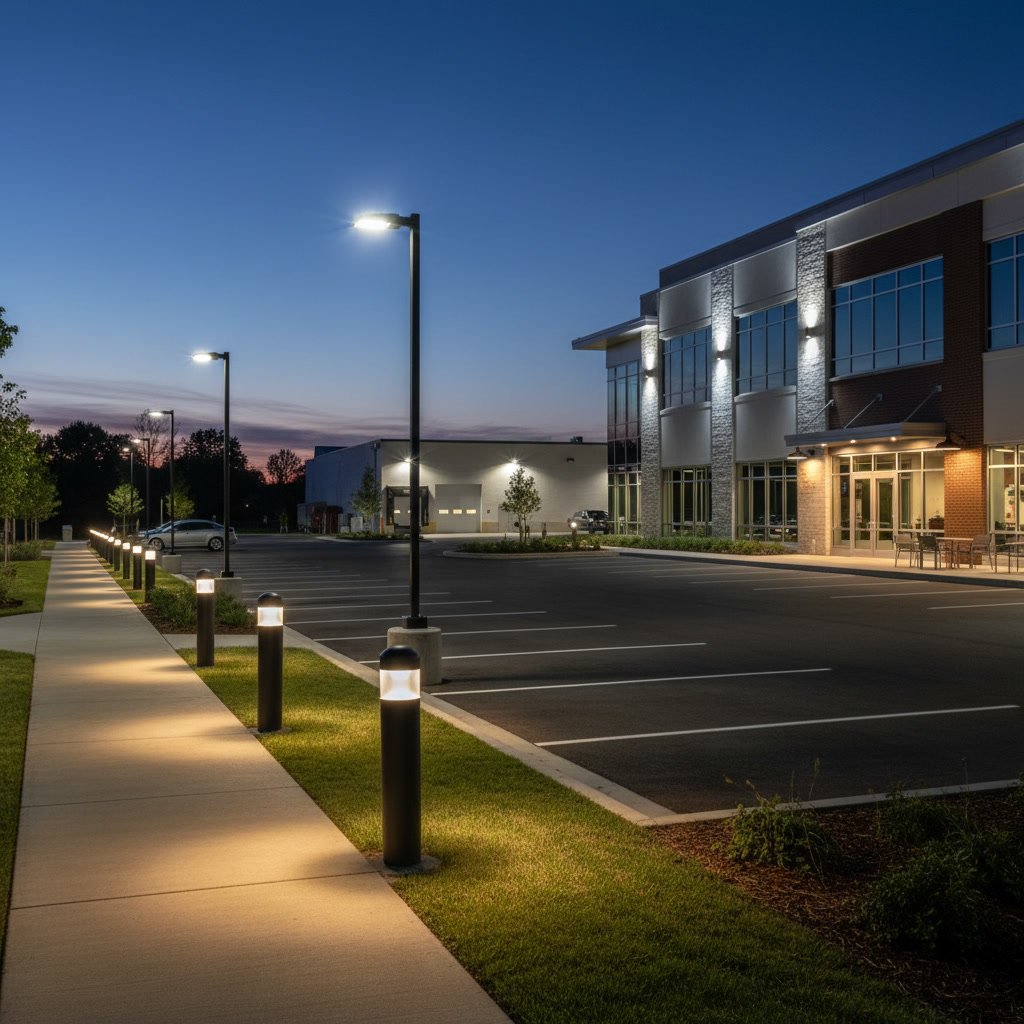
Guest safety requires clear illumination of walkways, stairs, uneven ground, and transitions between spaces. Low-profile LED pathway lights should be installed every 6 to 8 feet along primary routes, with brighter fixtures at stairs or elevation changes.
For venues with gravel paths or natural terrain, solar-powered stake lights often prove insufficient. Commercial-grade LED pathway fixtures wired to a central power source provide consistent, reliable illumination throughout the evening.
Specialty and Accent Lighting
Pin spotting highlights centerpieces, cake tables, and gift areas with focused beams that draw attention without overwhelming the space. Gobo lighting projects patterns onto dance floors, walls, or rock formations, adding personalized touches like monograms or decorative designs.
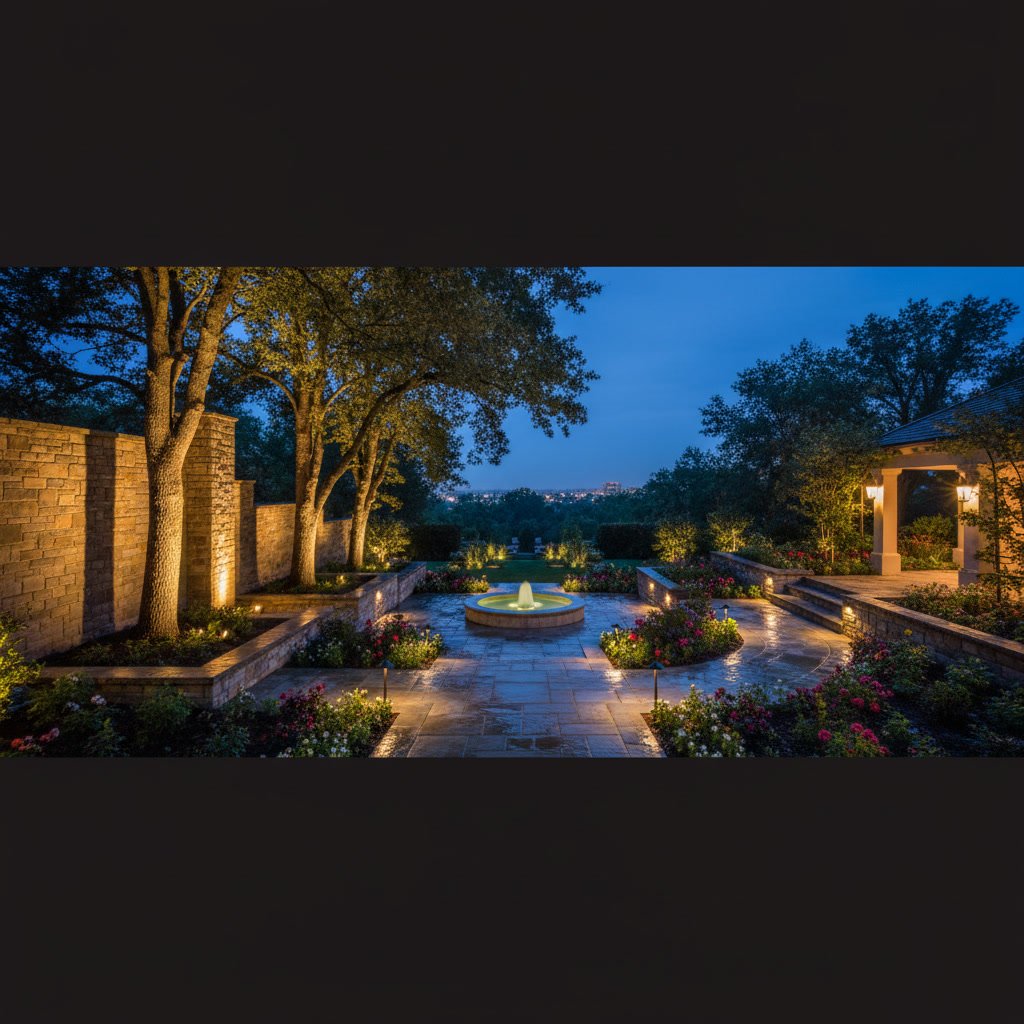
If your venue includes water features, trees, or architectural elements worth highlighting, consider adding a few dedicated accent lights. Even two or three well-placed fixtures can dramatically enhance the venue’s visual depth.
Matching Lighting to Your Wedding Timeline
The sequence of your wedding events determines which lighting elements need to be active at which times. A ceremony beginning at 5:00 p.m. in June requires minimal lighting, while a 6:30 p.m. October ceremony needs full illumination before guests are seated.
Sunset times in Sedona range from approximately 5:20 p.m. in December to 7:40 p.m. in June. Plan for ambient lighting to be fully operational 30 minutes before sunset to avoid the awkward transition period when natural light fades but artificial lights aren’t yet turned on.
Dimming capability is valuable for spaces that serve multiple purposes throughout the evening. Your cocktail hour lighting might be 60 to 70 percent brightness, dinner at 80 percent, and dancing at 100 percent with added color-changing effects.
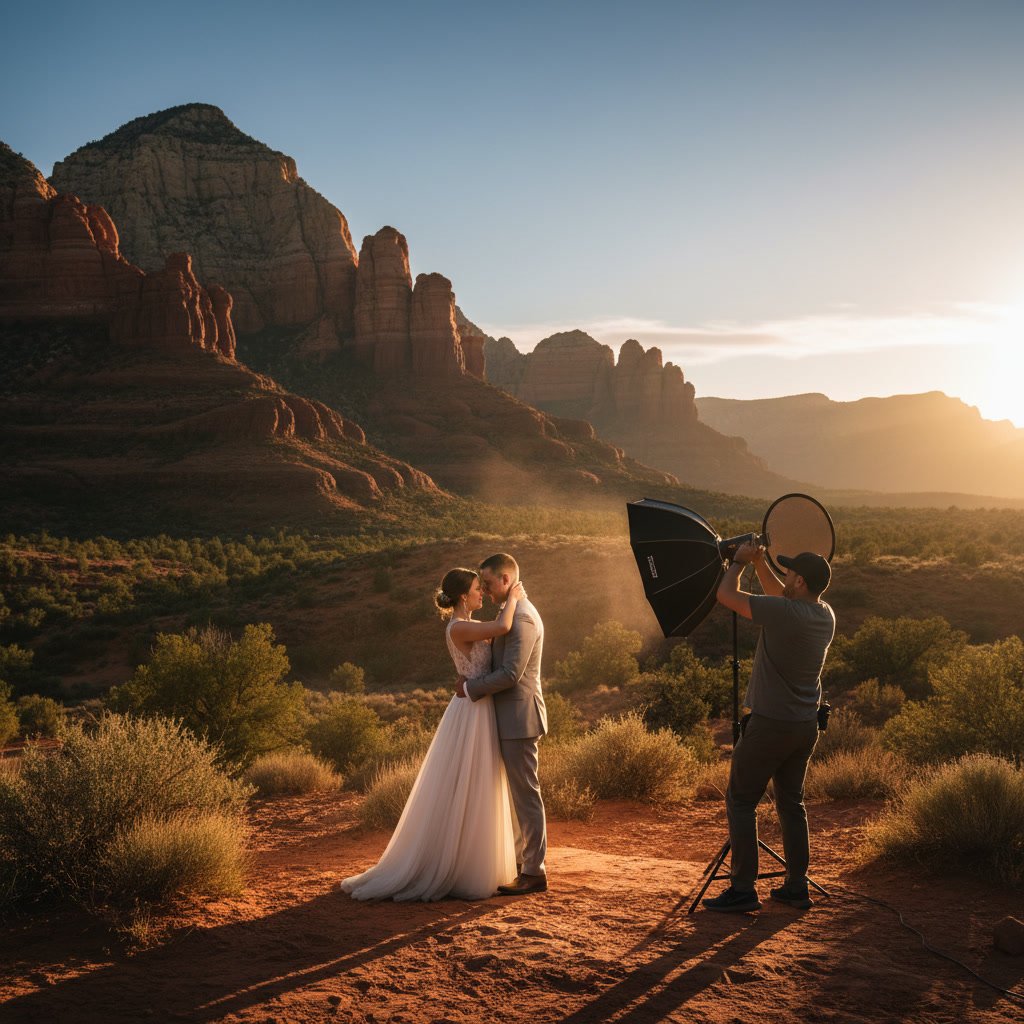
Pro Tip: Schedule a site visit at the same time of day as your planned ceremony. Observing how natural light interacts with the space helps you identify which areas need supplemental lighting and where shadows might create photographic challenges.
Power Sources and Technical Requirements
Understanding your venue’s electrical capacity prevents the frustrating scenario where your lighting plan exceeds available power. Standard 15-amp household circuits provide 1,800 watts maximum, but you should plan for no more than 1,440 watts per circuit to maintain a safety margin.
Calculate total wattage by adding up every fixture in your lighting plan. A typical commercial bistro string with 25 bulbs draws approximately 175 watts. Twenty uplights at 15 watts each add another 300 watts. Your total load determines whether you need multiple circuits, a generator, or battery-powered solutions.
Generator rentals for wedding lighting outdoor venues typically range from 3,500 to 7,000 watts depending on the scale of your installation. Modern inverter generators run quietly enough for outdoor events, producing 50 to 65 decibels at 20 feet, similar to normal conversation volume.
Battery-powered LED fixtures have improved significantly in recent years, with commercial units running eight to twelve hours on a single charge. For ceremonies and cocktail hours, battery-powered uplighting eliminates cable runs across walkways and simplifies setup.
Working With Professional Lighting Contractors
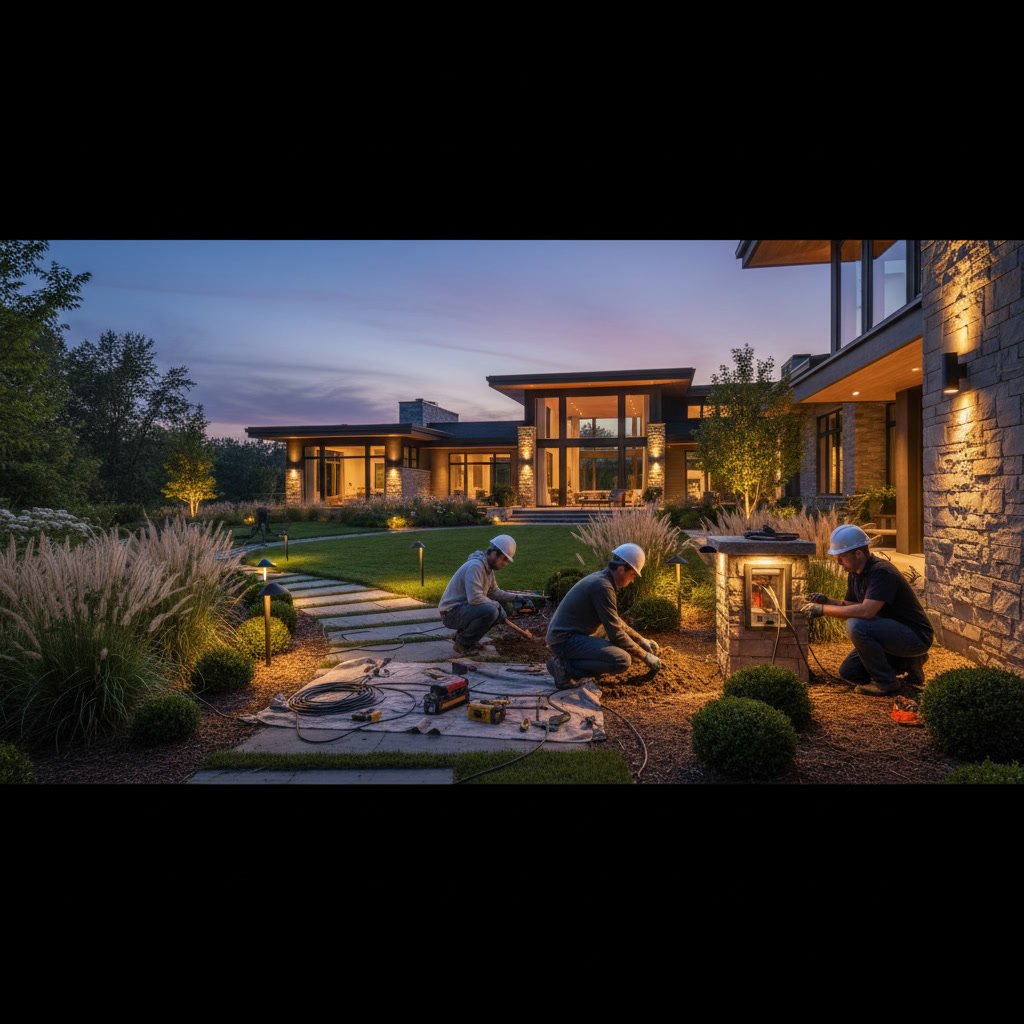
Professional installation ensures your wedding lighting is safe, reliable, and visually cohesive. Experienced contractors understand load calculations, weather considerations, and backup systems that DIY approaches often overlook.
When evaluating lighting contractors, ask about their experience with outdoor venues specifically. Desert environments present different challenges than indoor spaces or coastal settings, from dust infiltration in fixtures to extreme temperature swings between day and night.
A professional event lighting team will visit your venue during the planning phase, create a detailed installation diagram, and coordinate with other vendors like caterers and florists to ensure lighting placements don’t conflict with tables, bars, or decor elements.
Installation typically occurs the day before your wedding or early on the wedding day, with final adjustments and testing completed at least two hours before guests arrive. Contractors should remain on call throughout the event to address any technical issues immediately.
Coordinating Lighting With Other Design Elements
Your lighting choices should complement your overall wedding aesthetic rather than compete with it. Warm white lights in the 2700K to 3000K range enhance the natural red and amber tones of Sedona’s landscape, while cooler 4000K to 5000K lights create a more modern, crisp appearance.
If your wedding features specific color themes, programmable RGB LED fixtures allow you to match uplighting and accent lights to your palette. However, colored lighting works best as accent rather than primary illumination, as it can affect how food appears and make photography more challenging.
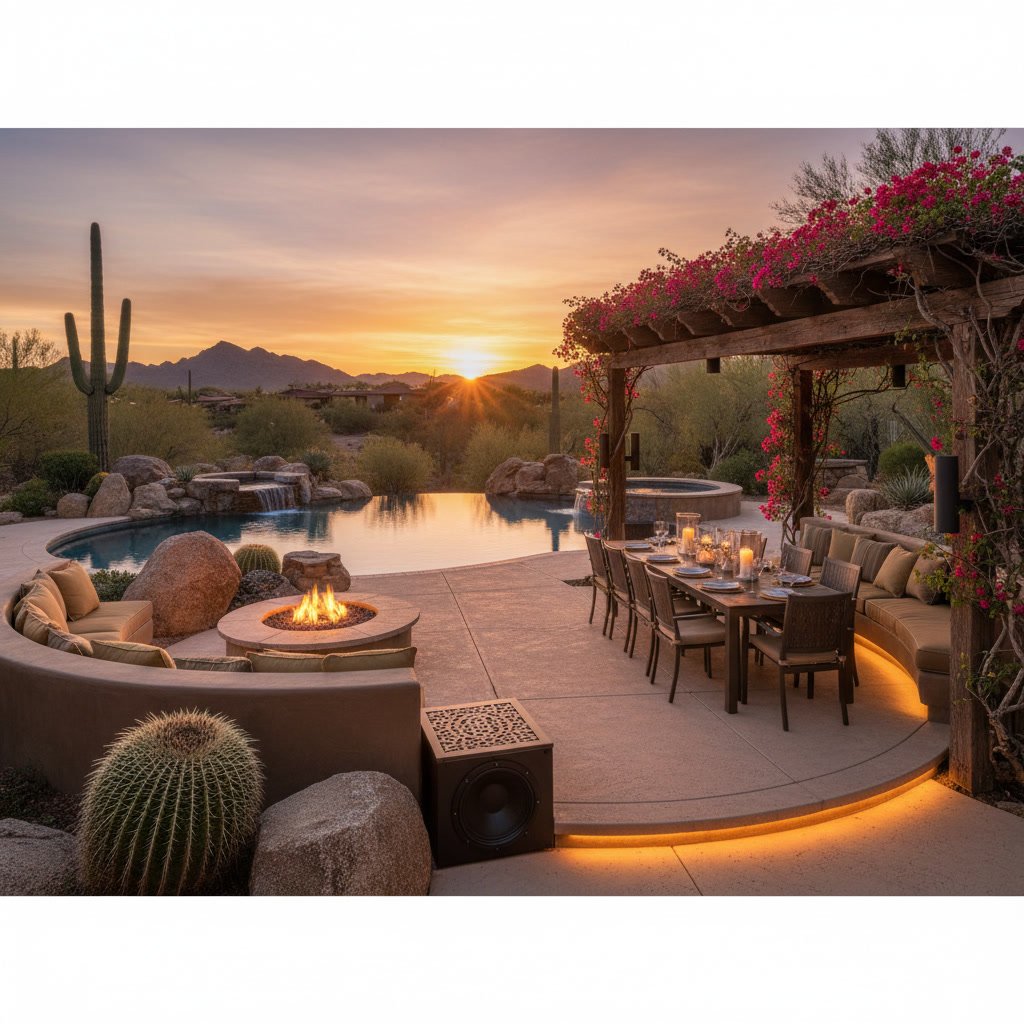
Consider how your lighting interacts with natural elements. Many couples planning outdoor events in Arizona benefit from integrating landscape lighting techniques that highlight native plants, rock formations, and architectural features while maintaining a cohesive design.
The same principles that guide outdoor party planning apply to wedding receptions, including attention to guest comfort zones and clear definition of different functional areas through lighting intensity and color temperature.
Balancing Ambient and Task Lighting
Ambient lighting provides overall illumination, while task lighting serves specific functional needs like dining, dancing, or bar service. Your ambient lighting should create a warm, inviting atmosphere at roughly 10 to 20 foot-candles, while task areas may need 30 to 50 foot-candles.
Dining areas require enough light for guests to see their meals clearly without the harsh brightness of overhead fixtures. String lights positioned 10 to 12 feet overhead combined with low centerpiece lighting typically achieve this balance.
Dance floors benefit from slightly lower ambient light, around 5 to 10 foot-candles, with the option to add color-changing effects or moving lights for energy and visual interest. Bar areas need brighter task lighting so bartenders can work efficiently and guests can see drink options.
Budget Considerations and Cost-Saving Strategies
Wedding lighting costs vary significantly based on venue size, fixture types, and installation complexity. Basic string light installations for a 50-person wedding might start around $800 to $1,200, while comprehensive lighting packages with uplighting, pin spots, and specialty effects can exceed $3,000 to $5,000.
Rental costs typically include delivery, installation, operation, and removal. Some contractors charge flat-rate packages, while others bill by fixture count or labor hours. Request detailed quotes that break down equipment costs versus labor so you understand where your budget is allocated.
If budget constraints require prioritization, focus first on safety lighting for pathways and stairs, then ambient lighting for your reception space, and finally decorative and specialty effects. You can also consider hybrid approaches that combine some rental fixtures with purchased battery-powered LEDs for accent lighting.
Many couples find that investing in quality party lighting for the reception creates more impact than elaborate ceremony lighting, since guests spend more time in the reception space and darkness is more complete.
Key Takeaway: Allocate 8 to 12 percent of your total wedding budget to lighting. This ensures adequate coverage for safety and ambiance without compromising other important elements like catering or photography.
Weather Contingencies and Backup Plans
Arizona weather is generally predictable, but summer monsoon season from July through September brings sudden storms, high winds, and occasional heavy rain. Your lighting plan should account for rapid weather changes, especially if your venue lacks covered backup space.
All outdoor lighting fixtures should be rated for wet or damp locations at minimum, with IP65 or higher ratings for fixtures exposed to potential rain. String lights need secure mounting points that can withstand wind gusts, typically requiring professional-grade rigging hardware rather than adhesive hooks or lightweight wire.
Generator-powered systems need weatherproof connections and GFCI protection on all circuits. Battery-powered fixtures should be tested for runtime under load, as extreme heat or cold can reduce battery performance by 20 to 30 percent.
Discuss weather contingency plans with your lighting contractor during the planning phase. Some offer backup generators, alternative fixture configurations, or rapid weather-response services that can adapt your lighting plan if conditions change on your wedding day.
Enhancing Your Wedding With Audio Integration
Many couples overlook the connection between lighting and audio systems, but coordinating both creates a more immersive experience. Modern LED systems can synchronize with music for dramatic entrances, first dances, or cake cutting ceremonies.
Professional outdoor audio systems require similar power planning and weather protection as lighting. Bundling both services with a single contractor often reduces overall costs and simplifies coordination on your wedding day.
Speaker placement works best when coordinated with lighting design, ensuring cables don’t create trip hazards and fixtures don’t interfere with sound projection. Perimeter speakers paired with uplighting on venue boundaries creates clear event space definition while maintaining sightlines.
Frequently Asked Questions
How far in advance should I book wedding lighting for an outdoor venue in Sedona?
Book your lighting contractor four to six months before your wedding date, especially for popular seasons like spring and fall. Peak wedding months in Sedona see high demand for professional lighting services, and waiting until six to eight weeks before your event may limit your options or increase costs due to rush fees.
Can I use regular string lights from home improvement stores for my outdoor wedding?
Consumer-grade string lights lack the durability, weather resistance, and consistent output needed for professional wedding installations. Commercial bistro lights use heavier gauge wire, weatherproof sockets, and shatterproof bulbs designed for rental applications. They also provide significantly better light output per watt and more reliable performance throughout multi-hour events.
What happens if weather affects my outdoor lighting setup?
Professional lighting contractors use weather-rated fixtures and monitor forecasts leading up to your event. If severe weather threatens, experienced installers can adjust mounting methods, add protective measures, or implement backup power solutions. Always discuss weather contingency clauses in your contract, including policies for last-minute changes or equipment protection.
How much power does a typical outdoor wedding lighting setup require?
A moderate wedding lighting installation for 75 to 100 guests typically draws 2,000 to 4,000 watts total. This includes string lights, uplighting, pathway lights, and accent fixtures. Larger weddings or elaborate designs may require 5,000 to 8,000 watts. Your lighting contractor will calculate exact requirements based on your specific fixture selections and venue layout.
Should my wedding lighting match my color scheme exactly?
Lighting should complement your color scheme rather than replicate it exactly. Warm white lights work with virtually any color palette and create flattering ambient illumination. If you want colored uplighting or accent lights, choose shades slightly lighter or more saturated than your decor colors, as lighting appears more intense than fabric or floral elements.
Creating Your Perfect Sedona Wedding Atmosphere
Selecting wedding lighting for outdoor venues in Sedona requires balancing aesthetic vision with practical considerations like power sources, weather protection, and guest safety. The right combination of string lights, uplighting, pathway illumination, and accent fixtures transforms your venue from beautiful to extraordinary while ensuring your celebration runs smoothly from ceremony through final dance.
TRI-CITY Lightning specializes in creating stunning wedding and event lighting throughout the Sedona area and surrounding communities. With commercial-grade equipment, professional installation expertise, and a deep understanding of Arizona’s outdoor venue challenges, we help couples design lighting that enhances their celebration while maintaining safety and reliability. Contact us at +19283568919 to discuss your wedding lighting vision and receive a detailed consultation for your outdoor venue.