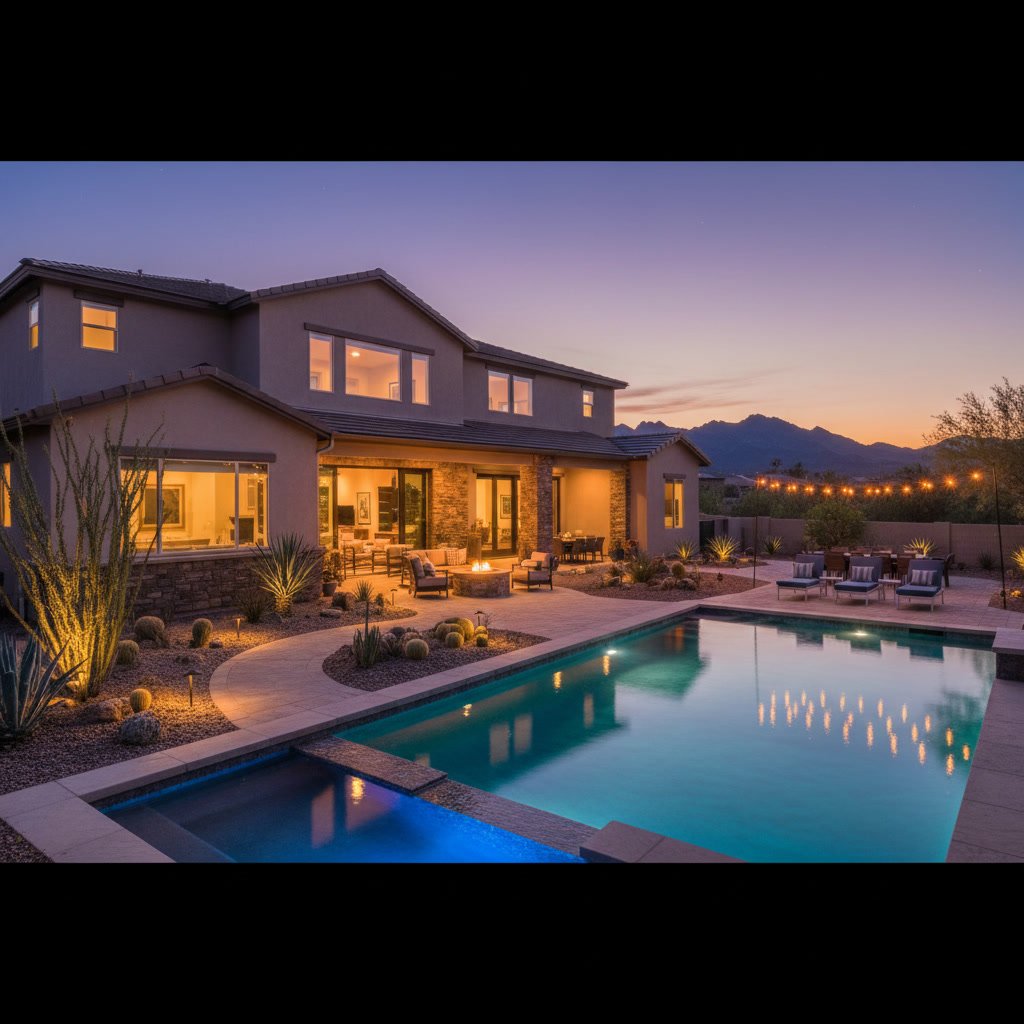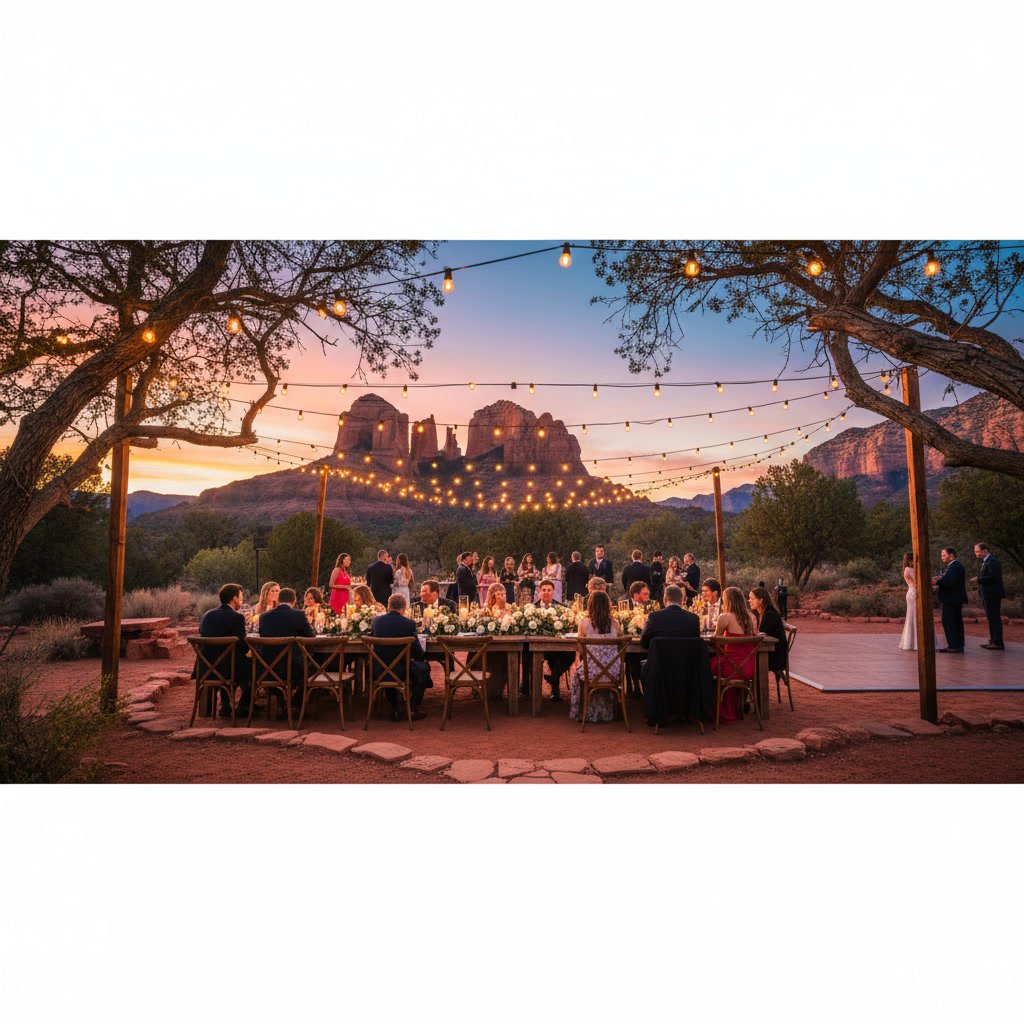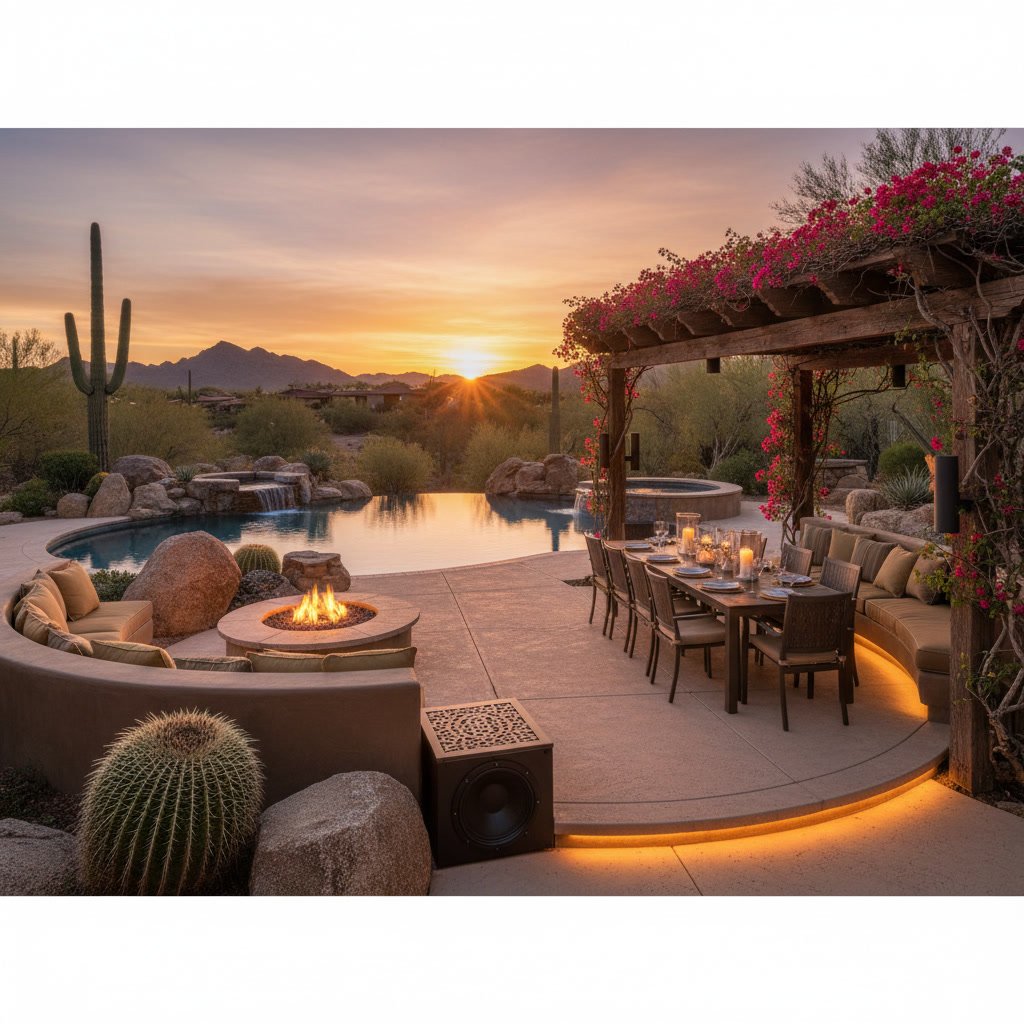
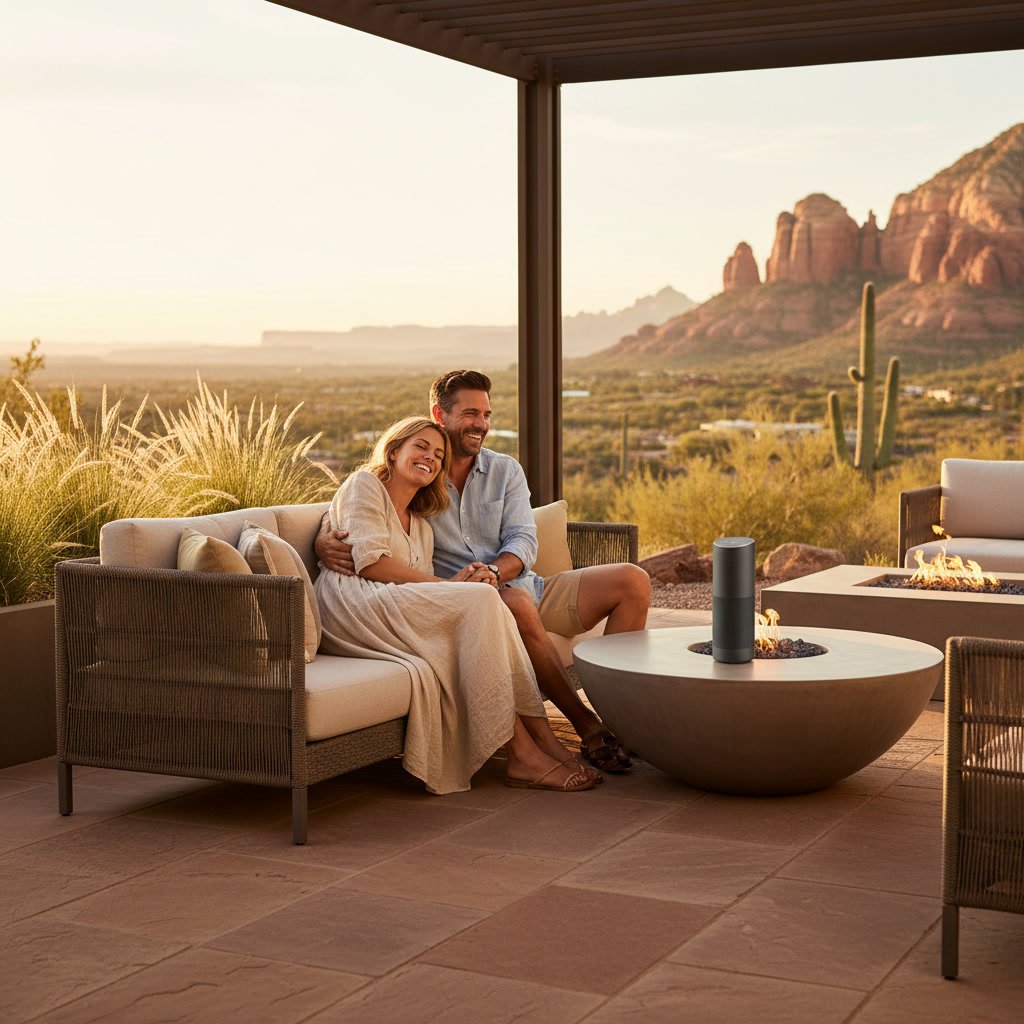
Arizona homeowners know the value of a great outdoor living space. Your patio or backyard becomes an extension of your home, a place to relax, entertain, and enjoy the state’s beautiful weather year-round. But the perfect outdoor environment isn’t complete without quality sound. Choosing the right outdoor audio systems for your Arizona property means understanding how desert conditions, space layout, and your specific needs all come together to create the ideal entertainment experience.
The right sound system turns your outdoor space into a true retreat. Whether you’re hosting weekend gatherings, creating ambiance for quiet evenings, or providing background music for party lighting setups, your audio choice matters as much as any other design decision.
Understanding Arizona’s Unique Climate Challenges
Arizona’s climate presents specific challenges that not all outdoor audio systems can handle. Summer temperatures in Prescott Valley regularly exceed 95 degrees, while winter nights can drop below freezing. The intense UV exposure, low humidity, and occasional monsoon rains create a harsh environment for electronic equipment.
Your outdoor speakers need weatherproof ratings that go beyond basic water resistance. Look for systems rated IP65 or higher, which offer protection against dust ingress and water jets from any direction. This rating ensures your investment survives both the dry heat and sudden summer storms that characterize Arizona weather.
Temperature swings also affect speaker components. Quality outdoor audio systems use materials designed to expand and contract without degrading sound quality. UV-resistant enclosures prevent the sun from breaking down plastic components and fading finishes over years of exposure.
Determining Your Coverage Area and Speaker Placement
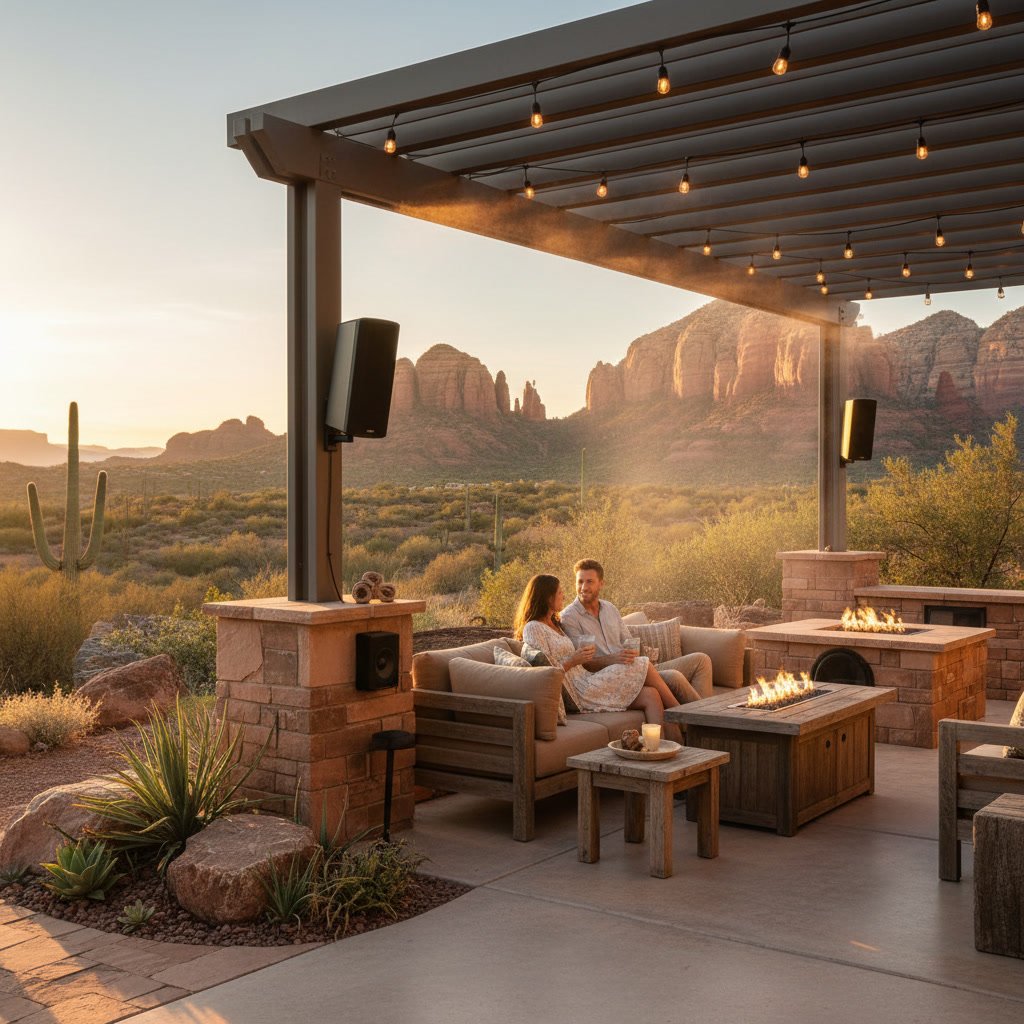
Before selecting speakers, measure your outdoor space and identify where you’ll spend most of your time. A small patio requires different equipment than a sprawling backyard with multiple entertainment zones. Most residential outdoor speakers effectively cover 200 to 400 square feet per unit, depending on power output and design.
Speaker placement dramatically affects sound quality. Position speakers at least eight to ten feet apart to create proper stereo separation. Mounting height also matters. Installing speakers seven to nine feet above ground level provides the best sound dispersion for seated listeners while keeping equipment out of the way.
Consider how your landscape lighting already defines zones in your outdoor space. Your audio layout should complement these areas, creating cohesive entertainment zones that work together visually and acoustically.
Zone-Based Audio Design
Larger properties benefit from zone-based systems that allow independent volume control for different areas. You might want soft background music near the pool while maintaining conversation-level sound on the dining patio. Multi-zone amplifiers let you control each area separately, giving you flexibility for different activities and guest preferences.
This approach works particularly well for homes in areas like Sedona or Prescott, where properties often feature multiple outdoor living areas at different elevations or around various landscape features.
Choosing Between Wired and Wireless Systems
Outdoor audio systems fall into two main categories: wired and wireless. Each offers distinct advantages depending on your property layout and technical requirements.
Wired systems provide superior sound quality and reliability. They don’t suffer from wireless interference or connectivity drops, making them ideal for permanent installations. The trade-off is installation complexity. Running speaker wire through walls, under decking, or through landscaping requires planning and often professional installation.
Wireless systems offer easier installation and flexibility. Modern Bluetooth and Wi-Fi speakers deliver impressive sound quality, though they can’t quite match wired systems at the high end. Battery-powered options provide ultimate portability but require regular charging. Plug-in wireless speakers eliminate battery concerns while maintaining placement flexibility.
Pro Tip: If you’re planning permanent outdoor infrastructure, coordinate your audio installation with other projects. Installing speaker wire during a permanent lighting upgrade or landscape renovation saves time and money while keeping wire runs hidden.
Hybrid Approaches
Many homeowners find success with hybrid systems combining wired infrastructure and wireless control. Hard-wired speakers connect to a network-enabled amplifier, letting you stream music wirelessly from your phone while enjoying the reliability of wired audio delivery. This approach captures the best of both worlds.
Power Requirements and Amplification
Speaker power ratings, measured in watts, determine how loud your system can play without distortion. For typical outdoor entertaining, speakers rated between 50 and 100 watts per channel provide adequate volume. Larger spaces or high-ambient-noise environments may require 150 watts or more.
Don’t confuse peak power with RMS (root mean square) power. RMS represents continuous power output and provides a more accurate measure of real-world performance. A speaker rated at 75 watts RMS will consistently outperform one claiming 150 watts peak power.
Amplifier selection depends on your speaker configuration. Passive speakers require external amplification, while powered speakers include built-in amplifiers. External amplifiers offer more flexibility for system expansion and typically deliver better sound quality for demanding listeners.
Voltage and Distance Considerations
For speaker runs longer than 100 feet, consider 70-volt systems used in commercial applications. These systems minimize power loss over long cable runs and allow you to connect multiple speakers to a single amplifier without complex impedance matching.
Standard 8-ohm speakers work well for most residential installations where speakers stay within 75 feet of the amplifier. Use 16-gauge speaker wire for runs under 50 feet and upgrade to 14-gauge or 12-gauge wire for longer distances.
Sound Quality Factors for Outdoor Environments
Outdoor acoustics differ dramatically from indoor spaces. Without walls and ceilings to reflect sound, outdoor audio disperses quickly and requires more power to fill the same perceived volume. Understanding these differences helps you select appropriate equipment and set realistic expectations.
Frequency response determines how accurately speakers reproduce different sound ranges. Look for speakers with response curves between 60Hz and 20kHz for full-range sound. Some outdoor speakers sacrifice bass response for weather resistance and compact size. If deep bass matters for your music preferences, consider adding an outdoor-rated subwoofer to your system.
Sensitivity ratings, measured in decibels, indicate how efficiently speakers convert amplifier power into sound. Speakers rated above 88dB sensitivity require less power to achieve the same volume as less efficient models. High-sensitivity speakers work well with modest amplifiers, reducing overall system cost.
Rock Speakers and Landscape Integration
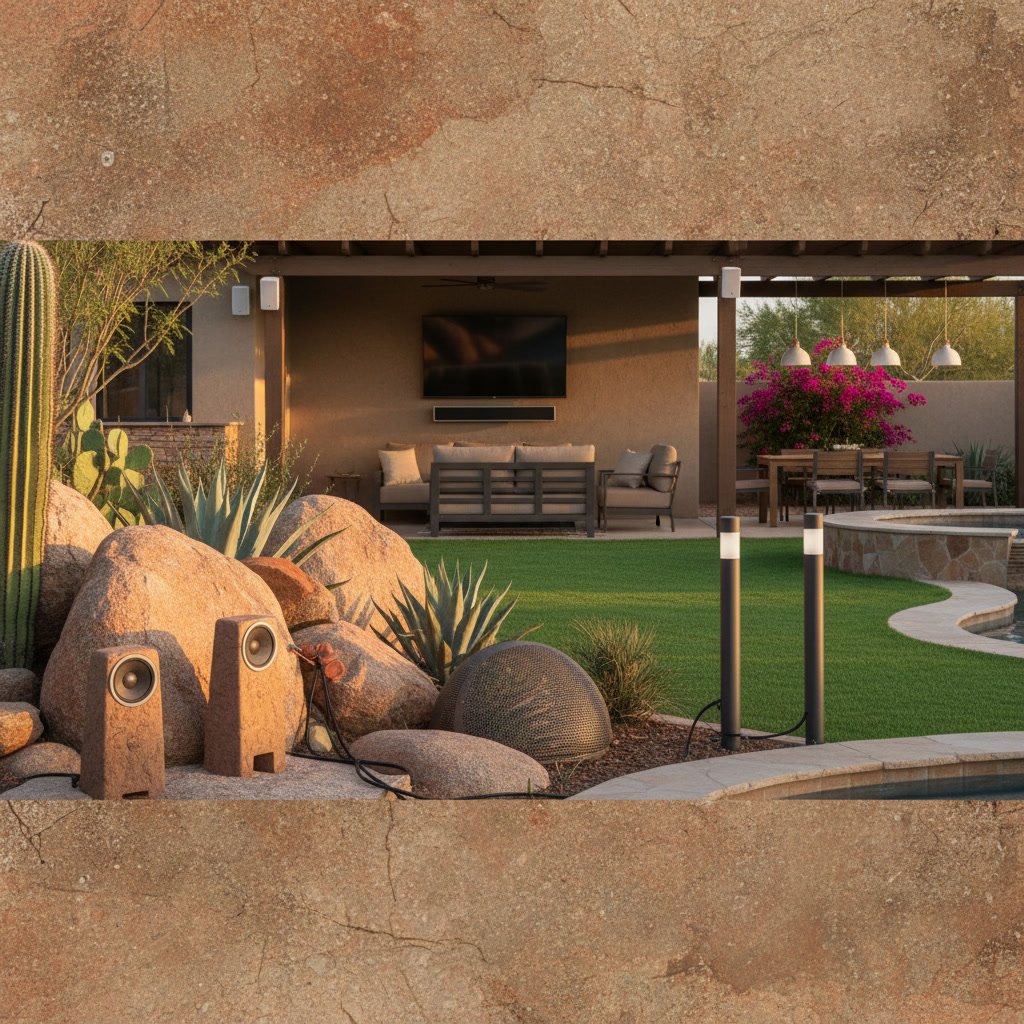
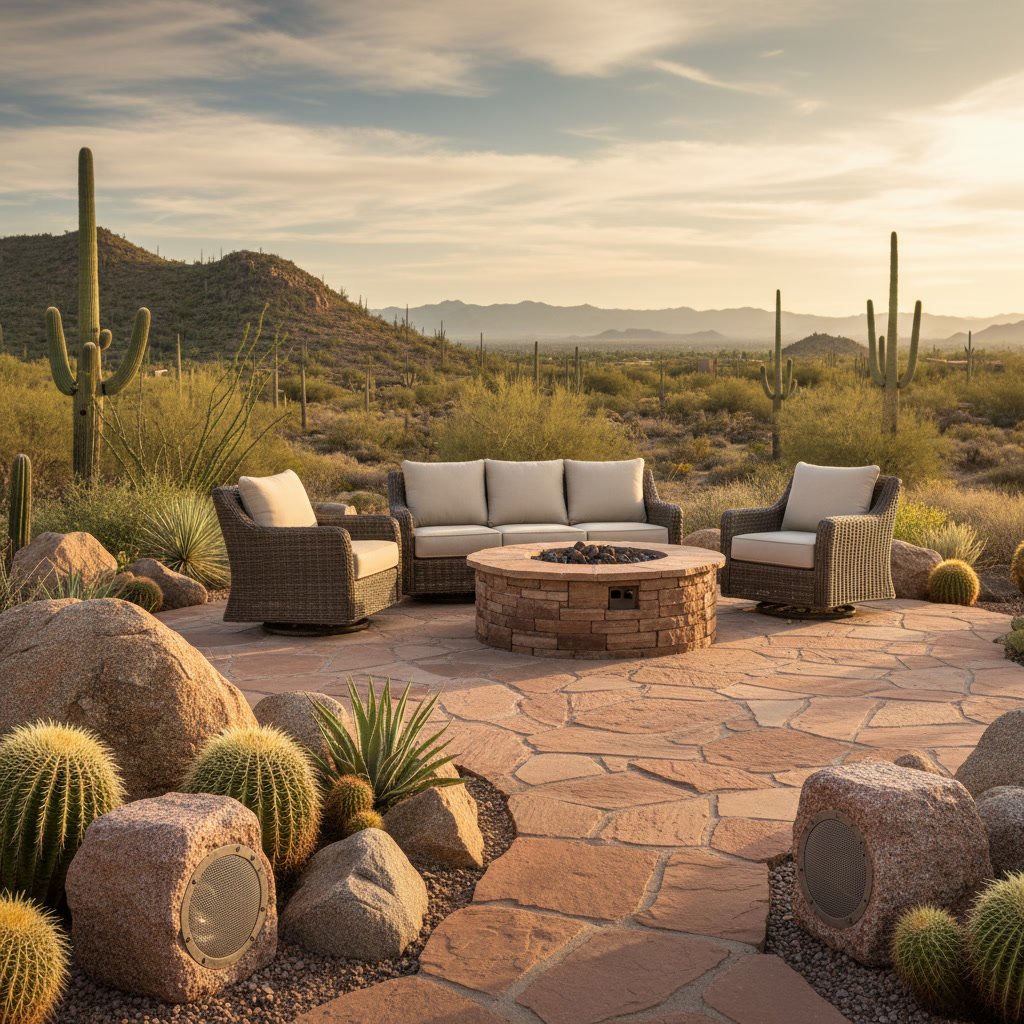
Rock speakers blend into landscaping while delivering surprisingly good sound quality. Modern designs use advanced materials and driver configurations that overcome the acoustic limitations of unconventional enclosures. These speakers work particularly well in desert landscapes where they complement natural boulder formations and xeriscaping.
Position rock speakers near seating areas but away from direct foot traffic. Their low profile makes them easy to forget, which increases the risk of damage from lawn equipment or outdoor furniture. Strategic placement near existing landscape features helps protect equipment while maintaining natural aesthetics.
Smart Features and Control Options
Modern outdoor audio systems integrate with smart home platforms like Alexa, Google Home, and Apple HomeKit. Voice control lets you adjust volume, change sources, and control zones without leaving your seat. Integration with home automation systems allows audio to respond to other triggers, like automatically lowering volume when someone rings your doorbell.
Multi-room audio systems from brands like Sonos, Denon, and Yamaha let you play the same music throughout your property or different sources in each zone. Stream from multiple services simultaneously, play local music libraries, or connect traditional sources like turntables and CD players.
Mobile apps provide the most flexible control, offering full access to sources, equalization, and zone management from your smartphone. Look for systems with intuitive apps that family members and guests can use without instruction. Complicated interfaces reduce the practical value of advanced features.
Budget Considerations and Value Assessment
Quality outdoor audio systems range from a few hundred dollars for basic wireless speakers to several thousand for professionally installed multi-zone systems. Setting a realistic budget requires understanding what you’re getting at each price point.
Entry-level systems ($300 to $800) typically include a pair of weather-resistant speakers and a basic amplifier or wireless connectivity. These systems work well for small patios where you want background music without major investment. Sound quality and durability vary widely at this price point, so research specific models carefully.
Mid-range systems ($800 to $2,500) offer better build quality, improved sound, and often include smart features or multi-zone capability. This range represents the sweet spot for most homeowners who want reliable performance and features that enhance daily use.
Premium systems ($2,500 and up) deliver exceptional sound quality, comprehensive smart home integration, and professional-grade components built to last decades. These systems make sense for serious audiophiles or properties where outdoor entertainment plays a central role in lifestyle.
Pro Tip: Calculate total cost of ownership, not just initial purchase price. Quality systems installed correctly require minimal maintenance and rarely need replacement. Budget options often fail within three to five years under Arizona’s harsh conditions, ultimately costing more through repeated replacements.
Professional Installation Value
Professional installation costs typically range from $500 to $2,000 depending on system complexity and property challenges. This investment ensures proper speaker placement, secure mounting, weather-sealed connections, and optimal system calibration. Poor installation compromises even the best equipment, making professional service worthwhile for permanent systems.
When planning event lighting or other outdoor upgrades, consider coordinating with audio installation. Contractors can run all necessary wiring in a single project, reducing disruption and often lowering combined installation costs.
Maintenance and Longevity in Desert Conditions
Even weather-resistant outdoor audio systems benefit from basic maintenance. Clean speaker grilles quarterly to remove dust and debris that accumulate in Arizona’s dry conditions. Use compressed air or a soft brush rather than water, which can force dirt deeper into components.
Inspect mounting hardware annually. Temperature cycling loosens fasteners over time, and loose speakers vibrate inefficiently while risking damage from wind or accidental contact. Tighten all connections and verify that weather seals remain intact around wire entry points.
For wireless systems, keep firmware updated to maintain compatibility with streaming services and smart home platforms. Many issues blamed on failing hardware actually result from outdated software that no longer communicates properly with updated source devices.
Consider seasonal adjustments for optimal performance. Higher humidity during monsoon season may require slight equalization changes to maintain clarity, while winter’s dry air can make speakers sound slightly brighter. Quality systems with app-based control make these adjustments simple.
Frequently Asked Questions
Can outdoor speakers handle Arizona summer temperatures?
Quality outdoor audio systems designed for harsh climates handle Arizona summers without issues. Look for speakers rated for operating temperatures up to 120 degrees Fahrenheit or higher. Avoid mounting speakers in direct afternoon sun when possible, as surface temperatures can exceed air temperature by 30 degrees or more. Dark-colored speakers absorb more heat, so consider lighter finishes for sun-exposed locations.
How many speakers do I need for my outdoor space?
Most outdoor speakers effectively cover 200 to 400 square feet depending on power output and design. A typical 12×16 foot patio works well with two speakers, while a 30×40 foot backyard entertainment area might need four to six speakers for even coverage. Consider your space’s shape, seating arrangements, and any obstacles that block sound when planning speaker quantity and placement.
Should I choose Bluetooth or Wi-Fi outdoor speakers?
Wi-Fi speakers offer better range, higher audio quality, and multi-room capability compared to Bluetooth options. Bluetooth works well for portable applications and simple setups but limits you to about 30 feet from the source device. Wi-Fi systems integrate with home networks, allowing control from anywhere on your property and easy expansion as needs change. Choose Bluetooth for flexibility and simplicity, Wi-Fi for performance and features.
Do outdoor audio systems work with existing landscape lighting controls?
Many modern outdoor audio systems and lighting controls integrate through smart home platforms. If your landscape lighting uses smart controls, you can often create scenes that adjust both audio and lighting together. This integration works particularly well when you want coordinated ambiance for entertaining, automatically dimming lights and starting music when you activate an evening entertainment mode.
How long do outdoor speakers typically last in Arizona conditions?
Quality outdoor audio systems with proper installation last 10 to 15 years or more in Arizona conditions. Budget speakers and poorly installed systems often fail within three to five years due to UV damage, moisture infiltration, or temperature-related component failure. Invest in speakers specifically designed for harsh climates and ensure all connections receive proper weather sealing during installation for maximum longevity.
Creating Your Ideal Outdoor Audio Experience
Selecting outdoor audio systems for your Arizona patio or backyard involves balancing weather resistance, coverage area, sound quality, and budget to create a system that enhances your outdoor lifestyle. Focus on equipment designed for harsh climates, plan speaker placement around how you actually use your space, and consider professional installation for permanent systems. The right approach delivers years of reliable performance that makes every outdoor moment more enjoyable.
TRI-CITY Lightning brings the same attention to detail to outdoor audio installations as we do to our lighting projects throughout Prescott, Prescott Valley, Chino Valley, and surrounding communities. Our experience creating complete outdoor entertainment environments means we understand how audio, lighting, and landscape work together to transform your property. Contact us at +19283568919 to discuss how professional outdoor audio can enhance your Arizona outdoor living space.