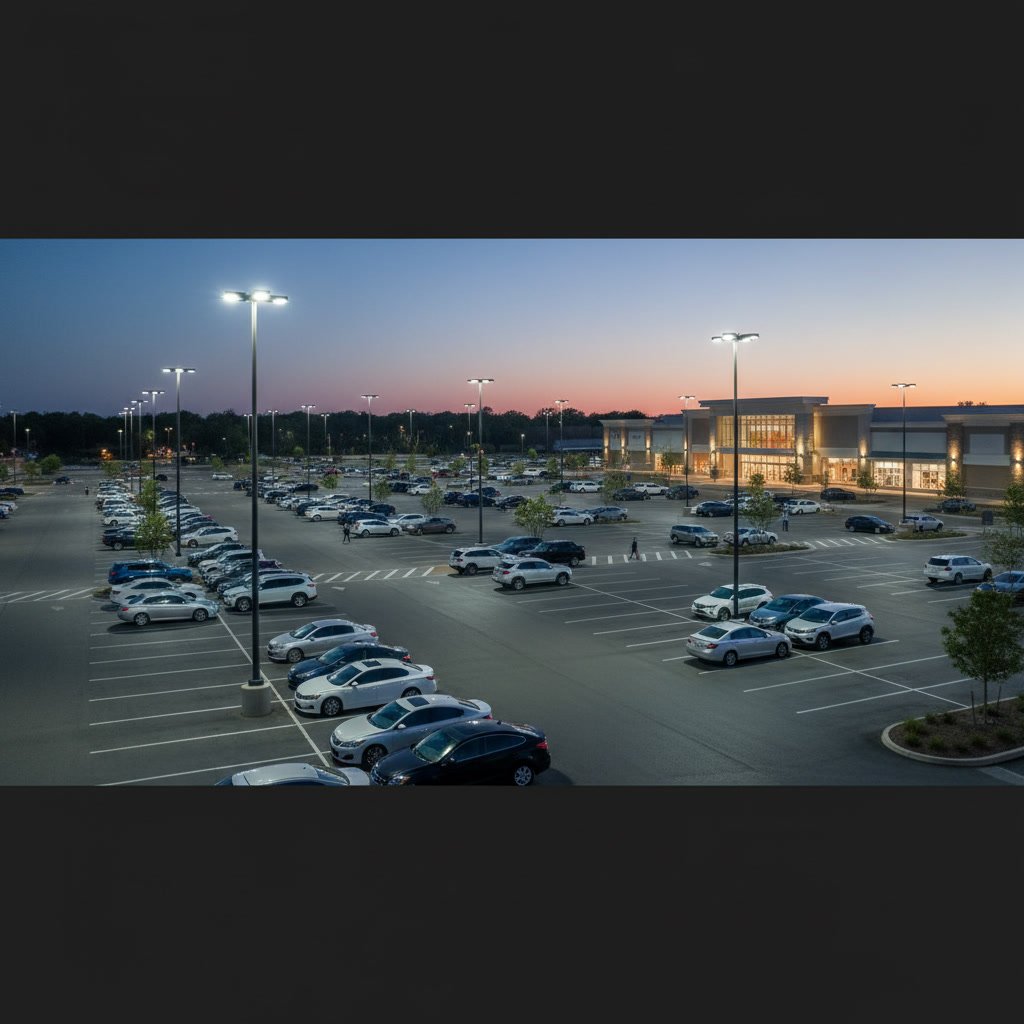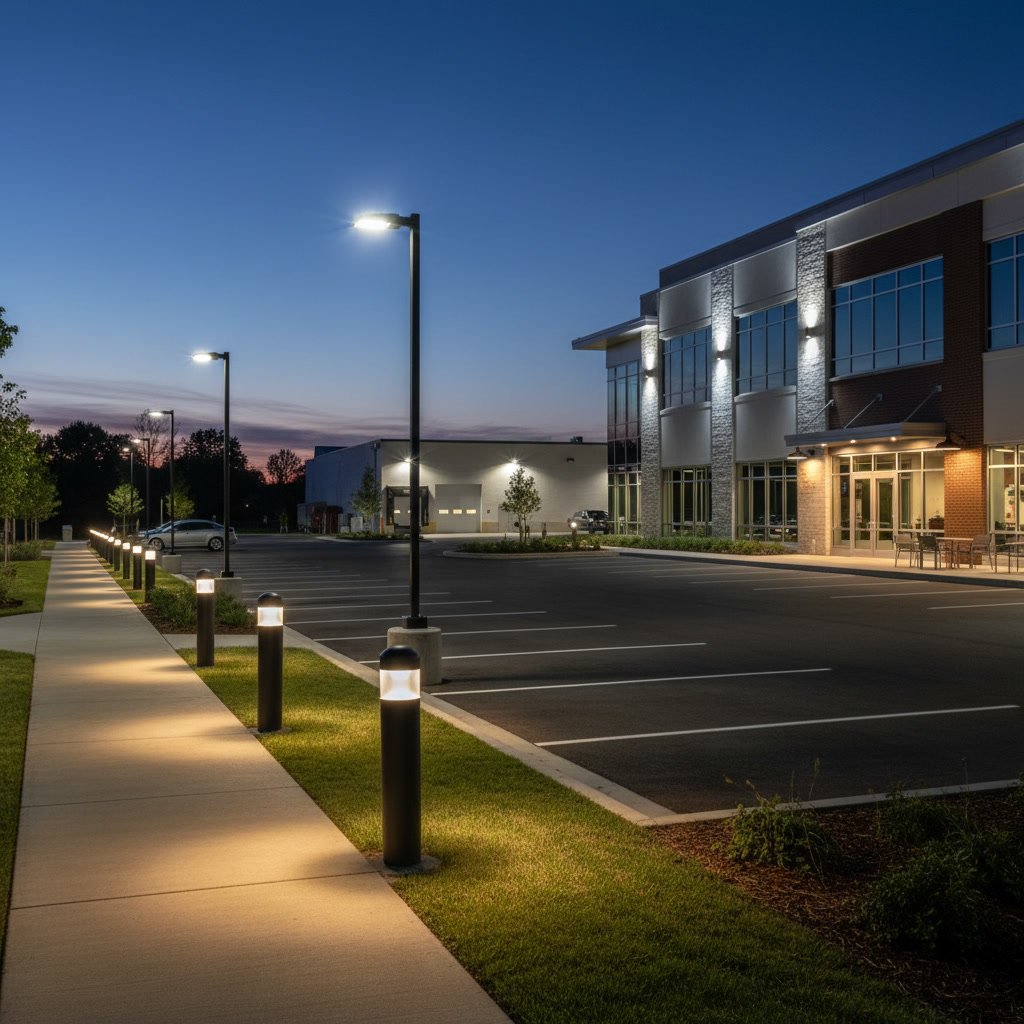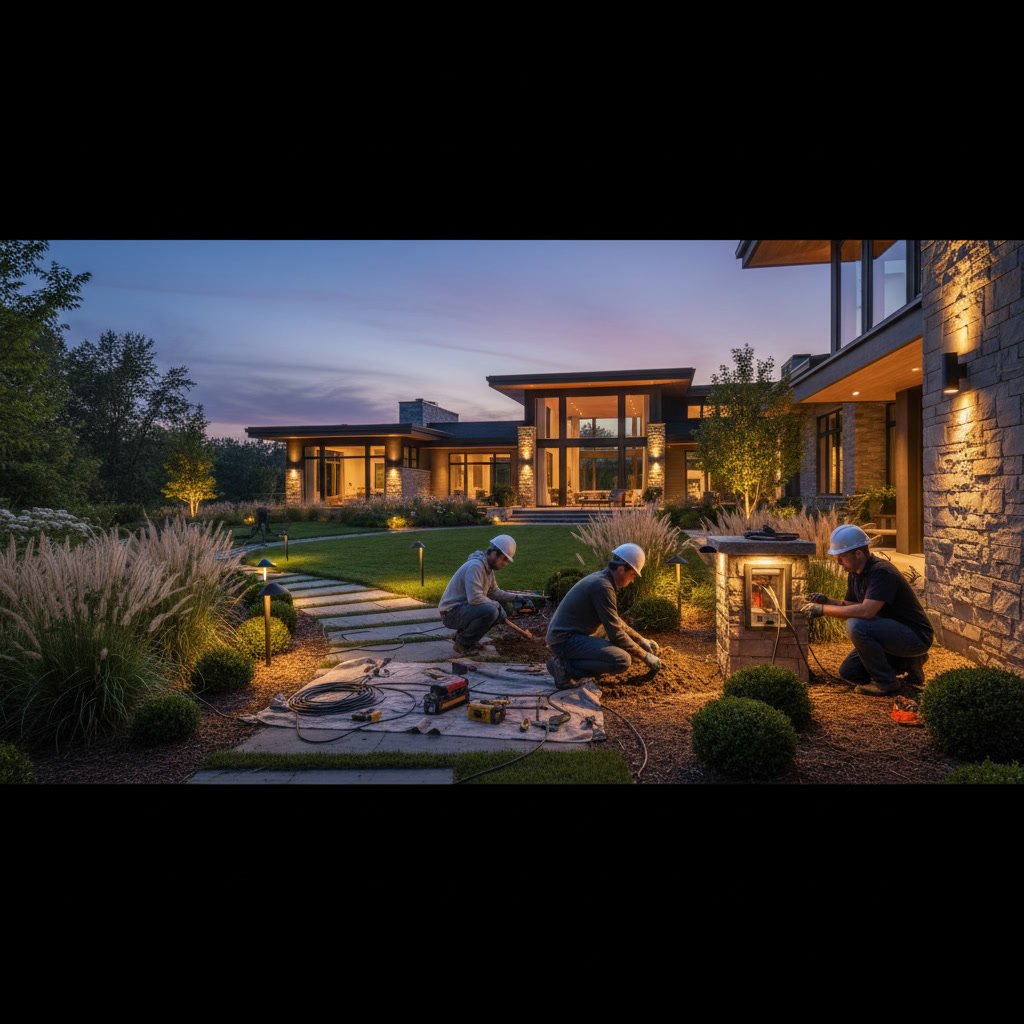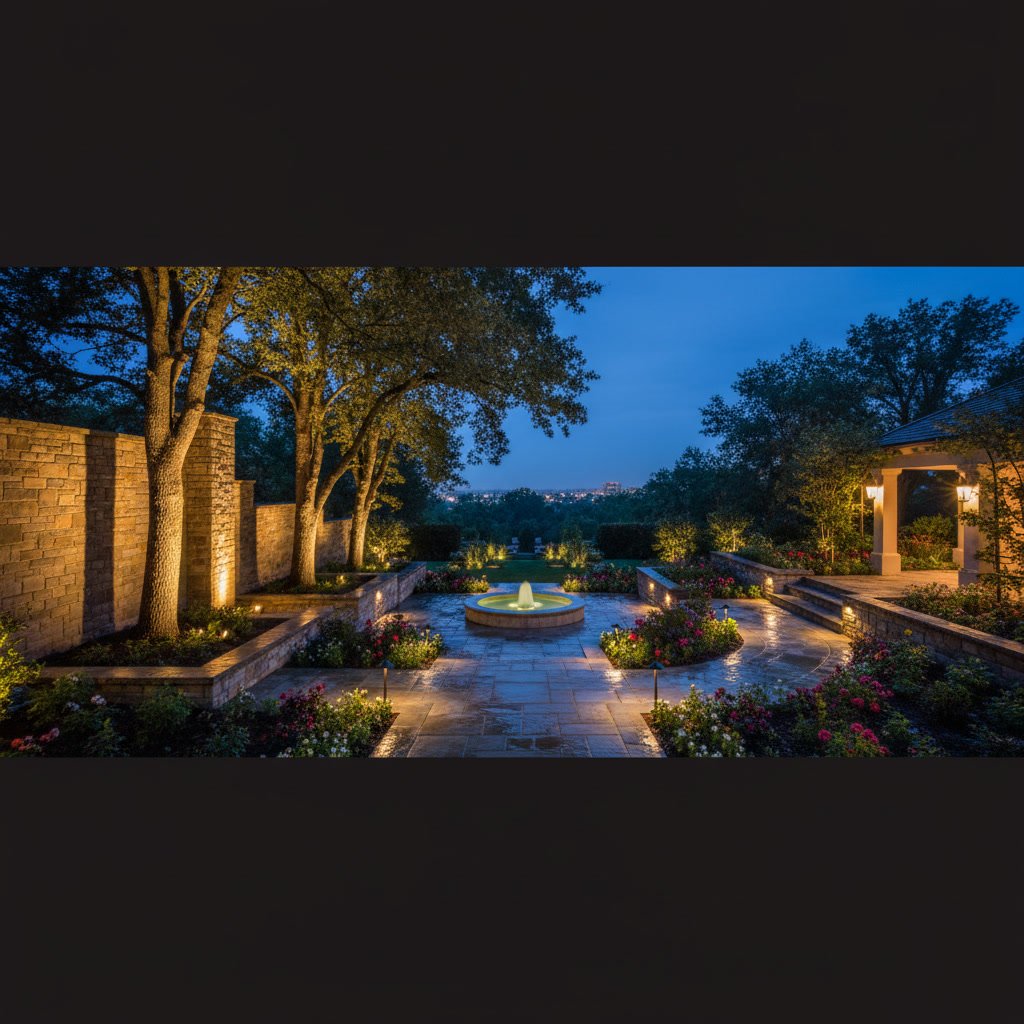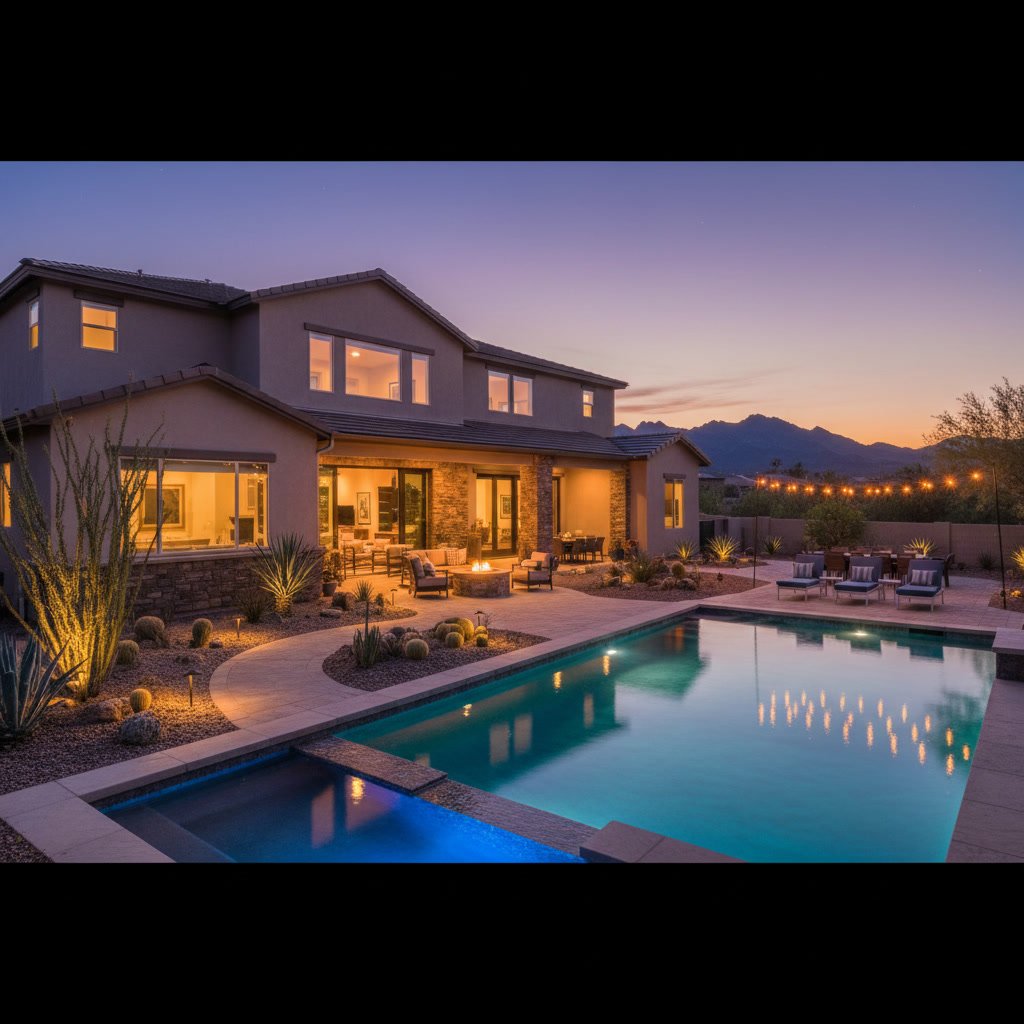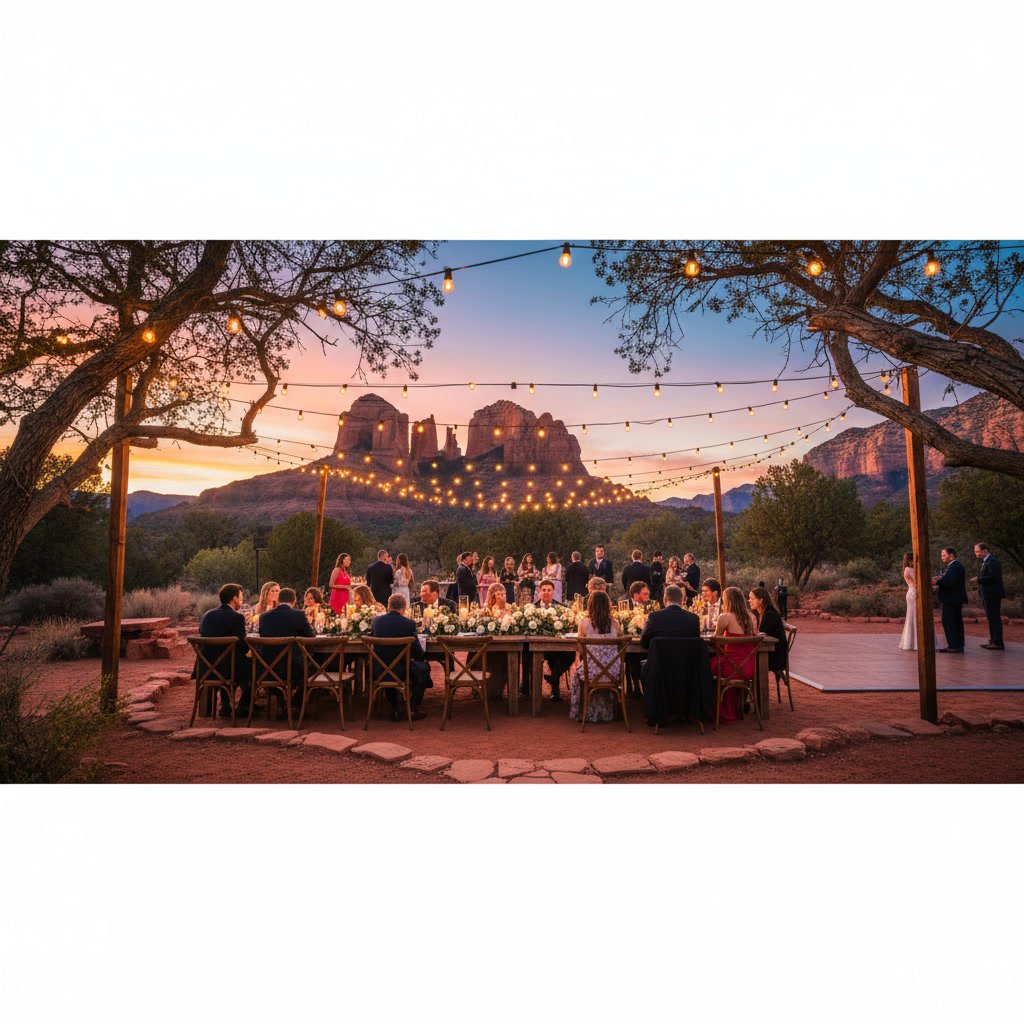
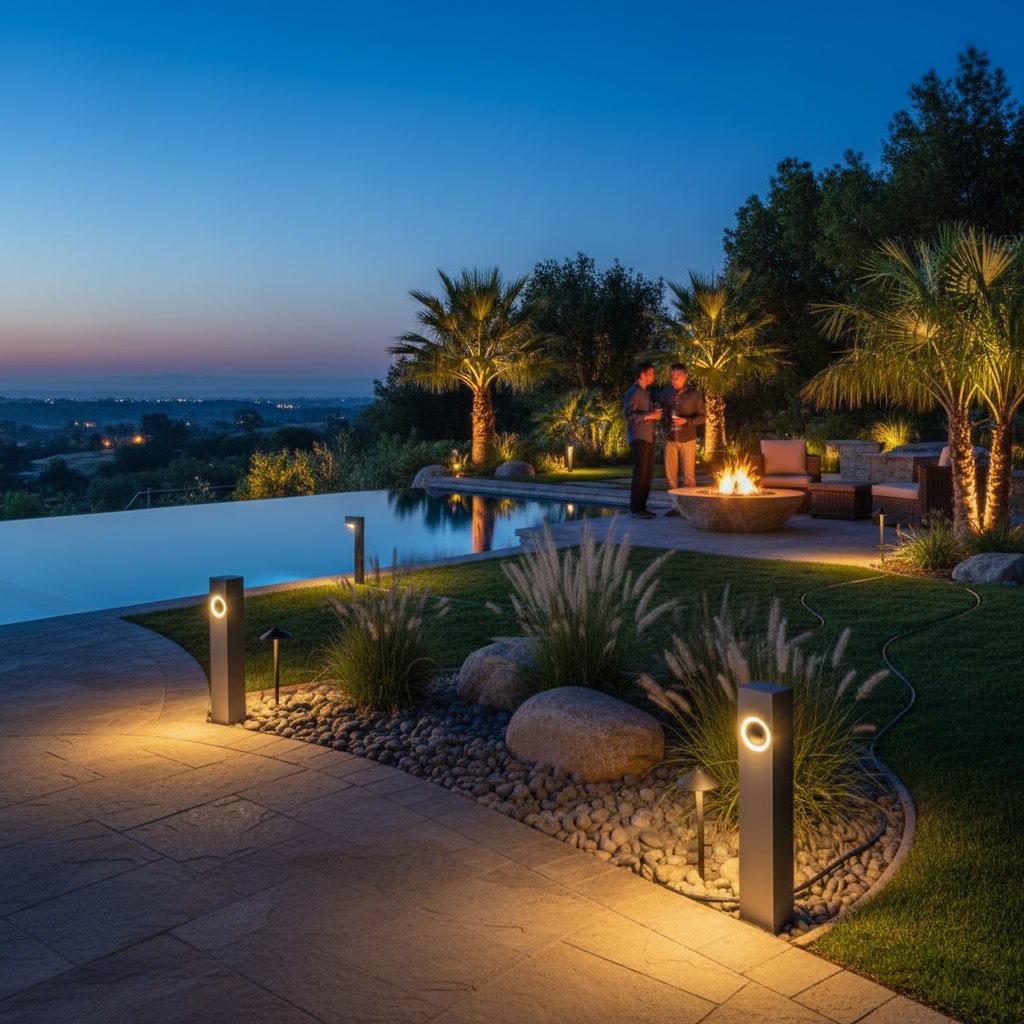
Your backyard landscape lighting creates stunning visual appeal after dark, but adding synchronized outdoor audio takes your outdoor living space to an entirely new level. Integrating outdoor audio landscape lighting transforms patios, gardens, and entertainment areas into complete sensory environments where sight and sound work together seamlessly.
The key to successful integration lies in planning both systems together from the start, ensuring power sources align, wiring paths don’t conflict, and control systems can manage both audio and lighting from a single interface. When done correctly, you can dim lights while adjusting volume, create zones that combine specific lighting moods with curated playlists, and host events where every element works in harmony.
This guide walks you through the technical considerations, design principles, and practical steps needed to combine these two systems effectively.
Why Combine Audio and Lighting Systems
Outdoor spaces designed with both sound and light offer advantages that single-system installations cannot match. The combination creates atmosphere that engages multiple senses simultaneously, making spaces feel more complete and intentional.
When hosting gatherings, synchronized outdoor audio landscape lighting eliminates the need to manage separate controls. Guests experience consistent ambiance throughout your property, from softly lit pathways with background music to vibrant party zones with upbeat sound and colorful lighting effects.
Property value also benefits from integrated systems. Buyers increasingly seek homes with sophisticated outdoor entertainment capabilities, and professionally installed audio-lighting combinations demonstrate attention to detail and quality construction.
The technical synergies matter too. Running both systems during initial installation reduces labor costs compared to two separate projects. Conduit can carry both low-voltage lighting wire and speaker cable, junction boxes can serve dual purposes, and a single transformer location can power both networks.
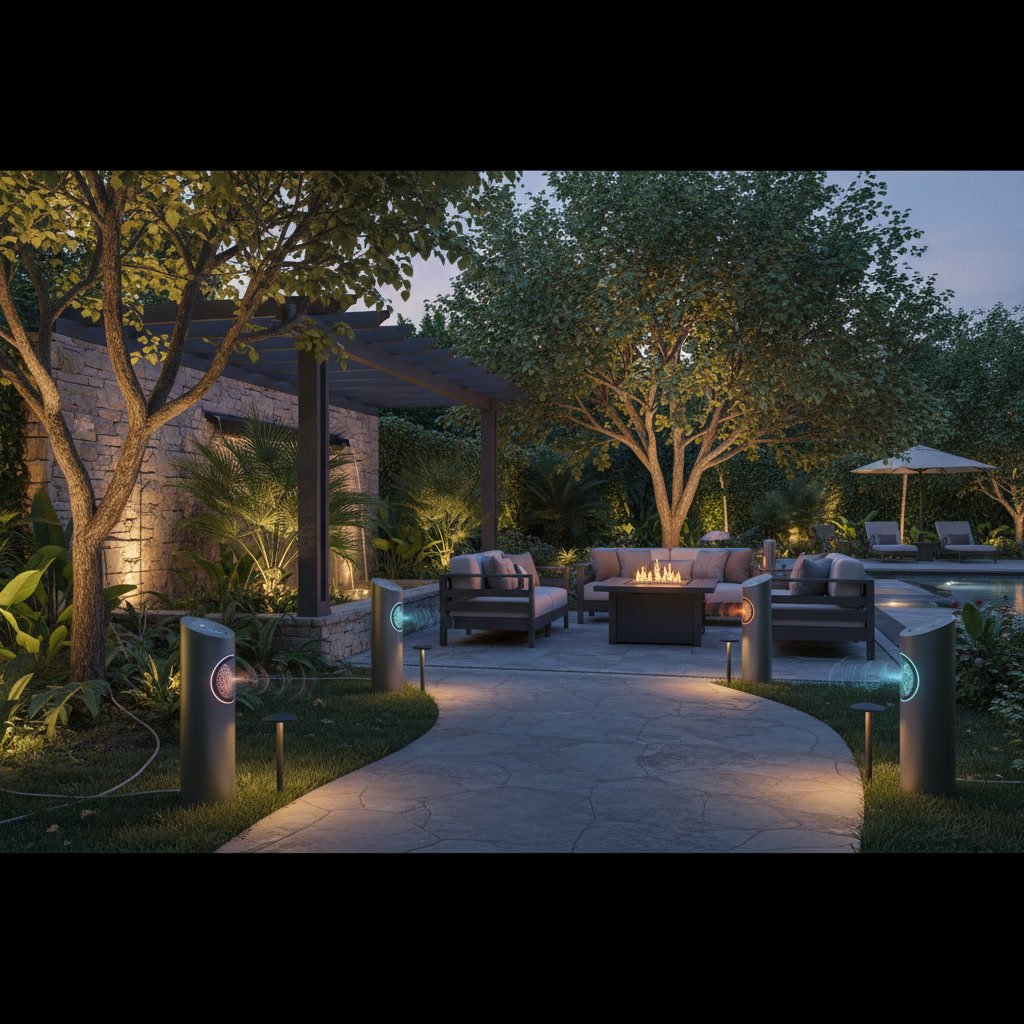
Planning Your Integrated System Layout
Successful outdoor audio landscape lighting starts with a comprehensive site plan that identifies all lighting zones, speaker locations, and control points before any installation begins.
Mapping Lighting and Audio Zones
Divide your outdoor space into functional zones based on how you use each area. A typical residential property might include a dining patio, pool area, garden paths, and a front entrance. Each zone requires different lighting levels and audio coverage.
Your dining patio might need warm accent lighting at 50-75 lumens with overhead speakers providing even sound distribution at moderate volume. Pool areas typically require brighter safety lighting at 100-150 lumens with weatherproof speakers positioned away from water splash zones.
Garden pathways benefit from subtle lighting at 20-40 lumens per fixture with discreet in-ground speakers or rock speakers that blend into the landscape. Front entrances need welcoming lighting at 75-100 lumens with background audio that doesn’t overpower conversation.
Power and Wiring Considerations
Both landscape lighting and outdoor audio typically operate on low-voltage systems, making integration straightforward from a power perspective. Most landscape lighting runs on 12-volt transformers, while outdoor speakers connect to amplifiers that plug into standard 120-volt outlets.
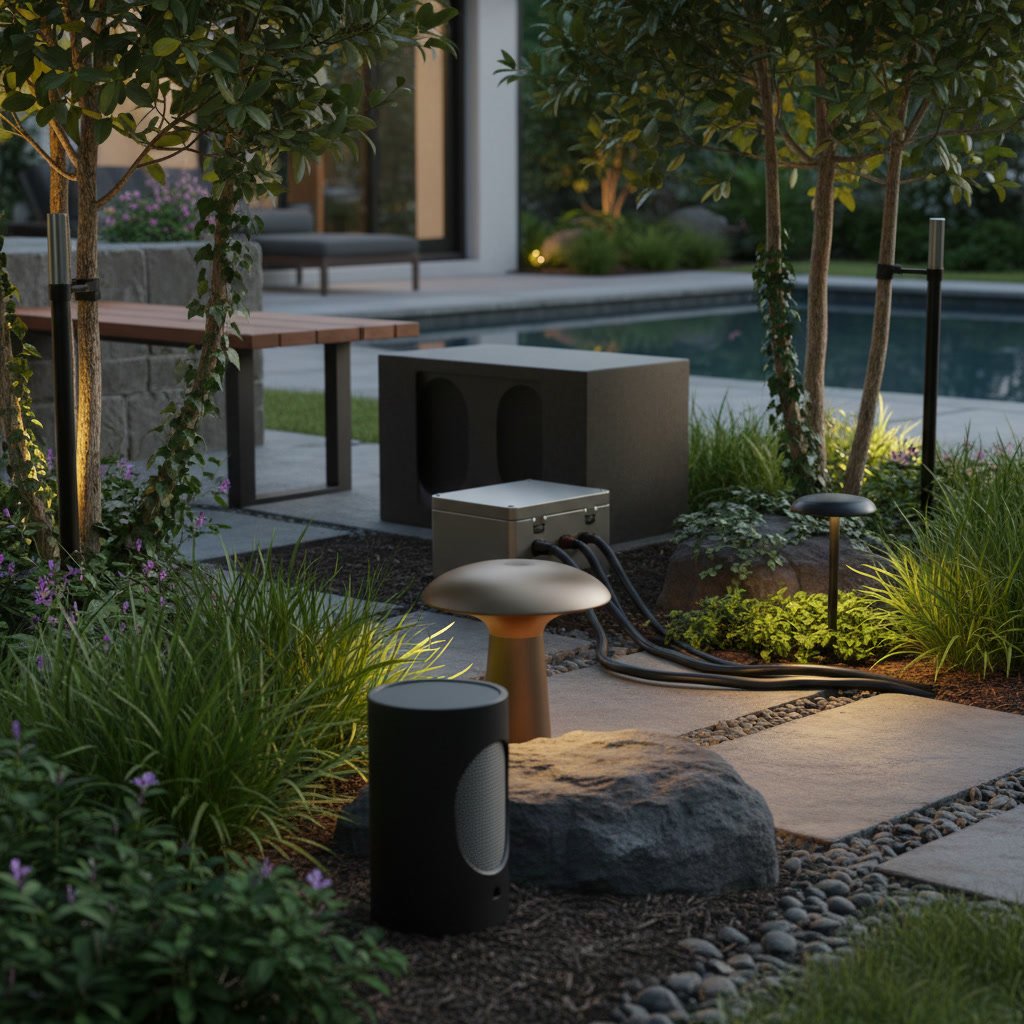
Plan transformer locations that can serve both systems. A single outdoor-rated cabinet can house your lighting transformer, audio amplifier, and smart controls. This centralized approach simplifies troubleshooting and reduces the number of weather-resistant enclosures needed.
Separate your wiring runs to prevent interference. Lighting cables and speaker wires can share conduit but should maintain at least two inches of separation where possible. Never bundle power cables with audio signal cables, as electrical interference can create buzzing or humming in speakers.
Choosing Compatible Equipment
Equipment selection determines how well your outdoor audio landscape lighting systems communicate and whether you can control them through a unified interface.
Smart Lighting Controllers
Modern LED lighting controllers offer dimming capabilities, color-changing options, and scheduling features that can synchronize with audio systems. Look for controllers with open API protocols or compatibility with popular smart home platforms like Control4, Savant, or home automation systems.
Many permanent lighting systems now include smartphone apps that allow scene creation, where specific lighting configurations activate with a single tap. The best systems allow third-party integrations, enabling your audio system to trigger lighting changes automatically.
Outdoor Audio Components
Weatherproof speakers rated IP65 or higher withstand Arizona’s intense sun, occasional rain, and temperature fluctuations. Rock speakers blend into natural landscapes, while architectural speakers mount under eaves or in soffit areas for more directed sound.
Amplifiers should provide enough power for your speaker count and coverage area. A typical backyard requires 50-100 watts per zone, with multiple zones allowing different audio in various areas. Choose amplifiers with streaming capability and app control to match your lighting controller’s sophistication.
Wireless streaming options like Sonos, Bose, or dedicated outdoor audio brands offer excellent sound quality and easy integration with smart home systems. Many now include presets that can link to lighting scenes for one-touch ambiance control.
Installation Best Practices
Proper installation techniques ensure your integrated system performs reliably for years and avoids the common pitfalls that plague DIY projects.
Trenching and Conduit Routing
Dig trenches at appropriate depths for your local code, typically 6-12 inches for low-voltage landscape lighting and 12-18 inches for any 120-volt audio amplifier power runs. Use schedule 40 PVC conduit for all underground wiring to protect against accidental shovel strikes and moisture intrusion.
Create a detailed map showing all conduit runs, junction box locations, and wire types. This documentation proves invaluable years later when adding fixtures or troubleshooting issues. Take photos before backfilling trenches to create a visual record of your installation.
Leave pull strings in all conduit runs for future wire additions. You may want to add speakers or lighting fixtures later, and empty conduit with pull strings makes expansion simple.
Fixture and Speaker Placement
Position lighting fixtures first, as their placement is more critical for visual effect and safety. Path lights should space 8-12 feet apart for even illumination. Accent lights need precise aiming to highlight architectural features or landscape elements without creating glare.
Add speakers after lighting placement is finalized. Speaker positioning depends on coverage area and desired sound pressure levels. For background music, space speakers 15-20 feet apart at ear height when seated. For party lighting and event zones, closer spacing at 10-15 feet provides higher volume capability.
Avoid placing speakers directly above or behind lighting fixtures, as the light can draw attention to speakers that should blend into the environment. Position speakers in shadowed areas or among landscaping where they remain hidden while providing excellent sound coverage.
Creating Synchronized Scenes and Moods
The real magic of outdoor audio landscape lighting emerges when you program scenes that adjust both systems simultaneously to create specific moods and atmospheres.
A dinner party scene might dim pathway lights to 30 percent, warm up patio accent lighting to 2700K color temperature, and stream jazz at moderate volume. A pool party scene could activate bright colorful lighting, increase pathway illumination for safety, and deliver upbeat music at higher volume levels.
Seasonal programming adds another dimension. Holiday scenes can synchronize holiday lighting patterns with festive music playlists, creating immersive seasonal experiences. Summer evening scenes might gradually dim lights as sunset progresses while maintaining consistent audio levels.
Motion-activated integration enhances security and convenience. When someone approaches your front entrance, lighting can illuminate pathways while audio announces visitors or plays welcoming background music. These automated responses create sophisticated functionality that feels effortless.
Pro Tip: Create at least three distinct scenes for each outdoor zone: a subtle evening ambiance mode, an entertaining mode for gatherings, and a security mode with bright lighting and audio alerts. This variety ensures your system adapts to any situation.
Control System Integration Options
How you control your integrated outdoor audio landscape lighting determines how often you use these features and how much value you derive from the investment.
Smartphone and Tablet Apps
Dedicated apps from lighting and audio manufacturers provide individual control but often lack cross-system integration. More sophisticated solutions use smart home platforms that consolidate both systems into a single interface.
Apple HomeKit, Google Home, and Amazon Alexa can control compatible lighting and audio equipment through voice commands or smartphone apps. These platforms allow routine creation where specific times or triggers activate preset scenes across both systems.
Dedicated Control Systems
Professional automation systems like Control4, Crestron, or Savant offer the most robust integration capabilities. These systems use a single touchscreen or app to manage lighting, audio, video, climate, and security throughout your property.
While more expensive than consumer platforms, dedicated systems provide reliability and customization that consumer options cannot match. Programming is done by trained professionals who create interfaces tailored to your specific needs and preferences.
Wall-Mounted Keypads
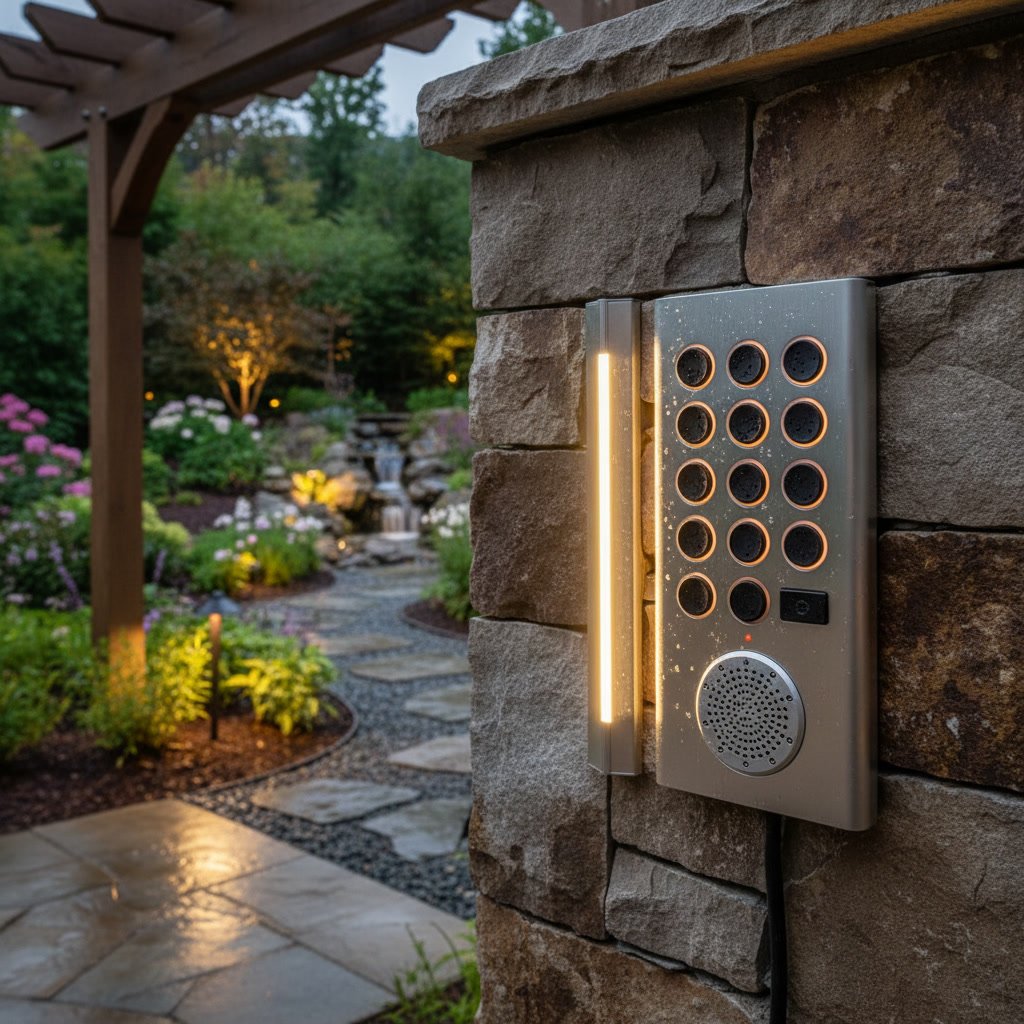
Physical controls remain valuable for guests unfamiliar with your smartphone app or for quick adjustments without unlocking a device. Install weatherproof keypads at key locations like patio entries or outdoor kitchens with clearly labeled buttons for common scenes.
Keypads with LED indicators show system status at a glance, useful for verifying that security lighting is active or confirming that audio is muted during quiet hours.
Maintenance and Troubleshooting
Regular maintenance keeps your integrated system performing optimally and prevents minor issues from becoming expensive repairs.
Inspect all lighting fixtures and speakers quarterly for moisture intrusion, physical damage, or insect nests. Clean speaker grilles and lighting lenses to maintain performance. Check all wire connections annually, tightening any that have loosened due to temperature cycling.
Test your integrated scenes monthly to verify that both lighting and audio respond correctly. Software updates for smart controllers and streaming devices should be applied promptly to maintain security and add new features.
Common issues include lights or speakers in a single zone failing simultaneously, which typically indicates a wiring problem at the zone connection point. Individual fixture or speaker failure suggests component replacement is needed rather than a systemic issue.
Wireless connectivity problems often stem from router placement or Wi-Fi signal strength in outdoor areas. Adding outdoor-rated access points or mesh network nodes resolves most connectivity issues without requiring system redesign.
Working with Professional Installers
While some homeowners tackle outdoor lighting or audio individually, integrating both systems benefits significantly from professional expertise. Experienced installers understand the technical nuances of power requirements, proper wire sizing, weatherproofing techniques, and control system programming.
Professional installation also ensures compliance with local electrical codes and manufacturer warranty requirements. Many lighting and audio manufacturers void warranties if products are not installed by certified technicians, making professional installation a practical necessity for premium equipment.
TRI-CITY Lightning serves homeowners throughout Prescott, Prescott Valley, Sedona, and surrounding areas with integrated outdoor lighting and audio solutions. The team’s experience with both systems ensures cohesive design and flawless technical execution.
When evaluating installers, ask about their experience with integrated systems specifically, not just individual lighting or audio projects. Request examples of completed installations and inquire about their approach to system design, equipment selection, and ongoing support.
Cost Considerations and Budgeting
Integrated outdoor audio landscape lighting systems vary widely in cost depending on coverage area, equipment quality, and control system sophistication.
Basic systems covering 1,000-2,000 square feet with quality landscape lighting and weatherproof speakers typically range from 5,000 to 10,000 dollars installed. This includes LED fixtures, outdoor speakers, amplification, basic smart controls, and professional installation.
Mid-range systems with advanced features like color-changing lighting, multi-zone audio, and dedicated control interfaces typically cost 10,000 to 20,000 dollars for properties up to one acre. These systems include premium equipment, sophisticated programming, and more extensive coverage.
High-end installations with architectural-grade fixtures, distributed audio throughout large properties, and professional automation systems start at 20,000 dollars and can exceed 50,000 dollars for estates with complex requirements.
Installation timing affects costs too. Combining outdoor audio landscape lighting with other landscape projects reduces labor costs since trenching and excavation serve multiple purposes. Installing during new construction or major renovations provides the most cost-effective opportunity.
Key Takeaway: Budget 60 percent of your investment for quality equipment and 40 percent for professional installation and programming. Cutting corners on installation often leads to performance issues that cost more to fix than proper initial installation would have cost.
Frequently Asked Questions
Can I add outdoor audio to my existing landscape lighting system?
Yes, outdoor audio can be added to existing landscape lighting in most cases. The key is ensuring adequate power capacity and determining whether your current lighting controller can integrate with audio equipment. Many homeowners successfully add outdoor audio systems years after initial lighting installation by running new speaker wire through existing conduit or creating new trenches for audio-specific wiring.
What weatherproofing rating do outdoor speakers need in Arizona?
Outdoor speakers in Arizona should carry a minimum IP65 rating to withstand intense UV exposure, dust storms, and occasional rain. Higher ratings like IP67 provide additional protection for speakers installed near pools, water features, or irrigation systems. Quality speakers also feature UV-resistant enclosures that prevent sun damage and fading over time.
How do I prevent audio interference from landscape lighting?
Audio interference from landscape lighting is prevented by maintaining proper wire separation, using shielded speaker cables, and ensuring all electrical connections are tight and properly grounded. LED drivers can generate electromagnetic interference, so position amplifiers and audio sources at least three feet from lighting transformers and controllers. Quality equipment with proper shielding rarely experiences interference issues when installed correctly.
Can outdoor audio and lighting systems work during power outages?
Standard outdoor audio landscape lighting systems require grid power and will not function during outages. However, battery backup systems or integration with whole-house generators can maintain operation during power interruptions. Some homeowners prioritize security lighting and entry audio on backed-up circuits while allowing decorative elements to remain off during outages to conserve backup power capacity.
What maintenance does an integrated outdoor system require?
Integrated systems need quarterly visual inspections, annual connection checks, and periodic software updates. Clean speaker grilles and lighting lenses every few months to maintain performance. Test all zones and scenes monthly to catch issues early. Professional service visits every 12-18 months ensure optimal performance and can identify potential problems before they cause system failures.
Transform Your Outdoor Living Experience
Integrating outdoor audio with landscape lighting creates immersive outdoor environments where every element works together seamlessly. From intimate dinner parties to large celebrations, properly designed systems adapt to any occasion while enhancing your property’s beauty and functionality.
The combination of professional-grade lighting and high-quality audio elevates outdoor spaces from simple yards to sophisticated entertainment venues. With careful planning, quality equipment, and expert installation, your integrated system will provide years of reliable performance and enjoyment.
TRI-CITY Lightning specializes in creating integrated outdoor audio landscape lighting solutions throughout Prescott, Prescott Valley, Chino Valley, Sedona, and surrounding communities. Our team brings expertise in both lighting design and audio installation to deliver cohesive systems that exceed expectations. Contact us at +19283568919 to discuss your outdoor entertainment vision and discover how integrated audio and lighting can transform your property.