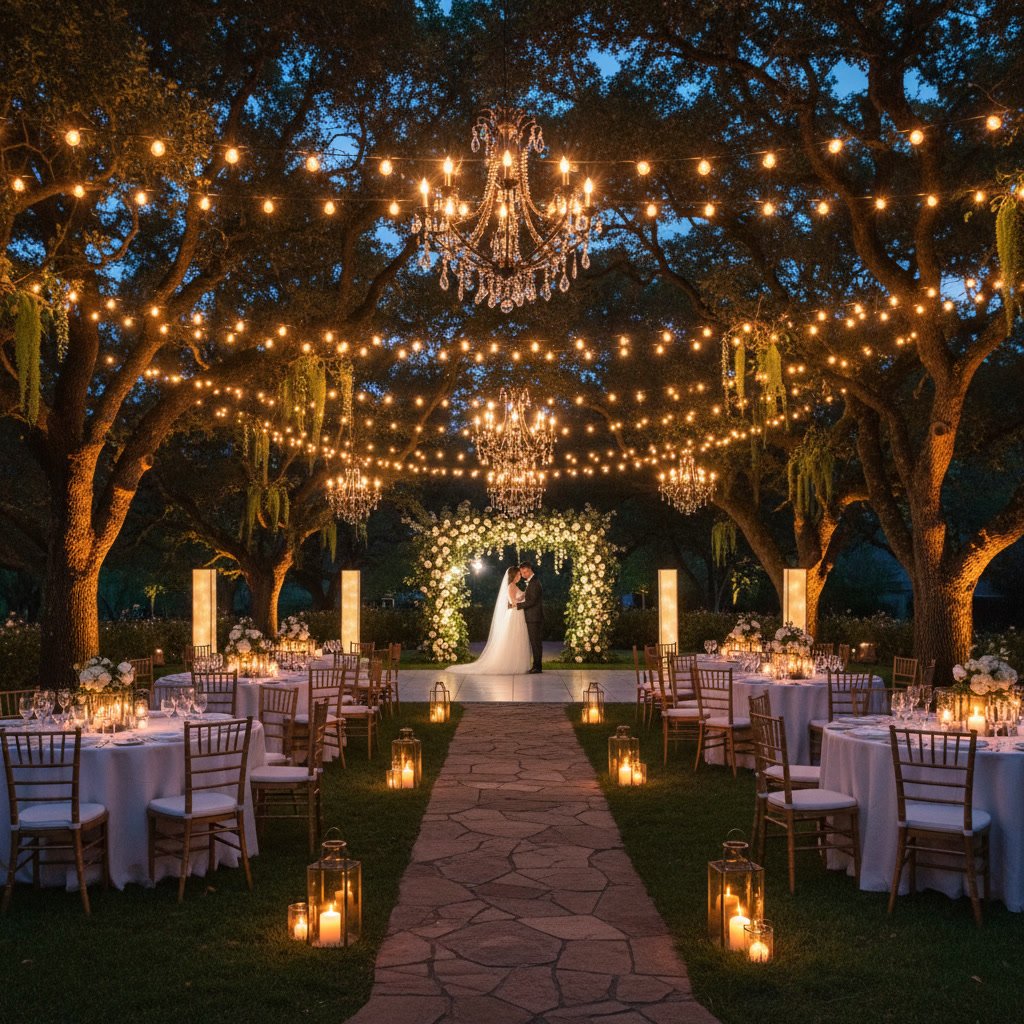
Choosing the right wedding lighting design starts with understanding your venue’s natural features, your ceremony timeline, and the specific mood you want to create as daylight fades. Effective outdoor wedding illumination balances ambient light for guest comfort, accent lighting for focal points like the altar or dance floor, and decorative elements that reflect your personal style. Professional installation ensures safe electrical connections, weather resistance, and seamless integration with your venue’s existing landscape.
Why Outdoor Weddings Require Specialized Lighting Planning
Natural light changes dramatically throughout the day, and most outdoor ceremonies transition from daylight to dusk. Your lighting must adapt to these shifts without disrupting the celebration or forcing guests to navigate dark pathways. Unlike indoor venues with controlled overhead fixtures, outdoor spaces require custom solutions that account for weather, terrain, and the absence of permanent electrical infrastructure.
Professional wedding lighting also addresses safety concerns that couples often overlook during initial planning. Uneven ground, steps, water features, and parking areas all need adequate illumination to prevent accidents while maintaining the romantic atmosphere you envision.
The Three Essential Layers Every Outdoor Wedding Needs
Successful outdoor wedding illumination relies on three distinct layers working together. Ambient lighting provides overall visibility, ensuring guests can see each other, their meals, and move safely around the venue. This foundation typically comes from string lights, lanterns, or uplighting along the perimeter of your space.
Task lighting focuses on specific functional areas such as the dining tables, bar, buffet stations, and restrooms. Guests need enough light to read menus, see their food, and navigate service areas without straining their eyes or using phone flashlights.
Accent lighting creates drama and highlights architectural or natural features like trees, arbors, fountains, or the head table. This layer adds depth and visual interest to photographs while drawing attention to the elements that make your venue unique.
Matching Lighting Styles to Your Wedding Theme
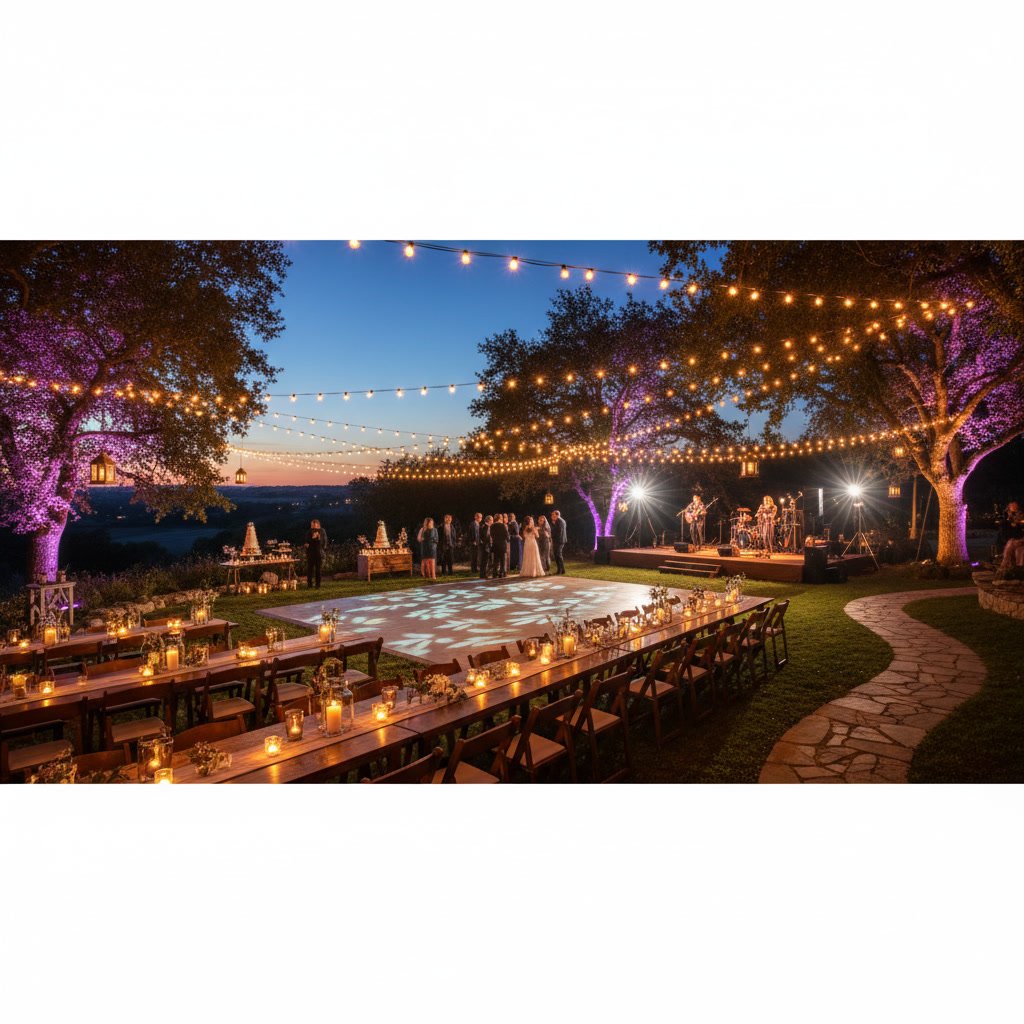
Your lighting choices should reinforce your overall aesthetic rather than compete with it. Rustic weddings benefit from warm Edison bulbs, wooden lanterns, and amber-toned string lights that complement natural wood and greenery. Modern celebrations often feature clean white LED strips, geometric pendant fixtures, and cool-toned washes that enhance minimalist decor.
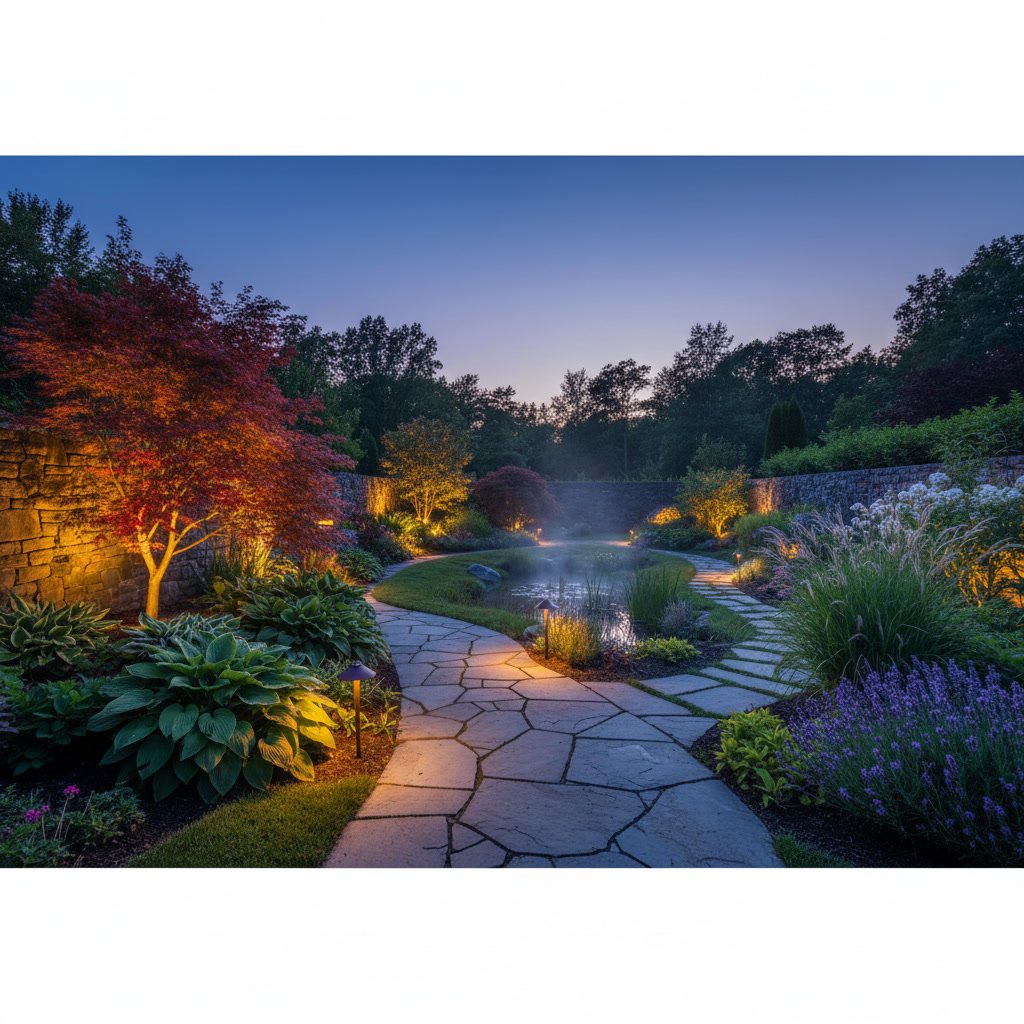
Garden and vineyard settings work beautifully with fairy lights woven through trees, subtle path lighting along walkways, and soft uplighting on stone walls or trellises. Beach and desert venues require brighter perimeter lighting to define the space while keeping decorative elements simple to avoid competing with the natural landscape.
How to Light Your Ceremony Space in Prescott
The ceremony requires focused attention on the altar or arch where vows are exchanged. Uplighting from the ground creates a gentle glow without harsh shadows on faces, while small spotlights can highlight floral arrangements or signage. If your ceremony occurs near sunset, plan for lighting that activates gradually as natural light fades.
Aisle lighting guides guests to their seats and creates a memorable entrance for the wedding party. Low-profile path lights, luminarias, or small lanterns work well without obstructing views. Consider the photographer’s needs, as lighting that looks beautiful to the eye may create unwanted glare or color casts in images.
Reception Lighting That Transitions From Dinner to Dancing
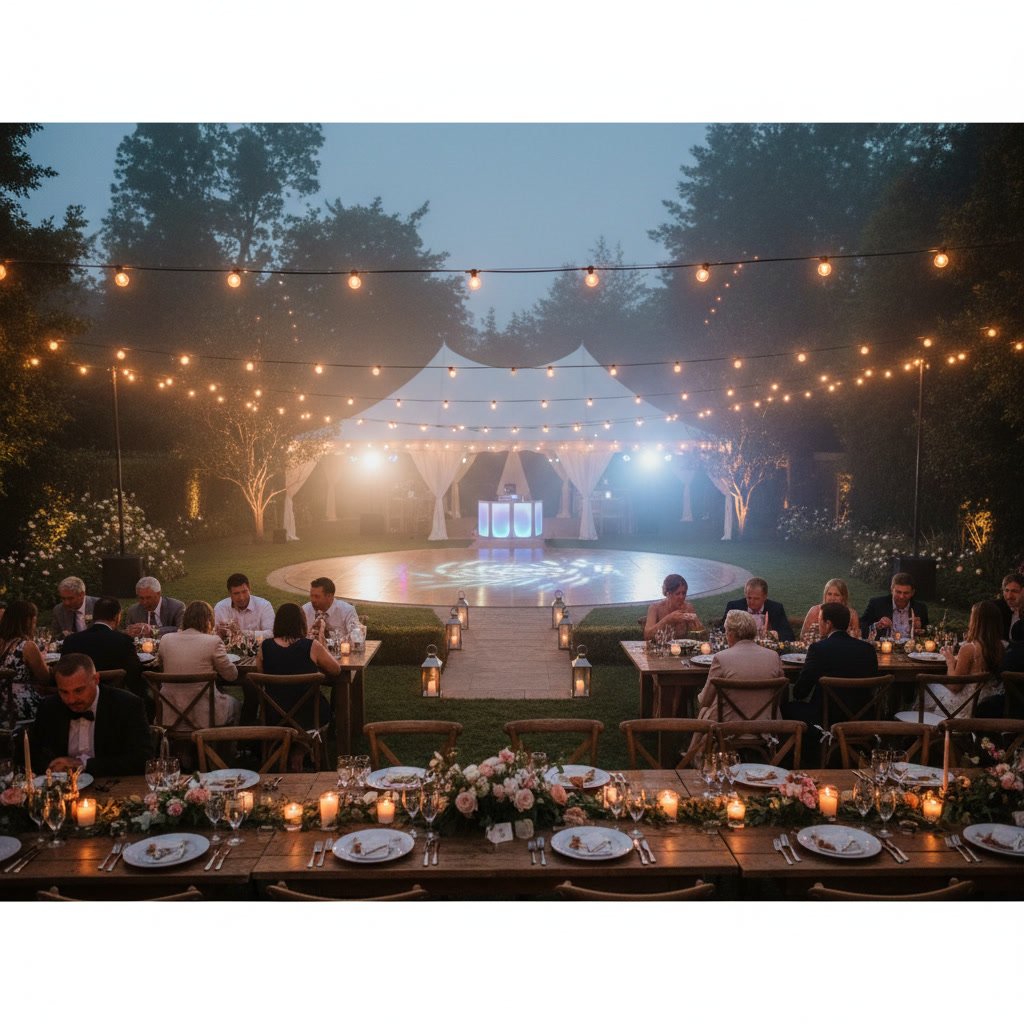
Your reception space needs flexibility as the event progresses from cocktails through dinner and into dancing. Dimmable systems let you adjust brightness levels without manually swapping fixtures. Brighter lighting during dinner service helps guests see their meals and socialize comfortably, while lower levels during dancing create energy and intimacy.
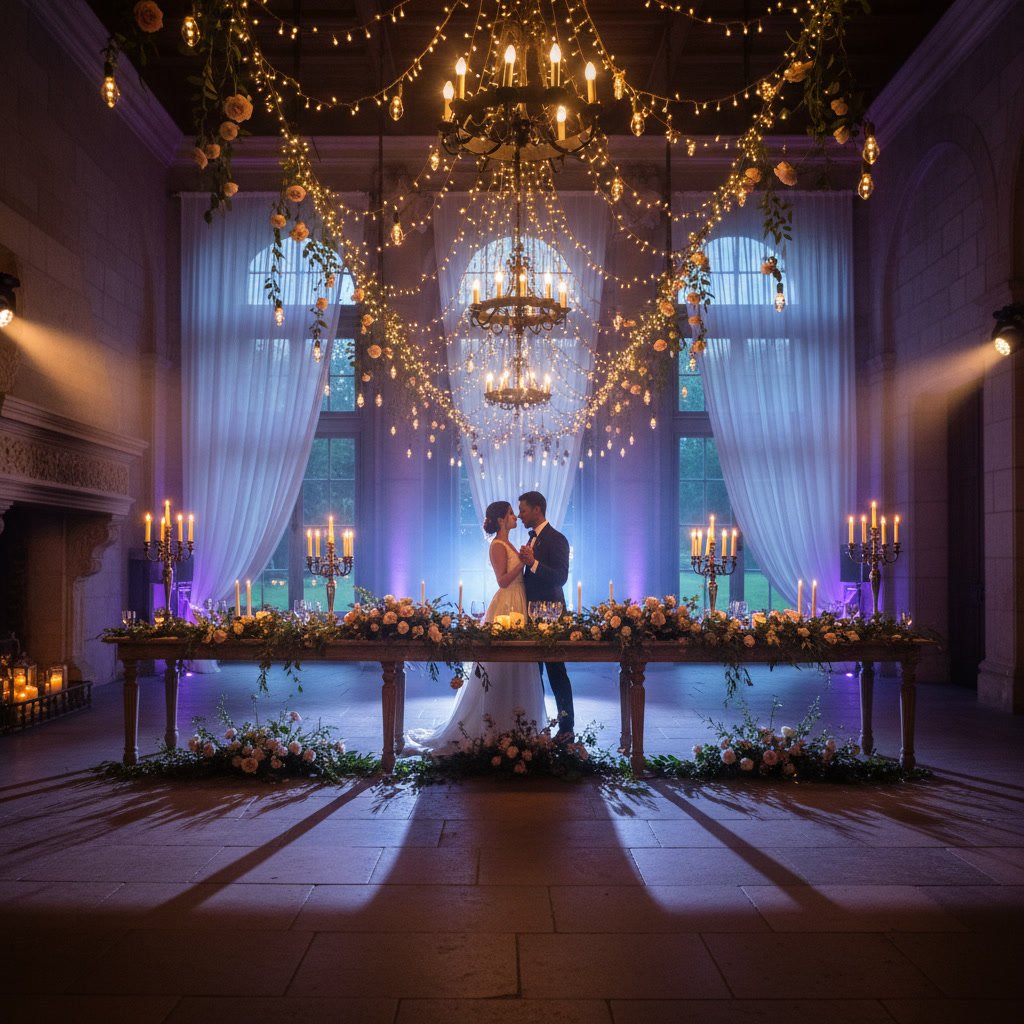
The dance floor deserves special attention as the focal point of your reception’s second half. Overhead string lights or a small chandelier provides ambient glow, while optional uplighting in your wedding colors can add excitement. If you’re incorporating outdoor audio systems, coordinate placement so speakers and lights work together without cluttering the space.
Choosing Between Permanent and Temporary Installations
Temporary setups work well for single-day rentals at parks or public venues where you cannot modify the property. Professional teams install everything the day before or morning of your wedding and remove it immediately after. This approach offers maximum flexibility but requires careful timing and weather contingency plans.
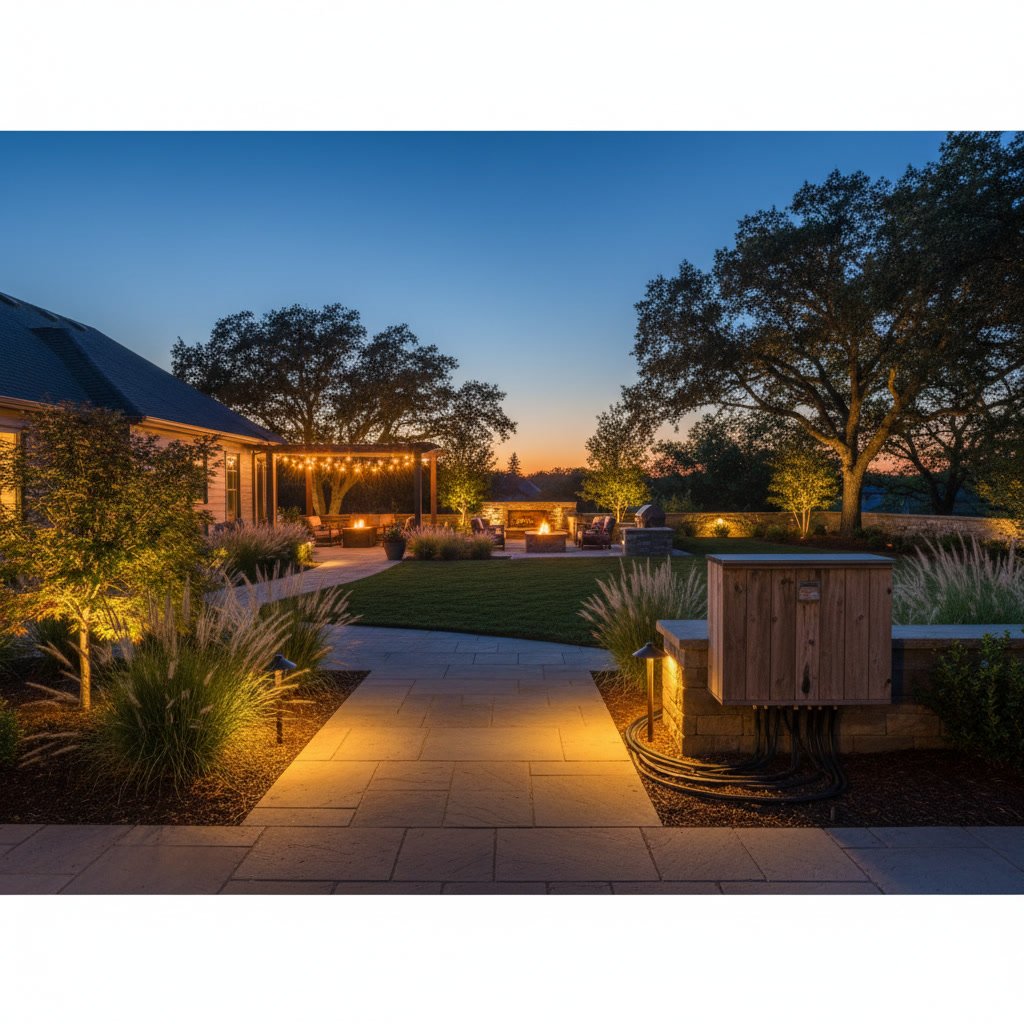
If you’re hosting your wedding at a private residence or family property, consider investing in semi-permanent infrastructure. Installing landscape lighting along pathways and around key features provides value beyond your wedding day while ensuring the system is tested and reliable before your celebration. The same installation process used for residential projects applies to wedding preparation.
Power Sources and Technical Requirements
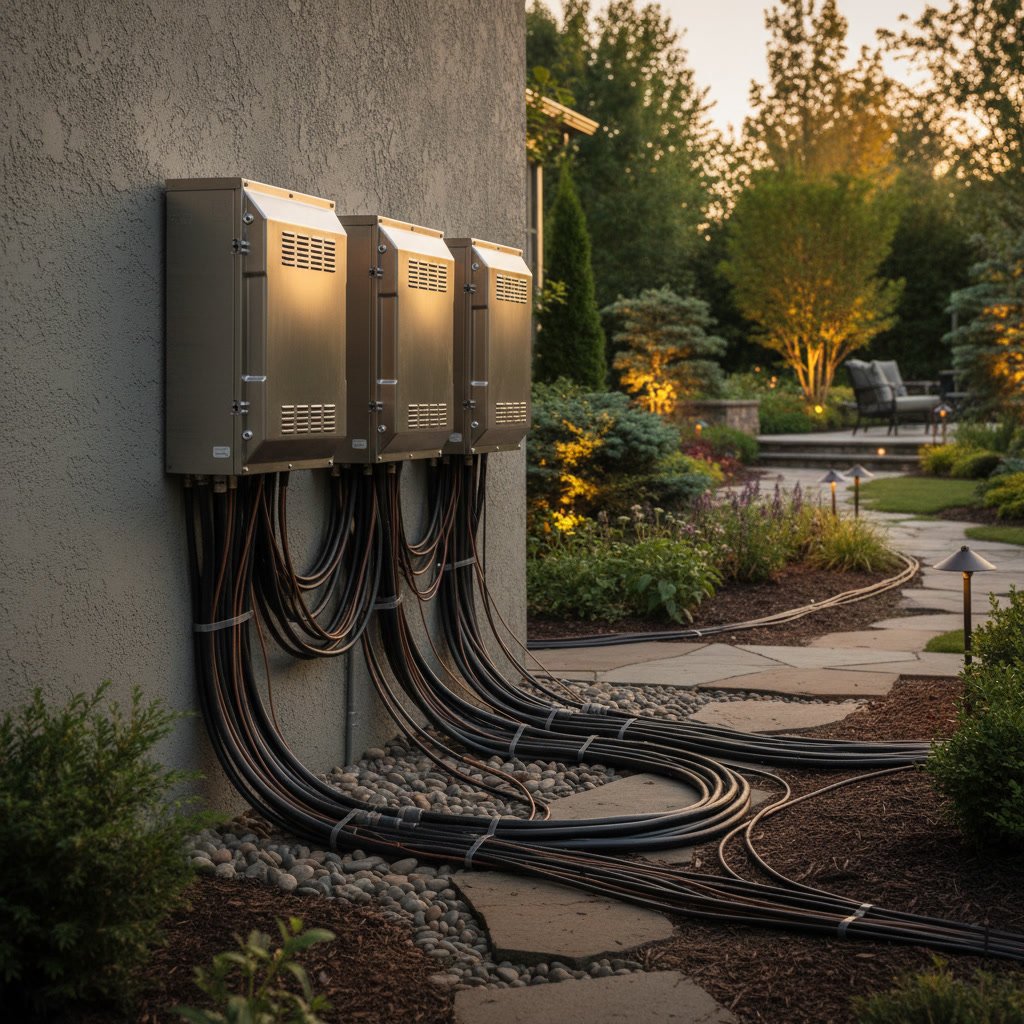
Understanding your power options prevents last-minute surprises. Most outdoor venues require extension cords, generators, or battery-powered fixtures unless permanent electrical outlets exist nearby. Generators provide reliable power for large setups but produce noise that can disrupt ceremonies, so placement matters significantly.
LED technology has transformed outdoor wedding lighting by dramatically reducing power consumption. A system that once required a 5,000-watt generator can now run on 500 watts, opening up battery-powered options that eliminate noise and fuel costs. Professional installers calculate total wattage requirements and ensure all connections meet safety codes and weather protection standards.
Budgeting for Professional Installation vs DIY
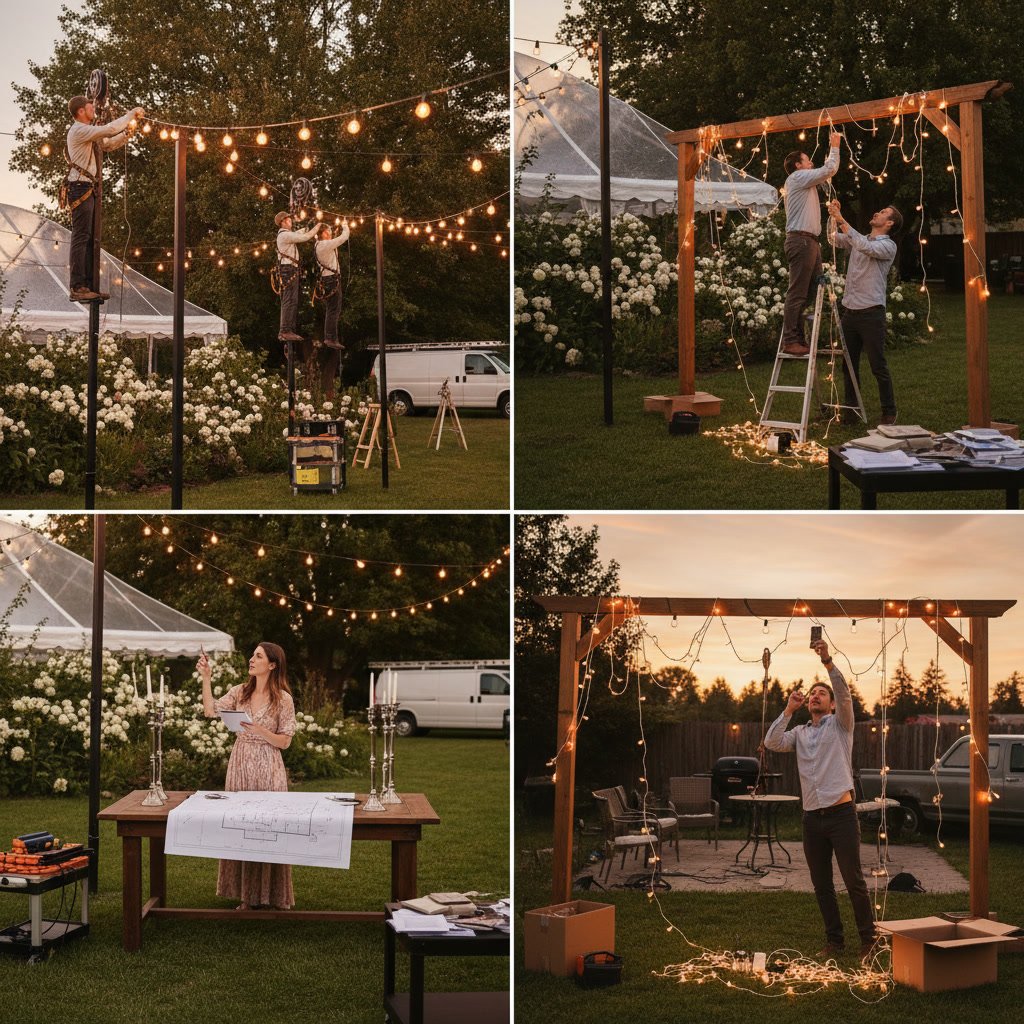
DIY lighting saves money upfront but rarely accounts for the time cost of setup, troubleshooting, and breakdown during your wedding weekend. Most couples underestimate the physical labor involved in hanging string lights 12 feet overhead, securing fixtures against wind, and running hundreds of feet of cable safely.
Professional services handle all technical aspects, carry liability insurance, and provide backup equipment if something fails. A typical outdoor wedding installation ranges from $800 to $3,500 depending on guest count, venue size, and complexity. This investment ensures your lighting looks polished in photographs and functions flawlessly throughout your event. If you’re already planning other event lighting projects, bundling services often reduces overall costs.
Weather Contingency Planning for Arizona Outdoor Weddings
Arizona’s climate presents specific challenges that affect lighting choices. Summer monsoons can bring sudden wind and rain, requiring waterproof fixtures and secure mounting systems. Spring and fall weddings enjoy mild weather but still need equipment rated for outdoor use to handle unexpected temperature drops or dust.
Always have a backup plan that includes covered areas or tent options. Lighting designed for open-air ceremonies may need adjustment if you move under cover, so discuss contingencies with your installer. Battery-powered fixtures provide flexibility if weather forces last-minute changes to your layout.
Coordinating With Other Vendors and Your Timeline
Your lighting team needs to coordinate with caterers, florists, rental companies, and photographers to ensure equipment placement doesn’t create conflicts. Installers typically arrive several hours before guests to complete setup, test systems, and make adjustments based on natural light conditions.
Share your detailed timeline with your lighting provider, noting when the ceremony starts, when sunset occurs, and when you expect the reception to transition from dinner to dancing. This information helps them program any automated systems and plan for manual adjustments. Similar coordination is essential for outdoor party planning, as discussed in our guide on planning event lighting for outdoor parties.
Creating a Lighting Experience That Reflects Your Vision
Your wedding lighting should feel intentional and cohesive from the moment guests arrive until the last dance. Walk through your venue at the same time of day your event will occur, noting where natural shadows fall and which areas will need the most attention. Take reference photos of lighting styles you love, but remember that what works in a forest setting may not translate to a desert landscape.
Work with experienced professionals who understand both the technical requirements and the aesthetic goals. TRI-CITY Lightning brings expertise in creating customized lighting solutions that enhance outdoor spaces while ensuring safety and reliability. The team’s background in both permanent installations and temporary event setups means they can recommend the most effective approach for your specific venue and budget.
Thoughtful wedding lighting transforms your outdoor celebration from a simple gathering into an unforgettable experience that guests will remember for years. By planning each layer carefully, coordinating with your venue and vendors, and investing in professional installation, you ensure that every moment looks as beautiful in person as it does in your photographs. TRI-CITY Lightning serves couples throughout the region with custom lighting solutions designed to make your outdoor wedding stunning from ceremony to reception. Reach out at +19283568919 to discuss your vision and receive a detailed proposal tailored to your venue and timeline.